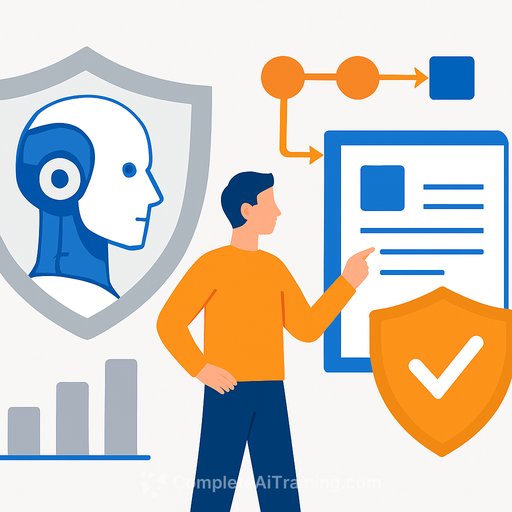
Patients Are Now Using AI to Fight Denials. Insurers Need a Response Plan
Insurers adopted AI to speed prior authorizations and claims. Patients and clinicians are now using their own AI tools to push back on denials, clarify benefits, and spot billing errors.
That sets up a new dynamic: automated reviews on one side, automated appeals on the other. If you work in insurance, your playbook needs to account for both the tech and the human impact.
Why this matters for insurance teams
- Denials are under a brighter spotlight. Reported denial rates have climbed across both in-network and out-of-network claims over the last few years.
- AI-driven prior auth and claims workflows are faster, but they're also being scrutinized for fairness, accuracy, and explainability.
- Patients can now generate tailored appeal letters, decode benefits, and flag coding issues with consumer AI tools-often in minutes.
What patients are using
- Consumer apps that read EOBs and benefit documents, translate jargon, and draft appeals that cite policy language.
- Nonprofits offering free AI-powered appeal letters that pull from denial notices, plan documents, and medical literature.
- General-purpose chatbots that help patients outline arguments or spot inconsistencies-useful, but error-prone without expert review.
These tools blend automation with human oversight. The best outcomes still come when a clinician or expert validates medical facts and coding before an appeal is sent.
Regulators are moving fast
- Multiple states have enacted rules around AI in health care this year.
- Arizona, Maryland, Nebraska, and Texas prohibit using AI as the sole decision-maker for prior authorization or medical-necessity denials.
- Common themes: transparency about AI use, human-in-the-loop requirements, documentation of bias mitigation, and appeal rights.
Operational and compliance risks if you get this wrong
- Legal exposure if AI is used as the final arbiter without a documented human review.
- Bias concerns that can trigger audits, reputational damage, and corrective action plans.
- Appeals congestion if automated denials are too aggressive or explanations are unclear.
- Provider abrasion and delayed care when prior auth logic conflicts with clinical guidelines or lacks nuance.
What insurers can do now
- Require human sign-off for any denial involving medical necessity, prior authorization, or complex coding disputes.
- Stand up model governance: version control, drift monitoring, medical-policy alignment checks, and documented change management.
- Explainability by default: every AI-assisted decision should produce a patient- and provider-friendly rationale mapped to policy and evidence.
- Bias testing: run pre- and post-deployment fairness audits across demographics, conditions, and coverage types; remediate and re-test.
- Appeals workflow design: make it easy to submit clinical evidence, correct coding, and request peer-to-peer review.
- Coding quality controls: catch preventable denials with automated pre-submission checks and provider feedback loops.
- Clinical alignment: keep rules current with specialty guidelines and CMS updates; involve medical directors in model updates.
- Audit trails: log inputs, model outputs, human overrides, and final decisions; retain artifacts for regulators.
- Clear communications: plain-language notices that detail what's missing, what qualifies, and the fastest path to approval.
- Train your teams: claims, UM, and member services need AI literacy to spot errors, escalate edge cases, and speak to process integrity.
KPIs to track
- Prior auth turnaround times (standard and expedited).
- First-pass approval rate and medical-necessity denial rate.
- Appeal submission rate and overturn rate (by reason and service type).
- Peer-to-peer review completion time and approval yield.
- Complaint volumes (member, provider) tied to AI-assisted decisions.
Bottom line: automation can speed reviews, but it can't replace judgment. Patients now have tools to meet automation with automation. The carrier advantage comes from combining fast systems with careful human review, transparent reasoning, and a fair path to yes when the evidence supports it.
Level up your team's AI fluency
If your organization is formalizing model governance, staff training helps prevent avoidable denials and rework. Consider practical programs on AI literacy and workflow automation.
Your membership also unlocks: