PayPal buys Cymbio to push agentic-commerce from concept to default
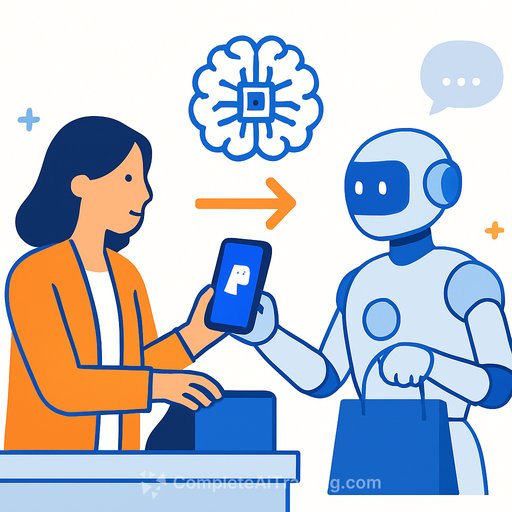
PayPal has agreed to acquire Cymbio, an 11-year-old Tel Aviv fintech focused on e-commerce and AI. The deal is expected to close in the first half of 2026; terms weren't disclosed. The move tightens PayPal's grip on agentic commerce-where AI agents find products, answer questions, and complete checkout without a traditional web journey.
For product teams, this is a signal: the product-detail page (PDP) is becoming an API surface for AI. Whoever controls PDP structure, validation, and distribution controls discovery and attribution.
What PayPal is actually getting
Cymbio's team will join PayPal to scale Store Sync, a product that makes merchant catalogs discoverable in AI channels and pushes orders into existing OMS, PIM, and fulfillment flows. Merchants keep their customer relationships and brand control while plugging into AI-driven shopping.
Early Store Sync adopters include Abercrombie & Fitch, Fabletics, Ashley Furniture, Newegg, and Adorama. These are already live on Microsoft Copilot and Perplexity, with OpenAI's ChatGPT and Google's Gemini app and AI Mode listed as "coming soon."
"Acquiring Cymbio's technology and team will enhance our agentic-commerce capabilities and accelerate the expansion to more of our merchants. By making their product catalogs discoverable on AI surfaces, merchants can increase sales while expanding product choice to the millions of consumers shopping on AI platforms today," said Michelle Gill, EVP and GM of Small Business and Financial Services at PayPal.
Why this matters: PDPs are the new growth surface
AI shopping relies on deep, structured PDP context-features, specs, pricing, media, availability, policies, and compatibility-to answer questions and reduce friction at checkout. As PDPs add 3D assets, richer attributes, and policy logic, the challenge shifts from presentation to machine-readability and distribution.
Payments consultant Richard Crone called the move "a big win for PayPal," adding that it gives PayPal leverage over the PDP layer-the most critical element in agentic commerce. He noted Google's Universal Commerce Protocol (UCP) aims to standardize how AI agents consume richer product context, raising the bar for PDP data quality and interoperability.
The competitive angle
Every major paytech player is building an agentic stack: catalog ingestion, PDP normalization, orchestration, and checkout. PayPal's Fastlane already routes transactions using AI. Cymbio plugs a gap-standardizing and distributing PDP data across marketplaces, social commerce, and LLM-driven shopping.
According to Crone, agentic payments with access to PDP context can turn each intent signal into a verified attribution event-potentially worth $1 to $5 per transaction-outperforming plain interchange. That's why Visa Intelligent Commerce and Mastercard Agent Pay need PDP access. PayPal now owns a large independent source for that feed.
What product teams should do now
- Elevate PDPs to a first-class API. Treat PDPs like an interface, not a page. Define contracts for attributes, variants, availability, shipping, returns, sustainability, and warranty. Version it. Test it.
- Adopt a canonical product schema. Map your catalog to a stable schema with required and optional fields, plus policy logic. Track lineage so AI agents can trace claims back to source.
- Instrument AI attribution. Tag AI-sourced discovery and conversions. Separate "agent-assisted" from "agent-led" events to price media, promos, and affiliate economics correctly.
- Tighten fulfillment hooks. Ensure OMS, inventory, and returns APIs are real-time and consistent. Agentic checkout falls apart with stale stock or policy mismatches.
- Establish a PDP data QA pipeline. Validate images, dimensions, specs, and safety/regulatory fields. Automate checks for missing or conflicting attributes.
- Build policy as data. Encode shipping thresholds, return windows, price-match rules, and bundle logic as machine-readable fields. Avoid burying terms in free text.
- Prepare for UCP-like standards. Keep PDP exports modular so you can add or swap required fields as standards mature without refactoring your core model.
- Guardrails and governance. Set rules for what agents can offer (discount limits, substitution logic, warranty constraints). Log decisions for auditability.
How Store Sync changes integration strategy
If you're a PayPal merchant, Store Sync could become the shortest path to AI discovery across Copilot, Perplexity, and soon ChatGPT and Gemini. Expect tighter alignment between PayPal checkout flows and agentic shopping entry points.
For non-PayPal stacks, plan for multi-channel PDP distribution. You'll likely need both a PayPal-compatible feed and a neutral feed for other agent networks. Keep your modeling core consistent and generate channel-specific views at the edge.
Quarter-by-quarter roadmap suggestion
- Q1: Finalize canonical PDP schema, add missing attributes, implement event tracking for agent-origin traffic, and ship an automated PDP QA pipeline.
- Q2: Expose a stable PDP API, add policy-as-data fields, integrate real-time inventory and delivery estimates, and pilot one agent channel (e.g., Copilot or Perplexity).
- Q3: Expand to a second agent channel, implement attribution contracts with finance, and run pricing experiments for agent-led carts.
- Q4: Optimize PDP media and spec depth by category, standardize return/exchange logic, and scale guardrails for promos and bundling.
Risks and mitigations
- Stale or conflicting data: Add freshness SLAs and automated diff alerts between PIM, PDP API, and channel feeds.
- Opaque attribution: Require signed attribution tokens from agent channels; reconcile in your CDP and billing.
- Channel lock-in: Keep a channel-agnostic model; generate per-channel transforms at export time.
- Compliance drift: Centralize policy-as-data with version control and audit logs; expose read-only snapshots to agents.
What to watch next
- Close of Cymbio deal: Timelines for Store Sync rollout and merchant onboarding velocity.
- Standards movement: Adoption signals for Google UCP-like specs across agent platforms.
- Checkout consolidation: Deeper integration between agent discovery and PayPal Fastlane performance.
- Rival responses: PDP ingestion plays from Visa, Mastercard, Stripe, and major marketplaces.
Relevant links
Level up your team
If you're rolling out AI shopping and attribution, upskill your PMs and engineers on agentic patterns, PDP modeling, and data contracts. Here's a curated path for product roles: AI courses by job.
Your membership also unlocks: