Pentagon AI Program Maven Deployed in Iran Strikes
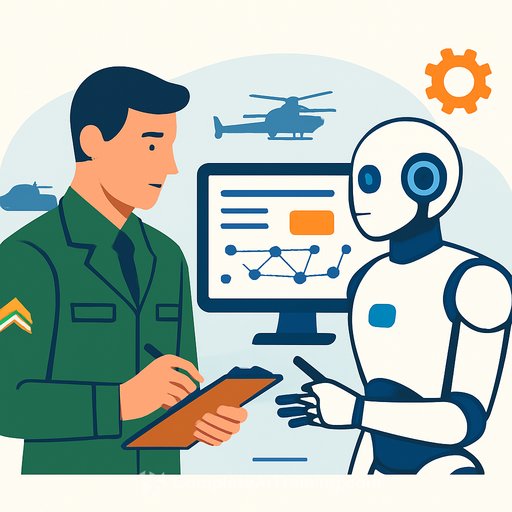
Project Maven, the Pentagon's artificial intelligence system for targeting and battlefield management, played a central role in recent US military operations against Iran. The program has compressed the time between detecting a target and striking it from hours to seconds, fundamentally changing how modern warfare operates.
What is Project Maven?
The Pentagon launched Maven in 2017 as a tool to help military analysts process the massive volume of drone footage from conflict zones. Operators were manually searching frame by frame for brief moments when targets appeared on screen.
Eight years later, Maven has evolved into a system that fuses sensor data, enemy intelligence, satellite imagery, and troop deployment information into a single operational view. It functions as both air traffic control and decision-making engine for military strikes.
How the system works
Maven rapidly scans satellite feeds to detect troop movements and identify targets. It then presents commanders with strike options based on available assets and operational conditions.
The addition of large language models - currently Anthropic's Claude - allows military personnel to interact with Maven using natural language rather than specialized commands. A Pentagon official described the process as "magically" turning an observed threat into a targeting workflow.
The system accelerates what military planners call the "kill chain" - the process from initial detection to destruction.
Google's departure and the ethics question
Google was Maven's original AI contractor until 2018, when more than 3,000 employees signed an open letter opposing the contract. Several engineers resigned over the ethical concerns. Google declined to renew and later published AI principles explicitly prohibiting involvement in weapons systems.
The disagreement exposed a divide between Silicon Valley engineers who viewed autonomous targeting as crossing an ethical line and defense officials who considered it essential to national security. Google has since reversed course, removing AI policy restrictions and signaling willingness to support national security work.
The Pentagon is now considering Google, xAI, and OpenAI as potential replacements for Claude after Anthropic demanded that its model not be used for fully automated strikes or tracking of US citizens.
Palantir's role
Palantir, a company founded with CIA seed funding and built around government intelligence work, became Maven's primary technology contractor in 2024. The company's AI now forms the operational backbone of the program.
Palantir CEO Alex Karp has framed the competition explicitly: "This is a have, have-not world." He argued that compressing the kill chain from hours to seconds makes an adversary obsolete, making it essential for the West to develop these capabilities.
Performance in current operations
The Pentagon and Palantir have declined to comment on Maven's specific performance in the Iran campaign. US strikes have been sustained at a high pace, and the system's ability to accelerate targeting appears central to operations.
According to the Centre for Strategic and International Studies, after three weeks the US campaign reached a pace of 300 to 500 targets per day. In the first 24 hours of Operation Epic Fury, US forces struck over 1,000 targets.
Media reports indicate that some strikes hit civilian areas, including a school housed in a building previously used as a military complex. Iran reported that the attack killed 168 children aged seven to 12 and wounded others.
For operations professionals, Maven illustrates how AI Agents & Automation compress decision-making timelines and reshape operational workflows. Understanding these systems is increasingly relevant to how organizations manage complex, time-sensitive processes. The AI Learning Path for Operations Managers covers similar process optimization and workflow automation principles.
Your membership also unlocks: