AI is raising the stakes in Interpol's fight against cybercrime
From perfectly spelled phishing emails to fake videos of government officials, AI has supercharged the tactics criminals use to mislead, defraud, and disrupt. Interpol and national agencies are seeing attacks that look cleaner, move faster, and scale without much effort. The playbook hasn't changed - deception still pays - but the quality and volume have.
How attackers use AI right now
- Phishing without the usual tells: flawless grammar, customized context pulled from public data, and convincing sender profiles.
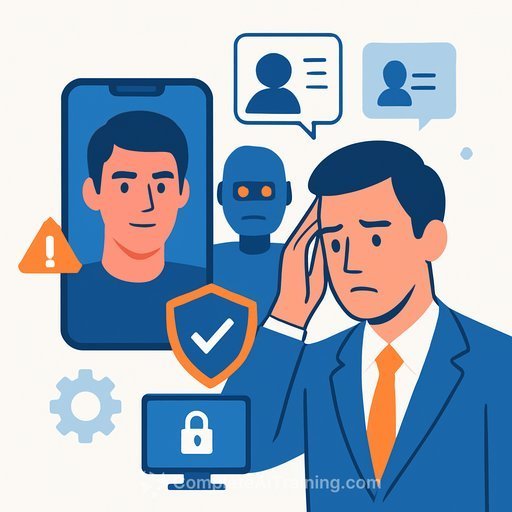
- Deepfake videos and voice clones of officials to rush payments, push disinformation, or force policy mistakes.
- Automated social engineering at scale: AI chats that mimic staff tone, answer objections, and keep victims engaged.
- Malware and exploit research accelerated by code suggestions, with fewer obvious signatures.
- Content farms that flood channels with fake "witness" posts to muddy incident response and oversight.
Why government targets get hit hardest
Government carries trust, authority, and access - exactly what criminals want to imitate. One well-timed fake video or email can trigger procurement changes, wire transfers, or public panic. Add cross-border jurisdictions and you get slower takedowns and faster damage.
What Interpol and partners are doing
Interpol is coordinating intelligence, joint operations, and digital forensics across borders to track AI-enabled crime and infrastructure. They're pushing faster information sharing and common standards so agencies can verify sources and act in sync.
Learn more about Interpol's cybercrime work here: INTERPOL: Cybercrime. For a solid overview of synthetic media threats, see Europol's analysis: Facing Reality of Deepfakes.
What your agency can implement this quarter
- Email authentication everywhere: enforce SPF, DKIM, and DMARC at reject; monitor DMARC reports weekly.
- High-friction steps for high-risk actions: verified call-backs and multi-person approvals for payments, vendor changes, data pulls, and media releases.
- Media verification protocol: any "urgent" video or voice from leadership requires source tracing, watermark checks, and a second-channel confirmation.
- Secure-by-default endpoints: block macro-enabled files by policy, isolate unknown executables, and auto-quarantine suspicious email threads.
- Staff drills: quarterly phishing and deepfake tabletop exercises with red-team scenarios tied to real agency workflows.
- Procurement guardrails: require vendors to disclose AI use, logging, model sources, data handling, and content-authentication support (e.g., C2PA).
- Threat intel in plain language: a one-page weekly brief for executives with top scams, active indicators, and actions taken.
- Stronger identity checks: FIDO2 keys for admins and finance roles; disable SMS for critical MFA paths.
- Incident playbooks that assume fakes: comms templates, public advisories, and pre-approved channels ready to counter synthetic media.
- Cross-border coordination: name a point of contact for Interpol requests and set SLAs for evidence sharing and legal holds.
Verification checklist for suspicious videos, audio, or messages
- Source: Where did it first appear? Confirm with a known official channel or direct line.
- Metadata: Check creation time, edits, and anomalies. Beware re-uploads that strip data.
- Consistency: Lip-sync, shadows, and room acoustics. Small glitches matter.
- Context: Does the request fit role, timing, and policy? Urgency is a red flag.
- Second factor: Validate via an out-of-band method (secure chat, phone, or in-person).
Policy updates that close common gaps
- Ban single-channel approvals for funds, sensitive data, and public statements.
- Mandate content-authentication on official media where feasible and label exceptions clearly.
- Require training for anyone who can authorize payments, publish statements, or access citizen records.
- Log retention and audit trails for all high-risk actions - make review a weekly habit, not a post-breach task.
Upskill your team (without the fluff)
Most breaches start with a human decision under pressure. Give your teams hands-on practice with AI-enabled threats and tools so they recognize patterns fast and respond with confidence.
For structured paths by role, see Complete AI Training: Courses by Job. Teams focused on defensive research and threat analysis can also consult AI Research Courses for deeper technical study.
Bottom line
AI lifts the quality bar for attackers. Meet it with disciplined verification, smart controls on high-risk actions, and tighter cooperation with Interpol and your peers. Small, consistent upgrades to process and tooling will save you time, money, and credibility when the next "urgent" message lands in your inbox.
Your membership also unlocks: