Google's Personal Intelligence in Search: What PR and Communications Need to Know
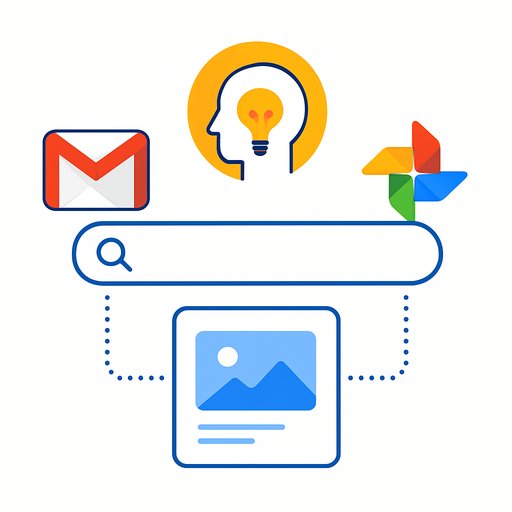
Google is rolling out Personal Intelligence inside AI Mode in Search, a shift toward results that reflect each person's plans, preferences, and history. It connects with Gmail and Google Photos (opt-in) to adapt answers. The experiment is available in the U.S., in English, for paid Google AI Pro and AI Ultra subscribers with personal accounts. Workspace business, enterprise, and education accounts are not included in this phase.
How it works
At the core is Gemini 3, processing queries with signals from connected Gmail and Photos. Think email confirmations, travel bookings, and photo memories. Search for "hotel near my conference," and results may factor in your upcoming reservation. Ask about "best running shoes for cold weather," and answers could reflect brands you've engaged with and the season of your next trip.
The point is less re-explaining context. Connect once, get results that match real-life circumstances.
Privacy and control
Connecting Gmail and Photos is optional, and you can disconnect anytime. Google says AI Mode does not train directly on your inbox or photo library. Model improvements are limited to prompts and responses generated within AI Mode. Errors can happen-misread context, wrong associations-so you can correct responses or send feedback inside the experience.
Why this matters for PR and Communications
Search is getting personal. Visibility will lean less on broad keywords and more on how well your brand fits an individual's moment. Zero-click answers may rise, shifting discovery and consideration into AI-generated summaries. Your story has to be clear, consistent, and ready to be pulled into context-aware responses.
Immediate actions for PR teams
- Clarify brand facts that AI can reference: pricing windows, shipping cutoffs, locations, hours, return policies, and key product specs. Keep this data findable and consistent across owned properties.
- Strengthen first-party data practices with consented email and loyalty programs. Coordinate lifecycle communications so transactional emails carry clear, consistent information that could influence how AI interprets a customer's situation.
- Structure content for entity understanding: product pages with clean copy, FAQs that answer real questions, and schema where relevant. Reduce ambiguity so AI can pull accurate snippets.
- Monitor "share of answer." Track how often your brand appears in AI summaries for priority queries. Gather examples, flag inaccuracies, and create a correction workflow.
- Update measurement. Expect fewer click-throughs from certain queries. Watch branded search lift, direct traffic, and assisted conversions alongside qualitative tracking of AI answers.
- Refresh your privacy narrative. Publish a clear explainer on data use, consent, and benefits for users. Make it easy for comms to reference during media conversations.
- Brief spokespeople. Prepare talking points on personalization, what data is involved, and how users stay in control. Anticipate questions about bias, accuracy, and corrections.
- Plan for misinterpretations. Set up rapid-response protocols to correct AI summaries, supported by canonical sources on your site.
Implications for paid and earned
Paid: Expect greater emphasis on feed quality, message consistency, and creative that maps to specific moments. As results get more individualized, audience signals and product data matter more than broad keyword lists.
Earned: AI summaries may cite brand facts without clicks. Keep press rooms, fact sheets, and media kits current and easy to parse. Ensure images have clear metadata and captions to avoid context errors.
Practical scenarios
- Travel: A traveler searches "late checkout near my flight." If their Gmail shows a 7 a.m. departure, AI Mode could highlight properties that match timing and location. Your hotel page and confirmation templates should make policies and availability unmistakable.
- Retail: A user asks "winter jackets that ship before Feb 3." If their inbox shows a trip next week, AI could highlight inventory and shipping cutoffs. Keep inventory, shipping estimates, and store pickup options consistent across site copy and email.
- Healthcare and finance: Be precise and compliant. Provide plain-language explanations and point to authoritative resources to reduce misreads and ensure safe guidance.
Availability snapshot
Opt-in via Labs. U.S. only for now. English queries. Personal Google accounts. Google AI Pro and AI Ultra subscribers. Not available for Workspace business, enterprise, or education accounts yet.
What to watch next
- Geographic and language expansion, plus potential Workspace support.
- More app connections beyond Gmail and Photos.
- Improved transparency for how AI selects and cites sources.
- Clearer pathways for brands to correct or influence factual details.
- How zero-click behavior affects attribution and media planning.
Resources
For official updates, check Google's Search Labs and AI announcements on the Google Blog.
If you're planning team upskilling for AI-era comms and measurement, explore the AI Learning Path for Training & Development Managers.
Your membership also unlocks: