Practical Applications of AI for Travel Agency Operations
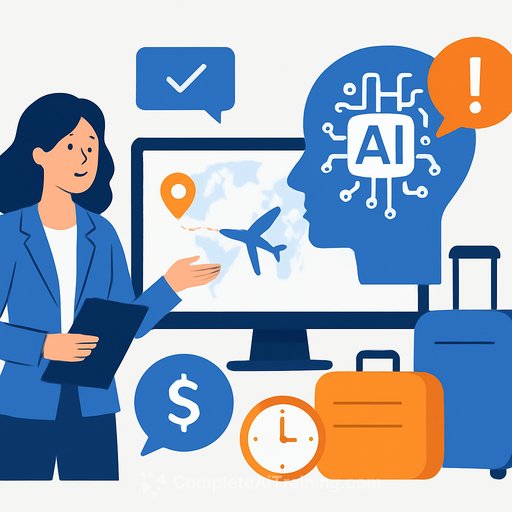
Travelers expect personal service. AI gives operations teams the scale to meet that demand while competing with giants like Expedia and Booking.com.
By late 2025, agencies using generative tools, sentiment analysis, and real-time data pipelines reported faster workflows, stronger personalization, and higher revenue. The win comes from pairing automation with human judgment.
Enhancing Group Travel Coordination
Group trips break down when preferences and budgets clash. AI assistants and shared planning portals collect inputs, propose trade-offs, and create balanced itineraries for families, friends, and corporate teams.
Start with a clear intake template, pre-set budget rules, and standard prompts. Train advisors to review AI suggestions, adjust for context, and lock final decisions. Agencies report faster planning, fewer back-and-forth messages, and higher retention.
- Inputs: dates, budget ranges, must-haves, deal-breakers
- Outputs: consensus schedule, rooming lists, split payments, approval-ready plan
- KPIs: time-to-itinerary, message count per booking, post-trip CSAT
Customer Review Management That Scales
Thousands of reviews on platforms like TripAdvisor and Google shape demand. AI categorizes feedback by topic (service, value, cleanliness), detects tone, and flags trends so teams can act quickly.
Use AI to draft summaries and response suggestions, then keep a human in the loop to correct context and bias. Feed insights into SOP updates, staff coaching, and supplier scorecards.
- Dashboards: top complaints, time-series trends, root causes
- Workflows: auto-tagging, escalation rules, response templates
- KPIs: average response time, issue recurrence, NPS shift
Proactive Travel Risk Management
Health, weather, and geopolitical risks change plans fast. AI can ingest official advisories and forecasts, then surface clear guidance for advisors and travelers.
Build dashboards that score risk by destination, recommend reroutes, and notify clients. Many travel brands combine multiple data types, including social sentiment, to shape strategy and protect revenue.
- Sources to integrate: U.S. State Dept. advisories, WHO travel health, airline ops feeds, weather APIs
- Playbook: detect → assess → notify → rebook → document
- KPIs: time-to-alert, rebooking time, trip disruption rate
Streamlining Customized Quote Requests
Quote requests often turn into long email threads. AI intake forms and assistants gather dates, budgets, preferences, loyalty IDs, and policy constraints upfront.
NLP can summarize the inquiry, validate missing fields, and propose compliant options. Fewer touches for simple cases means advisors can focus on complex, high-value itineraries.
- Guardrails: policy checks, supplier inventory rules, price caps
- Hand-offs: agent reviews draft quotes, adds nuance, confirms terms
- KPIs: time-to-first-quote, conversion rate, cost per quote
Uncovering Emerging Trends via Social Media
Instagram, TikTok, and X reveal destination interest and traveler behavior in near real time. AI scans content and comments - teams can apply techniques from Social Media AI Training for sentiment analysis and mood tracking - to spot rising hotspots and micro-trends before they hit lagging indicators.
Use these signals to test packages, SEO content, and supplier negotiations. Balance with booking data to reduce hype bias.
- Mood tracking: excitement vs. concern by destination
- Signals: booking-intent phrases, seasonal surges, influencer impact
- KPIs: campaign lift, search share, inventory turn
Crafting Hyper-Personalized Itineraries
Tools like ChatGPT Training & Resources, Mindtrip, Layla, and Trip Planner AI can draft daily plans across flights, stays, and dining from profiles and preferences. Agencies can run similar engines with their own prompts, suppliers, and margins.
Keep advisors in control: validate accessibility needs, visa rules, transit times, and cultural fit. Personalization is the differentiator; empathy and local knowledge close the sale.
- Data inputs: traveler personas, loyalty status, past trips, constraints
- Safety checks: visa/entry rules, connection buffers, insurance
- KPIs: upsell rate, repeat bookings, itinerary satisfaction
Implementation Playbook for Operations Leaders
- Define use cases: quote triage, review analytics, risk alerts, group planning
- Pick vendors: API access, audit logs, SOC 2/GDPR readiness, cost per seat
- Data setup: intake templates, tagging taxonomies, prompt libraries
- Human-in-the-loop: approval thresholds, QA sampling, exception routing
- Enablement: role-based training, scenario drills, playbooks
- Governance: model performance reviews, bias checks, incident response
Metrics That Matter
- Efficiency: handling time, touches per booking, advisor utilization
- Revenue: conversion rate, average order value, attachment rate
- Quality: CSAT/NPS, rework rate, complaint volume
- Risk: disruption rate, alert-to-action time, refund exposure
AI adoption is rising because it works at scale. The agencies seeing the best results pair automation with human expertise and clear operating standards.
If your team is building these capabilities, a focused upskilling track helps. Explore role-based programs here: Complete AI Training - Courses by Job.
Your membership also unlocks: