AI ethics guide flagged for questionable citations
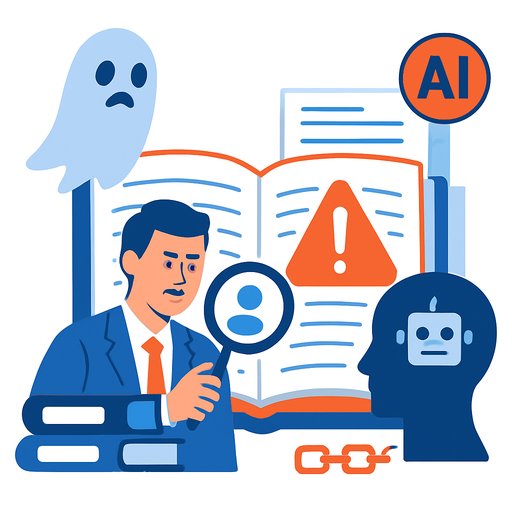
A recent AI ethics guide, published by a major academic imprint, is under scrutiny for dozens of questionable citations. Reports claim several references point to journals that do not exist, raising concerns about the reliability of the work and the review process behind it.
For scientists and research leaders, this is not a niche problem. If sources are fabricated or untraceable, the evidence chain breaks, and downstream work gets shaky fast.
Why this matters
Citations are how we verify claims, replicate methods, and build on prior results. If a reference doesn't resolve to a real journal or a valid DOI, it's noise-worse, it's misleading. Trust is earned one citation at a time.
How fake or faulty citations slip in
- Reference generators and AI tools can produce plausible-looking but non-existent journals or DOIs.
- Copy-paste errors mutate titles, years, or page ranges beyond recognition.
- Predatory or defunct journals get cited without verification.
- Editorial checks focus on style, not source validity.
Quick validation checks you can run in minutes
- Search the DOI on Crossref. No result = high-risk reference.
- Open the journal's homepage. Confirm publisher, ISSN, and current editorial board. Check for indexing in trusted databases you use.
- Scan author pages (institutional profiles, ORCID, Google Scholar) to see if the cited paper exists in their record.
- Check mismatch signals: volume/issue numbers that don't match the year, broken URLs, or page ranges out of scope for the journal.
- Search the title in multiple places (publisher site, Google Scholar, OpenAlex). Zero hits across all = likely fabricated.
- Look up retractions or concerns via Retraction Watch.
What editors and reviewers can implement right now
- Automated DOI and ISSN validation as part of submission checks.
- Require a reference audit: authors confirm accessibility for every citation (DOI or stable URL).
- Flag high-risk patterns: journals with no website history, generic publisher footprints, or sudden bursts of citations from a single source.
- Document AI use in manuscript preparation and reference generation, including tools and versions.
- Random spot-checks of references before acceptance, with a simple pass/fail log.
If you already cited the guide
- Re-verify the specific references you relied on. Replace any that fail basic checks.
- If your paper is under review, add a brief note to the editor and update the reference list.
- If published, consider a short correction that swaps in validated sources.
Build stronger literature habits
- Keep a lab "trust list" of journals and publishers with clear editorial standards.
- Store PDFs or official landing pages for key citations in your project repo.
- Add a pre-submission reference checklist to your lab's SOPs.
- Use citation managers with DOI validation and run periodic link checks.
The bigger picture
AI-assisted writing speeds up drafting, but it doesn't replace source verification. Treat references as data: validate, log, and audit. It's a small time cost that protects your work and your readers.
If your team needs to sharpen AI literacy and research workflows, see our curated AI courses by job for practical, tool-focused training.
Your membership also unlocks: