More AI regulations are coming. Here's what pharma marketers need to know
Federal law hasn't caught up to AI in healthcare yet. States have. And regulators are reaching for long-standing rules to fill the gaps while new ones come online.
For pharma marketers, the message is simple: lead with transparency, disclose AI use, and keep a human in the loop. Do that well, and you reduce risk across chatbots, targeting, and patient support programs.
Key takeaways
- No single federal AI law for healthcare exists yet, but state laws plus HIPAA, FDCA, and agency guidance already apply.
- States like California and Colorado target doctor impersonation and algorithmic discrimination that can impact treatment access and communications.
- Embed three principles everywhere: transparency, disclosure, and human-in-the-loop.
The regulatory picture: old laws, new rules
Expect a patchwork. California and Colorado are defining early boundaries, with other states close behind. Meanwhile, the FDA, FTC, and OIG are publishing guidance and may enforce when marketing crosses into unsafe or deceptive territory.
Existing laws still matter. HIPAA controls PHI use. The FDCA governs promotional claims and labeling. The FTC polices unfair or deceptive practices, including undisclosed AI use and exaggerated performance claims. For broader context, see the FTC's perspective on AI fairness and disclosure here.
AI that impersonates doctors
States are moving to stop AI systems that look or sound like licensed HCPs. California's new rules restrict using titles or language that imply licensure. They also require clear AI disclaimers and a path to contact a human HCP.
Other proposals go further. North Carolina's Senate Bill 624 would require a "health information chatbot license," with documentation on architecture, data practices, and privacy controls before deployment in health contexts.
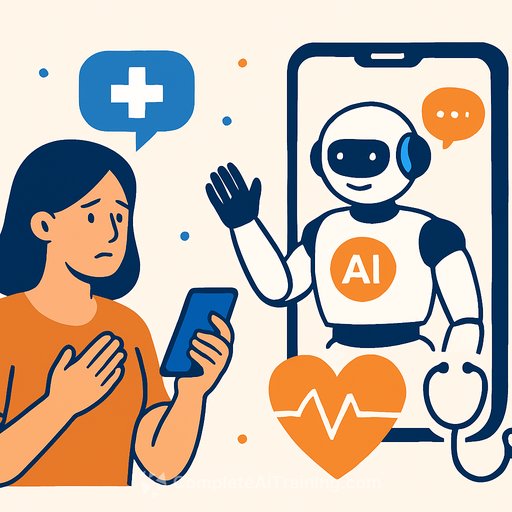
The practical move: if a chatbot is patient-facing, label it as AI, display limitations, and provide a direct route to a human professional. Don't use HCP titles or visual cues that could mislead users.
Algorithmic discrimination and bias
Bias is the risk hiding in personalization, targeting, and journey design. If your models shape who sees what, how often, or at what cost, you're already making consequential decisions.
Colorado's SB24-205 requires companies using high-risk AI (including in healthcare contexts) to conduct annual impact assessments and use reasonable care to prevent algorithmic discrimination. It also gives consumers transparency into the factors behind consequential decisions and access to human review. Read the bill summary from the Colorado General Assembly.
The questions to ask now: Which segments get different treatments or messages? Are outcomes meaningfully different across protected classes? Can a human review and reverse an adverse decision?
What this means for pharma marketers
Regulators want two things: honesty about AI and human accountability. If AI touches patient support, HCP engagement, or audience selection, expect to show your work.
Build AI guardrails that consider state AI statutes, HIPAA, FDCA, FDA/FTC guidance, OIG advisories, and international rules like the EU AI Act for global activity. As one expert put it, smart strategies anticipate every law that could apply-and close the gaps before they become problems.
Your 30-60-90 day playbook
- 30 days: Inventory every AI use case across marketing, patient support, and analytics. Label what's patient- or HCP-facing. Add AI disclosures and human contact paths to any chatbot or assistant.
- 45 days: Stand up a cross-functional AI review (legal, privacy, medical, compliance, marketing, data science). Approve a single policy for disclosure language, opt-outs, and human-in-the-loop reviews.
- 60 days: Launch a bias check for targeting and journey models. Document inputs, features, and segment outcomes. Set thresholds that trigger human review.
- 90 days: Complete an annual AI impact assessment for high-risk systems. Log model versions, training data sources, evaluation metrics, and remediation steps.
Guardrails that hold up under scrutiny
- Disclosure and consent: Tell users they're interacting with AI. Explain limitations. Offer opt-outs and a fast path to a human.
- Naming and visuals: No "Dr." or clinical titles for bots. Avoid UI patterns that could imply licensure.
- Human-in-the-loop: Require human review for high-impact moments: safety risks, clinical guidance, prior auth support, access decisions, adverse event handling.
- Bias testing: Evaluate audience selection, frequency capping, and content variants for disparate impact. Rebalance or constrain models as needed.
- Data hygiene: Separate PHI/PII from modeling where possible. Use minimization and role-based access. Document data sources and retention.
- Model transparency: Keep an internal "model card" for each AI tool: purpose, inputs, known limitations, escalation paths, and human override procedures.
- Content governance: Medical, legal, and regulatory review still applies. AI output is draft, not final. Track sources and prevent hallucinated references.
- Incident response: Define triggers (bias threshold breaches, safety flags, privacy events), who responds, and how you pause or roll back models.
How enforcement could show up
Expect attention on undisclosed AI interactions, bots implying clinical authority, biased targeting that affects access, and claims that outpace evidence. Agencies may act under existing authorities while states enforce new AI statutes.
Marketers who document their decisions, offer human recourse, and demonstrate reasonable care will be better positioned if questions arise.
Put this into practice
- For campaign teams building personalization with safeguards, see AI for Marketing.
- For regulatory and compliance leaders setting policy and oversight, explore the AI Learning Path for Regulatory Affairs Specialists.
Bottom line
Transparency, disclosure, and human-in-the-loop are the common thread across new and existing rules. Build them into every AI touchpoint, document the details, and keep iterating as state laws evolve. The teams that treat this as an operating system-not a checklist-will move faster with fewer surprises.
Your membership also unlocks: