AI-Powered Humanoid Robots Transform SAP Warehouse Pilot
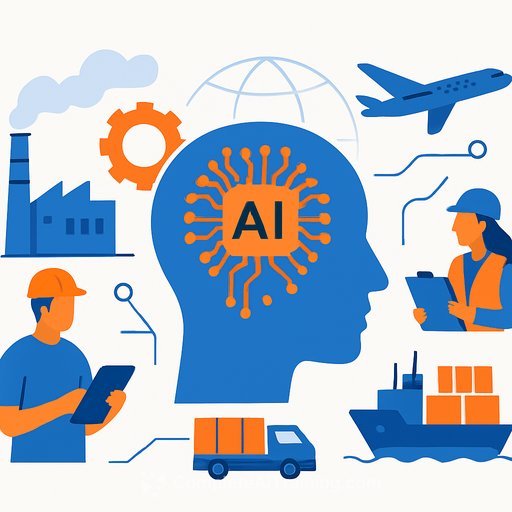
Humanoid robots are stepping into real warehouse work, not as demos, but as part of connected operations. SAP and refrigeration specialist BITZER ran a pilot under Project Embodied AI to test how autonomous robots can plug into enterprise systems and act on live business data.
The goal: integrate physical robots with SAP Business AI and SAP Extended Warehouse Management (EWM) so machines can make on-the-spot decisions-without fragile middleware or constant human oversight.
Why BITZER made sense as a test bed
BITZER builds refrigeration and AC systems for sectors where timing and temperature control matter-healthcare, logistics, retail. As a RISE with SAP customer, they already run cloud-based enterprise systems, which made integration cleaner and faster.
"Optimising business processes is as important as product innovation at BITZER," says Christian Stenzel, Vice President of Organisation and IT. With demand-driven production as a priority, the team is looking for automation that adapts in real time, not just fixed-motion machinery.
Inside the pilot
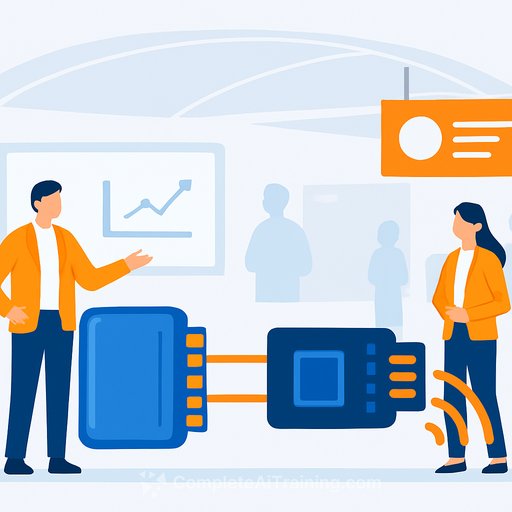
The proof of concept dropped NEURA's 4NE1 humanoid robot into BITZER's warehouse and connected it directly to SAP EWM. No custom middleware. No manual dispatching. The question was simple: can a robot run against the same system your people use-and keep up across a 24-hour cycle?
"The proof of concept at BITZER is great first step for experiencing first-hand how the impact of SAP Business AI can be extended into physical operations," says Dr. Lukasz Ostrowski, Head of Embodied AI and Robotics at SAP.
What worked
- Direct integration: Robots communicated with SAP EWM without extra integration layers, cutting complexity and likely shortening deployment timelines.
- Autonomous operation: Tasks ran end-to-end without human intervention, including overnight and across shift changes.
- Continuous adaptability: The system responded to fluctuating demand during 24/7 production cycles-important for cold-chain reliability.
- Automated material orders: Orders were generated by the system, reducing manual entry and the risk of delay or error in time-sensitive environments.
Why this matters for Operations and Product
- Robots as first-class system users: Treat robots like standard EWM users with roles, permissions, and event-driven tasks-not as one-off integrations.
- Fewer bespoke connectors: If your backbone is SAP, direct connectivity lowers project risk and ongoing maintenance.
- Better demand alignment: 24/7 autonomous work helps smooth spikes, especially for temperature-controlled workflows where downtime is costly.
- Cleaner data loops: Automated order creation reduces error propagation and accelerates replenishment and procurement cycles.
What to validate before you scale
- Safety and compliance: Human-robot collaboration zones, fallback states, and stop conditions must be crystal clear.
- Task fit: Start with structured tasks (putaway, staging, replenishment). Leave messy edge cases for later.
- Connectivity and uptime: Ensure Wi-Fi/5G redundancy, battery strategy, and service windows.
- Data quality: Location accuracy, master data hygiene, and barcode/RFID reliability drive robot performance.
- Economic model: Compare cost per productive hour vs. human+equipment, including maintenance and integration overhead.
How to run your own pilot
- Pick one workflow with clear SLAs (e.g., material staging to lineside) and define success metrics: cycle time, error rate, uptime, handoffs.
- Verify EWM events and APIs that will trigger robot actions. Map exceptions and human overrides.
- Stand up a digital twin or sandbox first. Simulate loads across a full shift before floor trials.
- Create standardized work for exceptions: damaged labels, blocked aisles, missing bins.
- Set guardrails: cap scope, lock daily KPIs, and run weekly reviews with Ops, IT, and Safety.
What's next
SAP plans further proofs of concept as Project Embodied AI moves from isolated pilots to repeatable patterns inside enterprise stacks. For teams in Operations and Product, the signal is clear: the closer robots get to your core systems, the more they can help you move faster with fewer integration headaches.
Learn more about the core tech here: SAP Extended Warehouse Management and NEURA Robotics.
If you're upskilling teams for AI-driven operations, explore practical training paths: AI Learning Path for Supply Chain Managers.
Your membership also unlocks: