AI Takes Over Construction Sites as Companies Automate Physical Labor
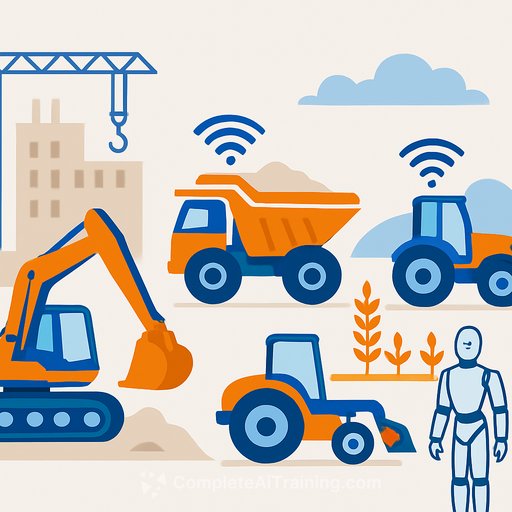
Small construction equipment moved soil and materials across a Silicon Valley parking lot on March 31, steering around obstacles and placing materials in optimal positions-all without a driver. The machines were controlled by artificial intelligence from a remote control room, a demonstration by Applied Intuition of how industrial sites will operate in the near term.
Applied Intuition, which builds AI software and operating systems for vehicles, robots, and construction equipment, valued at $15 billion as of June 2025, held its first "Physical AI Day" to showcase the technology to media and analysts. The company's chief executive, Qasar Younis, said the shift centers on "embedding intelligence into things already around us."
Autonomous Equipment Moves Beyond Vehicles
Physical AI extends far beyond self-driving cars. Applied Intuition co-developed an autonomous truck operating system with Volkswagen's Traton and has deployed level 4 autonomous trucks on commercial routes with Isuzu in Japan. The technology now reaches mining, construction, and agriculture-sectors where labor shortages and dangerous conditions have long plagued operations.
John Deere developed an automated system where tractors recognize obstacles through cameras and sensors, with AI plotting routes. Farmers can now control multiple machines from a smartphone. Caterpillar is building autonomous mining equipment, while defense contractors including Anduril and Shield AI focus on drone and unmanned vehicle autonomy.
NVIDIA created an autonomous driving model called Alpamayo and a 3D simulation environment called Omniverse to train it. The simulation approach lets companies test systems before deployment at scale.
Sites Shift to Remote Oversight
As operations become fully autonomous, human roles narrow to management and supervision from control centers. Companies anticipate the shift will address chronic labor shortages in dangerous and physically demanding environments.
The military drone market illustrates the scope. It is projected to grow from $42 billion currently to $260 billion by 2035, according to Fortune Business Insights.
For operations professionals, the shift means rethinking how teams manage sites. Fewer workers will be on-site, but oversight and problem-solving from control rooms will require new skills. Learn more about AI for Operations and AI Agents & Automation to understand how these systems function and their operational requirements.
Your membership also unlocks: