Study: College Students Edit AI, Don't Simply Copy It
Undergraduate writers are negotiating when and how to use generative AI in their assignments, rather than simply letting the tool write for them, according to a pilot study from Kennesaw State University.
Researchers tracked 20 students during 20-minute writing sessions using think-aloud protocols-a method where participants verbalize their thoughts while working. The study examined how students actually interact with AI during composition, moving beyond surveys and final paper analysis.
How students actually use AI
Students turned to AI most often at the beginning of the writing process to generate ideas or draft a thesis. One student described the approach plainly: "After [generating a few ideas,] I usually just use that [output] as a prompt."
But the work didn't stop there. Students frequently continued drafting independently after the initial brainstorm. Transcripts show statements like "I think my thesis should be…" or "Let me write this part," indicating they retained control over their argument.
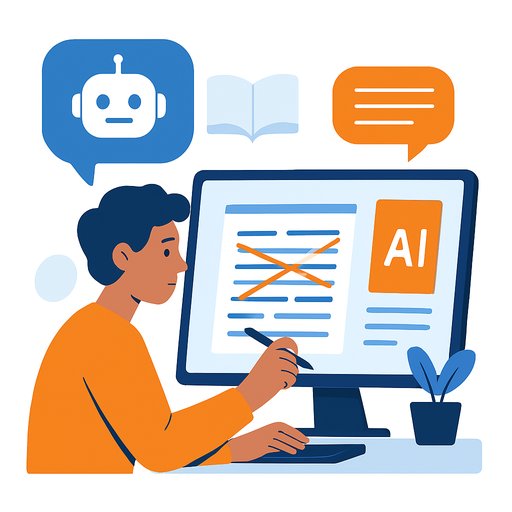
AI text rarely made it into final drafts without editing. Students actively revised generated language, treating AI as a sparring partner rather than a copy source. When AI responses didn't match the assignment, students redirected it. When output felt generic or disconnected from their argument, they switched back to their own writing.
Some students rejected AI suggestions entirely. One participant noted: "I don't really use AI for my research."
When students lean on AI
Students turned to AI during moments of uncertainty or writer's block. As one participant said, "I used a lot of AI because I was struggling." Even then, they typically used it as support while drafting, not as a shortcut to a finished product.
What this means for educators
The findings suggest that understanding how students decide to use AI during composition-not just what appears in the final essay-can inform better assignment design and policy. The research indicates AI enters the writing process during idea generation, revision, and moments of stuck points, while students maintain control over argument, voice, and phrasing.
The current findings come from a small cohort. Researchers are expanding the study to 100 undergraduate participants and plan to examine how neurodivergent writers interact with AI during composition, an area largely unexplored in current research.
For writers working with AI tools, the study offers a practical reality check: AI for Writers works best as a tool within your process, not as a replacement for it. Educators designing AI for Education initiatives may find that transparent policies about when and how students use these tools matter more than blanket restrictions.
Your membership also unlocks: