
AI news ·
Ping Identity's Kelvin Brewer discusses identity as foundation for secure government AI adoption at Cloud Exchange 2026
Government AI without strong identity frameworks becomes a liability, risking data exposure. Kelvin Brewer urges real-time policy checkpoints before scaling.
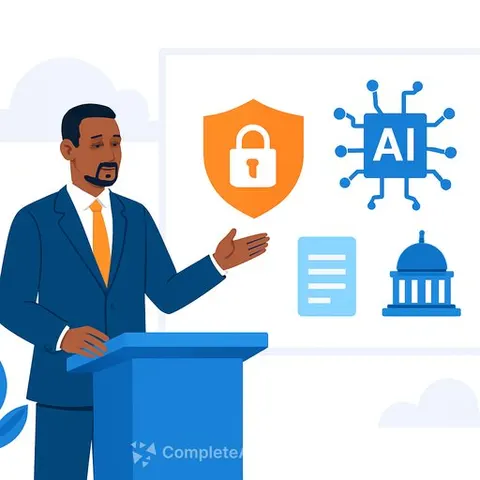
At Cloud Exchange 2026, Ping Identity's Kelvin Brewer will argue that identity management is the bedrock of any secure government AI deployment. Government agencies rushing to adopt AI tools face a hard truth: without a strong identity framework, those systems become liability magnets. Brewer's session, planned for the conference, directly addresses how agencies can move from pilot programs to production without compromising security or compliance.
Identity as a security control point
For government IT leaders, the conversation around AI often centers on model accuracy, data privacy, and vendor lock-in. Brewer's talk shifts the focus to a less glamorous but critical layer: who - or what - gets access. AI agents, automated workflows, and citizen-facing chatbots all need authenticated identities and fine-grained permissions. Without that, a compromised API key or a misconfigured service account can expose sensitive data at scale.
Brewer is expected to outline how modern identity frameworks can enforce policy decisions in real time. For example, an AI service pulling data from multiple agency databases must prove its context-user, device, location, and risk score-before a query is allowed. This approach treats identity as the continuous checkpoint, not just the front door.
Lessons from early government AI rollouts
Several federal and state agencies have already hit roadblocks when bolting AI onto legacy identity systems. A common failure mode: provisioning broad access to a large language model for internal use, only to discover that the model can surface data from silos the user shouldn't see. Brewer's session will likely reference these case studies, showing how identity-aware proxies and dynamic authorization can prevent the overexposure problem.
Ping Identity has been working with public sector clients to integrate its platform with cloud-native AI services. The company's stance is that identity should sit between the user and the AI, acting as a real-time policy engine. This isn't theoretical - similar patterns are already used in financial services to control access to algorithmic trading systems.
Why this matters for government
Government AI projects face a unique tension: the mandate to innovate quickly versus the duty to protect citizen data. A breach tied to an AI tool can trigger congressional inquiries, legal action, and erosion of public trust. Brewer's message is that identity isn't a checkbox to handle after deployment; it's the architecture that makes safe deployment possible. For agency CISOs and CIOs, the practical takeaway is to audit their current AI access patterns before scaling. For those building the skills to do that, resources like AI for Government Courses and AI Strategy & Executive Training can help leaders plan identity-first AI rollouts that align with federal security frameworks.