Pittsburgh's Return as a Hub for Weapons Manufacturing
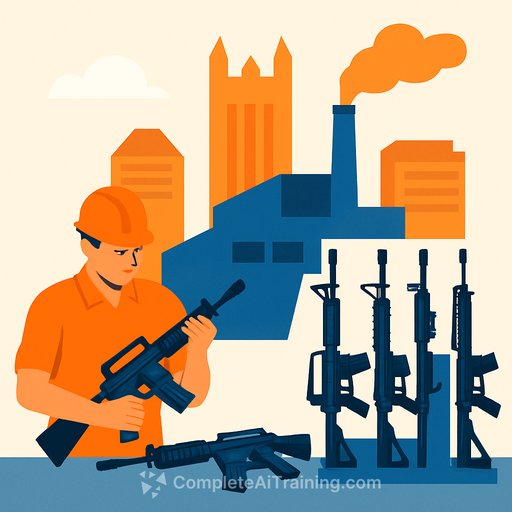
Pittsburgh, once the heart of the nation's steel production during World War II, is positioning itself to regain prominence in weapons manufacturing. Local developers Walnut Capital and RIDC are spearheading efforts to attract AI and defense technology companies. Projects like East Liberty’s AI Avenue and Robotics Row in Lawrenceville focus on building office spaces tailored to tech firms, aiming to boost real estate activity and economic growth in the region.
With modern warfare increasingly relying on remote and automated technologies, Pittsburgh’s existing defense tech companies are well-equipped to meet emerging demands. Joanna Doven, strategic consultant and executive director of the AI Strike Team, highlights the region’s unique capabilities to lead in defense technology development and maintain American supremacy in this sector.
Balancing Growth with Community Impact
Developers see this tech-driven revitalization as a path to renew a city still recovering from the steel industry’s collapse. Their vision includes vibrant neighborhoods featuring diverse businesses, mixed-use housing, and cultural elements. However, critics raise concerns about the displacement of affordable housing and the disruption of established communities.
Areas like Lawrenceville and Bakery Square illustrate this tension, already reflecting the challenges of rising housing costs and gentrification. Middle and low-income renters often find themselves priced out as new office spaces and upscale residences emerge, turning neighborhoods into more lucrative but less accessible locations.
David Vatz from Pro-Housing Pittsburgh points to a critical factor: “Rising housing costs in high-growth areas are caused by a lack of housing. Local governments must legalize more home construction, or prices will keep going up as people seek new jobs and opportunities in our region.”
AI Avenue's Growth: Economic Opportunities and Community Concerns
Bakery Square hosts over 20 AI companies and recently unveiled a new Sensitive Compartmented Information Facility (SCIF), essential for secure communication in defense projects. This facility is expected to attract significant government contracts, tapping into nearly a trillion dollars in Department of Defense funding aimed at automated warfare technologies.
Developers hope these investments will draw even more defense contracts to Pittsburgh’s tech companies. Adjacent neighborhoods like Larimer have seen benefits, including mixed-income housing projects such as the Cornerstone development and plans for 100 affordable units in Bakery Square, a collaboration between Walnut Capital and community groups.
Still, some residents express concern about the impact on Black communities and the erasure of local history—a tension that companies like Duolingo, with offices in these redeveloped areas, have contended with for years.
Lawrenceville Technology Center: Growth and Affordability Challenges
Once a steelmaking hub, Lawrenceville has transformed significantly. RIDC’s acquisition of properties like the Lawrenceville Technology Center has created a robotics and manufacturing hub hosting tenants such as Caterpillar and InnovationWorks. These companies secure federal defense contracts, driving high-paying jobs that boost the local economy.
According to RIDC’s Tim White, the increased disposable income from these jobs has fueled neighborhood vibrancy and rising property values. However, this upward trend in housing prices is a concern for many, especially longtime residents facing affordability issues.
White points to city zoning restrictions as a key factor limiting new housing supply, which contributes to price increases. This contrasts with Inclusionary Zoning policies that require developers to include affordable units but may lead to higher prices on new developments to offset costs. The debate over these policies was a notable issue in the recent mayoral primary.
Continuing Development Amid Ongoing Challenges
Crime rates in Pittsburgh have steadily declined over decades, including in neighborhoods around Bakery Square and Larimer. While some improvements coincide with tech growth, long-term trends show reductions in violence independent of recent development.
However, stark contrasts remain between affluent tech areas and nearby communities facing poverty and displacement risks. Corporate expansions often replace affordable housing, highlighting the challenge of balancing growth with equity.
Walnut Capital’s $850 million corporate and affordable housing project at Bakery Square aims to address some of these concerns, with completion expected by 2027. Community organizations remain cautiously optimistic, acknowledging that while disagreements exist, collaboration between for-profit and nonprofit groups can produce positive outcomes for the neighborhood.
Key Takeaways for Real Estate and Construction Professionals
- Pittsburgh’s shift toward AI and defense tech creates new demand for office and mixed-use developments, offering opportunities for real estate growth.
- Affordable housing remains a critical issue; successful projects often require partnerships between developers and community organizations.
- Zoning laws and housing supply directly impact property values and market dynamics—understanding these factors is essential for sustainable development.
- Neighborhood revitalization involves navigating social concerns alongside economic goals, especially in historically marginalized communities.
Professionals interested in the intersection of technology, defense manufacturing, and urban development may find value in exploring related AI courses and training to stay informed about evolving industry trends.
Your membership also unlocks: