Agentic AI: teaching machines to think like scientists
What happens when AI stops guessing and starts reasoning? Agentic AI brings scientific logic into the center of drug discovery by prioritizing verifiable steps over fast answers.
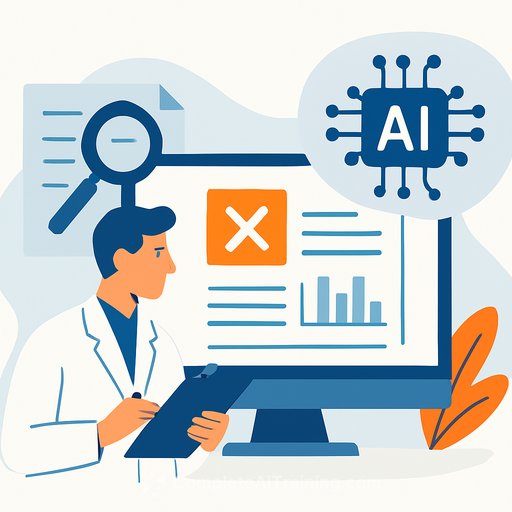
Most AI in biomedicine still focuses on pattern recognition or text generation. Useful, yes, but weak when decisions must be backed by evidence. Agentic systems change the frame: they set objectives, plan actions, gather and check evidence, and verify results before showing their work to a researcher.
From automation to orchestration
Before co-founding Causaly in 2018, Yiannis Kiachopoulos worked on using technology to accelerate knowledge work. His takeaway: AI should connect research processes and support reasoning, not just automate isolated tasks. "We started Causaly in 2018 to help scientists interpret biomedical knowledge faster without losing the rigour of their work demands."
In this setup, multiple AI agents collaborate. One collects and analyzes data, another validates literature, and a Principal Investigator agent checks quality before returning any output. "Causaly Agentic Research runs on an agentic orchestration layer that coordinates a multitude of specialised agents - including a Planner, Executor, Principal Investigator and other agents that are experts in a particular workflow or tool - under the oversight of a human-in-the-loop."
What makes agentic AI different
Generative AI can draft and summarize. Science needs more: clear reasoning with sources you can audit. Agentic AI doesn't stop at an answer; it explains how it got there and re-runs the process if standards aren't met.
"Each agent performs a distinct research function, and the Principal Investigator verifies quality before any output is returned. If standards are not met, the process repeats." In practice, the system behaves like a research assistant that can plan, gather, cross-check, and document every step. "That's how we deliver what we call science-grade AI. It's transparent, traceable and reproducible."
Applying agentic AI to target identification
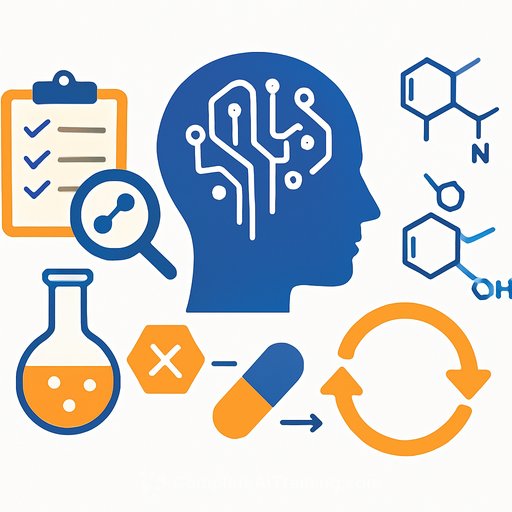
Target identification is messy: literature, experiments, competitive intel, and internal data all collide. Teams often spend weeks reconciling sources before they can prioritize anything. Agentic AI compresses that cycle while keeping the audit trail intact.
"In target identification and prioritisation, teams traditionally spend weeks consolidating literature, experimental data and competitive intelligence. With Causaly these steps are orchestrated automatically." A large biopharma partner completed a target-prioritisation exercise in five days that previously took four weeks, preserving full traceability via an internal Scientific Information Retrieval System (SIRS) and a unified Data Fabric. Every citation and assumption is documented.
Maintaining scientific rigour
Accuracy is a regulatory requirement. Kiachopoulos is explicit: "Rigour is non-negotiable. Every statement Causaly makes is backed by citations and our deep research reports are transparent about any assumptions and limitations, enabling scientists to make informed and defensible decisions."
Causaly enforces multiple layers of verification: approved data sources, a central audit layer, and continuous benchmarking for accuracy and reproducibility. "Our latest benchmarking shows that 99 percent of statements are backed by evidence. In a separate evaluation using the LitQA2 dataset, the system reached 88 percent precision on expert biomedical questions - slightly above the human baseline reported by FutureHouse (87.9 percent) and ahead of other evaluated AI models, while preserving full traceability of sources."
The company also scores reasoning quality. "We've developed a framework to measure foundational accuracy as well as qualitative depth of analysis and argument structure - and transparency of assumptions and limitations. We mirror scientific peer review criteria to evaluate AI agent output as we would that of a human scientist."
Where agentic AI adds the most value
Early wins appear where evidence is vast and fragmented: target identification, biomarker discovery, and drug repurposing. These are high-impact use cases where every week saved matters to program timelines.
By orchestrating literature review, data synthesis, and validation, agentic AI reduces cycle times while keeping everything traceable. "Causaly contributes across nearly every stage of the R&D pipeline from early research through clinical development to post-market activities like pharmacovigilance and medical information management."
The bigger picture
Agentic AI is moving from pilots to operations. A recent PwC survey reports strong adoption among senior executives and rising budgets, signaling that orchestration is becoming standard practice across R&D functions.
In life sciences, the draw is clear: acting as connective tissue across teams and disciplines. "We're seeing teams use Agentic Research to surface insights that link pathway biology to clinical outcomes, connect competitive-intelligence findings with portfolio strategy and ensure that every conclusion is backed by verifiable evidence."
Toward continuous discovery
Kiachopoulos expects agentic AI to manage end-to-end research lifecycles, with multiple agents planning, executing, and validating in partnership with human experts. The goal is simple: let scientists spend less time harmonizing data and more time interpreting results and testing hypotheses.
"Scientists will spend less time collecting and harmonising data and more time interpreting results and testing new hypotheses, which will accelerate the rate of validated discoveries across therapeutic areas." With tighter feedback loops between predictive models and experiments, decision quality improves earlier. "Ultimately, the opportunity isn't just faster research. It's a new operating system for scientific reasoning that increases reproducibility, reduces development risk and gets effective therapies to patients sooner."
How to get started: practical steps for R&D teams
- Define decision-grade objectives: specify acceptance criteria, required evidence types, and review checkpoints.
- Curate data access: integrate approved public and proprietary sources into a single audit-ready layer.
- Map agent roles: Planner, Executor, Principal Investigator, and domain-specific agents tied to your tools.
- Enforce verification: establish citation rules, source traceability, and re-run thresholds when quality is low.
- Benchmark continuously: measure accuracy, reproducibility, and reasoning quality against peer-review standards.
Educating the next generation of researchers
Working with agentic systems is becoming part of scientific literacy. Scientists need to read AI outputs the way they read a paper: examine the reasoning chain, check sources, and challenge assumptions.
For teams building these skills, structured learning paths help. See curated resources for research professionals in the AI Research Courses and explore the AI Learning Path for Training & Development Managers.
As Kiachopoulos notes, we're early. "We're only at the beginning of what agentic AI can do for life sciences."
Meet the expert
Yiannis Kiachopoulos, co-founder and CEO of Causaly
Yiannis Kiachopoulos is an 18-year veteran of strategy, transformation and innovation at global enterprises, with a background in computer science and a focus on transforming life science R&D with artificial intelligence. He advised large companies at Accenture before co-founding Causaly in 2018.
He holds a bachelor's in Japanese language studies, a master's in computer science and an MBA from the Hong Kong University of Science and Technology.
Your membership also unlocks: