
AI news ·
Prada's Jordan Wolfson campaign makes the case for AI imagery in luxury fashion
Prada's AI-generated campaign with artist Jordan Wolfson has split the luxury sector over whether the technology undermines craftsmanship or simply marks the next shift in creative tools. History suggests acceptance usually follows.
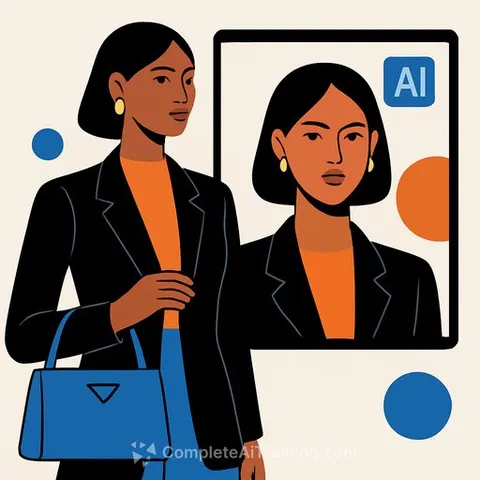
Luxury Brands Turn to AI Imagery as Art World Reconsiders the Technology
Prada's recent campaign featuring AI-generated imagery has forced the luxury sector to confront a familiar pattern: creative industries initially resist new tools, then integrate them into their work. The fashion house's collaboration with artist Jordan Wolfson demonstrates how established brands are beginning to view artificial intelligence as a design instrument rather than a threat.
The campaign has divided opinion. Some see it as a natural evolution in how brands create visual content. Others view it as a shortcut that undermines craftsmanship and authenticity-concerns that echo historical resistance to photography, film, and mechanical reproduction.
History Suggests Acceptance Follows Initial Skepticism
Andy Warhol faced similar criticism when he adopted silkscreen printing. Critics argued the technique was too mechanical, too removed from traditional painting. Warhol used the tool to produce iconic work anyway, and the art world eventually recognized silkscreen as a legitimate medium.
The pattern repeats across creative fields. Photographers were once dismissed as mere technicians. Digital artists faced gatekeeping from traditional media practitioners. Each wave of new technology eventually becomes absorbed into the mainstream.
What This Means for Marketing Professionals
For marketers in luxury brands, the question is practical: How do you use AI imagery without damaging brand perception? The answer depends on transparency and artistic intent.
Brands that acknowledge AI's role in their creative process-rather than presenting generated images as human-made-tend to avoid backlash. Generative Art can serve specific functions: rapid prototyping, exploring visual directions, or creating conceptual work that artists then refine.
The technology works best when it augments human creativity rather than replaces it. A designer might use AI to generate 50 variations on a concept, then spend weeks developing the strongest direction. This workflow differs fundamentally from simply publishing AI output unchanged.
The Brand Risk Calculation
Luxury marketing relies on perceived exclusivity and craft. Audiences pay premiums partly for the story of human skill and intention behind products. Using AI carelessly risks that narrative.
Prada's Wolfson collaboration works because Wolfson is an established artist with a distinctive vision. His use of AI is one tool among many. The campaign signals artistic experimentation, not cost-cutting.
Smaller brands or those without clear creative direction face greater risk. For them, AI imagery can read as impersonal or generic-qualities that contradict luxury positioning.
Moving Beyond the Binary
The real question isn't whether to use AI imagery, but how to use it purposefully. AI Design tools are becoming standard in creative workflows, similar to how Photoshop became standard decades ago.
Marketers should ask: Does this tool serve our creative vision? Are we being transparent about our process? Does the output align with our brand values?
Answering yes to those questions suggests AI imagery belongs in your campaign. Answering no suggests it doesn't-regardless of what competitors are doing.