AI in Education: Pradhan Chairs Startup Roundtable at IIT Delhi; Bharat Bodhan AI Conclave Begins
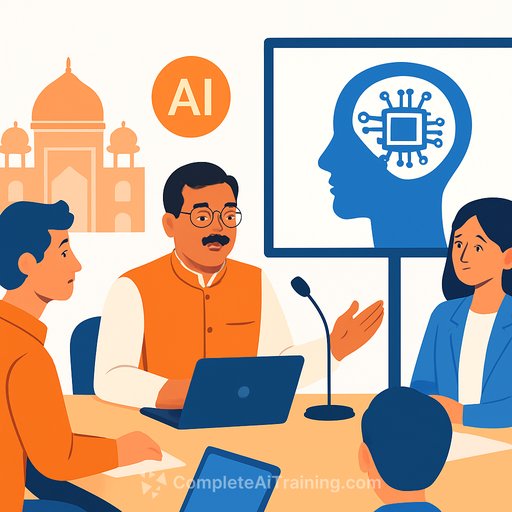
Union Education Minister Dharmendra Pradhan chaired a roundtable at IIT Delhi with founders from 10 Indian startups building AI-led education tools. Ministers Sukanta Majumdar and Jayant Chaudhary were also in the room, alongside policymakers and academic leaders. The focus: bring AI into classrooms and skilling in a way that fits India's priorities under the National Education Policy (NEP) 2020.
This discussion feeds directly into the upcoming India AI Impact Summit, with takeaways set to shape policy on responsible AI, safeguards, and how to scale what works. The timing matters-solutions are maturing, and schools and skilling institutions are ready to test what is practical, safe, and equitable.
Who was in the room-and what they presented
Ten startups shared AI-first tools across K-12 learning, test prep, language learning, upskilling, and skill education, with clear attention to underserved learners and local languages.
- Arivihan
- Fermi AI
- Khare.AI
- Seekho
- SpeakX
- SuperKalam
- SuperNova
- Vedantu
- ConveGenius
- Virohan
Why this matters for educators
The roundtable fits with NEP 2020's push for technology-enabled, multilingual, and inclusive learning. Expect more support for AI tools that extend teacher capacity, improve learning outcomes, and meet learners where they are-across geographies, devices, and bandwidth levels.
If you're planning pilots this year, look for tools that work across Indian languages, support foundational literacy and numeracy, and can plug into your existing systems without extra burden on teachers.
Read NEP 2020 on the Ministry of Education site
Key themes from the discussion
- Responsible AI: guardrails for privacy, bias, and academic integrity.
- Scale: practical models to reach low-resource schools and skilling centers.
- Public infrastructure: government support for digital rails that make AI tools easier to deploy and monitor.
- Context: solutions built for India's languages, curriculum needs, and diverse learner profiles.
What to expect at the Bharat Bodhan AI Conclave
The two-day conclave starts today at Bharat Mandapam, New Delhi. Senior policymakers, researchers, academic institutions, and industry leaders will discuss AI's role in education-what to build, how to adopt at scale, and how to grow national capacity.
Watch for clarity on responsible use frameworks, funding pathways for pilots, and models that strengthen teacher development alongside student outcomes. Expect signals on multilingual access and equitable deployment.
Signals for policy and practice
- Home-grown founders are building for Indian classrooms and skills-from tier-III cities to metros-showing strong, local problem-solving.
- Technology is being framed as a driver of inclusion, with AI expected to support the vision for Viksit Bharat @ 2047.
- EdTech is being treated as national capability, not just a short-term commercial play-expect emphasis on reach, quality, and evidence.
Practical next steps for schools, colleges, and skilling providers
- Start small: run 8-12 week pilots with clear learner outcomes, teacher workload metrics, and data-privacy checks.
- Prioritize equity: choose tools that work offline or in low bandwidth and support Indian languages.
- Set guardrails: define acceptable use, academic integrity policies, and human-in-the-loop review for AI-generated content.
- Back your teachers: add short, repeatable PD sessions focused on classroom use, not just tool features.
- Measure impact: pre/post assessments, attendance, engagement time, and teacher feedback-then decide to scale, iterate, or stop.
Stay updated and skill up
If you're planning AI pilots or building staff capability, curate focused learning for your teams and align it with your academic calendar.
- Explore AI courses by job role
- AI Research Courses - resources aimed at researchers and policymakers on evidence and evaluation.
The takeaway: AI in Indian education is moving from talk to deployment. Keep it responsible, measurable, and context-aware-and bring teachers into the process early.
Your membership also unlocks: