Optimizing Press Releases for Maximum Visibility Across Digital and AI Platforms
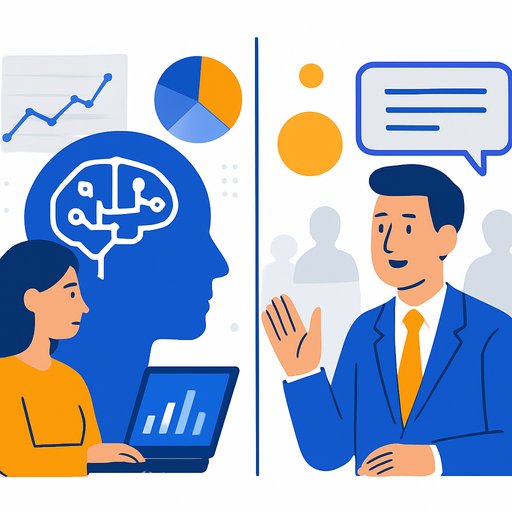
Press releases aren't written for journalists alone anymore. They have to land with editors, search engines, and AI summarizers at the same time.
Yesenia Reinoso, Founder and Principal at Y Communicate, shared a simple framework that helps your release travel further: write so both people and machines "get it" on first pass. Here's the playbook.
The headline formula: Entity + Action + Outcome
Headlines should tell a complete, skimmable story in one line. Use this structure to make your point fast and feed AI the right cues.
- Entity: the subject (company, product, person, city).
- Action: the clear verb (launches, approves, acquires, reports).
- Outcome: the concrete result (reduces costs 15%, expands access to 2M users, adds 120 jobs).
Examples:
- "Acme Health Launches Triage Tool, Cutting ER Wait Times 25%."
- "City of Austin Approves Microgrid Pilot to Reduce Storm Outages."
Subheads that answer the 5Ws + H in one sentence
Use the subhead to load key facts: who, what, where, when, why, and how. One tight sentence helps journalists and AI models extract context without guessing.
- "Announced in New York on Dec. 8, 2025, the pilot installs 12 battery systems in 2026 to keep emergency shelters powered during severe weather."
- "Acme Health's tool, available nationwide today, uses nurse-designed workflows to prioritize patients faster and address staffing shortages."
Quotes that carry weight: unique insight + concrete fact
Quotes should add something only your spokesperson can say. Pair a specific insight with a number, milestone, or verified proof point.
- "Since January, 3,200 customers have enrolled and 84% completed onboarding in under 10 minutes," said COO Maya Patel. "That speed matters when patients are waiting."
- "This agreement locks in renewable power at a fixed rate for five years," said the CFO. "It reduces our energy costs by an estimated 18%."
Make it easy to parse (for people and AI)
- Front-load the core claim: put the main point first in headlines, subheads, and quotes.
- Keep nouns close to verbs: avoid long clauses between the subject and action.
- Use plain language and clear numbers: write "12%," "$3 million," "1,200 customers," not vague ranges.
- Use exact dates: "Dec. 8, 2025" is better than "today," "soon," or "next week."
- One idea per sentence: aim for up to 22-26 words to keep it readable.
Avoid these traps that kill clarity
- Puffery: skip vague superlatives like "groundbreaking" or "industry-leading." Prove claims with data instead.
- Ambiguous pronouns: replace "it," "they," or "this" with the actual noun.
- Split claims: don't separate the claim and its qualifier. Keep them together so the meaning is clear.
- Vague timing: avoid "today," "next quarter," "soon." Use specific dates or time frames.
- Overlong sentences: break them up; short lines are easier to scan and quote.
A simple workflow your team can reuse
- Draft the headline with Entity + Action + Outcome.
- Write one subhead that includes the 5Ws + H.
- Add two quotes with one unique insight and one concrete fact each.
- Scan for parsing: lead with the claim, tighten subject-verb pairs, simplify numbers.
- Replace fluff with facts, add exact dates, and split long sentences.
- Final pass: read aloud; if you stumble, your reader will too.
Why this works
Editors need quick, verifiable facts. AI systems reward clarity, structure, and consistent signals. This formula gives both what they want, without extra work on your side.
Helpful resources
Level up your AI fluency
If you're building AI-first media workflows, curated learning can save you time. Explore courses for communications professionals at Complete AI Training.
Credit: Insights from a session with Yesenia Reinoso, Founder and Principal at Y Communicate, in "The New Press Release: Adapting Media Materials for Social, Search and AI Aggregators."
Your membership also unlocks: