AI Is Flooding the Charts. Here's How Creatives Keep Music Human
Back in 1999, during a TIME interview, Prince asked that the tape recorder stay off. He didn't trust what future tech might do with his voice. That sounded paranoid then. Today it reads like a warning label.
We now have AI-powered acts showing up on Billboard's airplay and sales charts. Xania Monet made a splash, and Breaking Rust hit the top of a country sales chart. Billboard notes at least six AI or AI-assisted acts have appeared on its charts in recent months-likely more, because disclosure is murky. A Deezer/Ipsos survey found 97% of listeners couldn't tell a human-made track from an AI-made one.
The risk isn't just that AI can mimic us-it's that we'll start mimicking it
Music is trend-driven. If AI products dominate, humans will start echoing the machines. That's the death spiral: clean, efficient, soulless slop.
Pop has always wrestled with authenticity. Beyoncé fielded "is this country?" critiques around Cowboy Carter. Kendrick Lamar and Drake sparred over who truly represents hip-hop. Kurt Cobain once framed fakery as the worst crime in art. The point: authenticity isn't a bonus feature in music-it's the product.
Ralph Ellison described the blues as keeping painful experience alive long enough to transform it into lyric truth. Software has no lived experience to transform. It can predict the next note, but it can't pay the cost.
Stop calling AI outputs "artists"
Words matter. "AI artist" anthropomorphizes a system that never had a childhood, a broken heart, or rent due. Call them what they are: AI products.
Then separate them. If Billboard can track everything from Tropical to Americana, it can host a Hot AI Products Chart. Quarantine AI products away from human artists who carry real financial and emotional weight-credit cards, mortgages, student loans, kids, bandmates, all of it.
Signals from the industry
At least one major broadcaster has pledged not to play synthetic vocalists pretending to be human. That tracks with research showing most listeners crave "Guaranteed Human" content. There's appetite for authenticity-if we label it and protect it.
Nick Cave reminded fans that creativity has meaning because it costs something. Even God took a day off after creating, he joked. AI doesn't sweat, slog, or rest; it doesn't struggle. That's why its output reads as empty calories unless a human is doing the meaning-making.
The creative playbook: Protect your voice, use tools without losing soul
- Carve a fingerprint. Double down on timbre, phrasing, lyrics, and imperfect choices that scream "you." The weirder and more specific, the harder it is to clone.
- Document provenance. Keep stems, session notes, time-stamped drafts, and behind-the-scenes clips. Proof of process builds trust and helps enforce rights.
- Label the work. Clearly state "Human-performed" or "AI-assisted" on releases, videos, and socials. Your audience will reward transparency.
- Write AI clauses into every contract. No training on your voice, image, or catalog without explicit permission and payment. No synthetic replicas.
- Use AI as an instrument, not an impersonator. Speed up comps, organize sessions, sketch harmonies. Don't outsource your voice or ask a model to "sound like X."
- Build direct channels. Email lists, memberships, and VIP drops beat algorithm roulette. The closer you are to fans, the less replaceable you are.
- Go where AI can't: live. Shows, listening parties, writing camps, Q&As. Human presence converts casual listeners into lifers.
- Join coalitions. Support efforts that demand consent, credit, and compensation for training on human works.
If you want structured ways to work with AI without losing the plot, explore practical courses for creatives at Complete AI Training or brush up on ethical prompting basics here: Prompt Engineering.
What labels, DSPs, and charts should implement now
- Explicit labeling: "Human," "AI-assisted," or "AI product." Make disclosure a submission requirement.
- Separate charts and playlists for AI products. Don't pit synthetic output against human artists for the same accolades.
- Consent-based training. If a model learns from a catalog, pay for the license, credit the contributors, and share downstream revenue.
- No synthetic vocal cosplay. Ban AI replicas that imitate living or deceased artists without consent.
- Watermarking and provenance. Adopt standards for source files and metadata that trace authorship and tools used.
- "Guaranteed Human" badges. Give audiences a switch and let them opt in or out. Then publish the data.
Innovation without pretending to be human
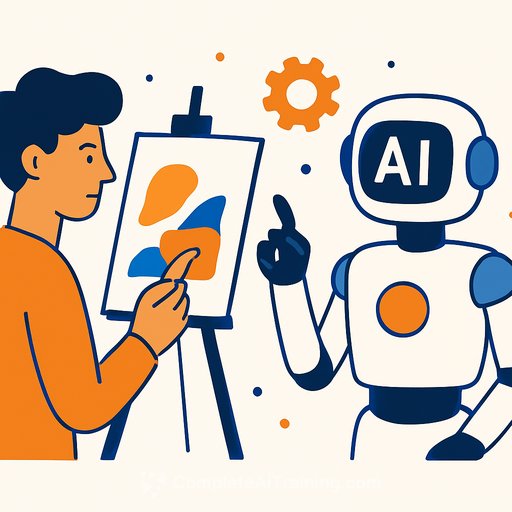
New tools aren't the enemy. Bob Dylan plugging in at Newport wasn't a betrayal; it was a choice to expand the palette. That's the bar for AI: expand the palette without stealing the painter.
Right now, too much AI output is a mirror held up to human catalogs without fair pay. Thousands of musicians are already pushing back and coordinating releases to spotlight the issue. If AI products take over without guardrails and compensation, we're headed for an endless remix of yesterday.
Choose the future you want to hear
Artists, audiences, and execs have to decide what gets celebrated and what gets siloed. Keep the human center intact. Use the tools, keep the soul.
If AI becomes the headliner, creativity gets priced in pennies and meaning gets priced out. Let's not outsource the ache that makes music worth making.
Your membership also unlocks: