
AI news ·
Princeton merges five research units into new data and artificial intelligence unit, lays off survey research director
Princeton merged five research units and laid off its survey director of 28 years. Faculty warn the unannounced merger lacks governance and threatens future projects.
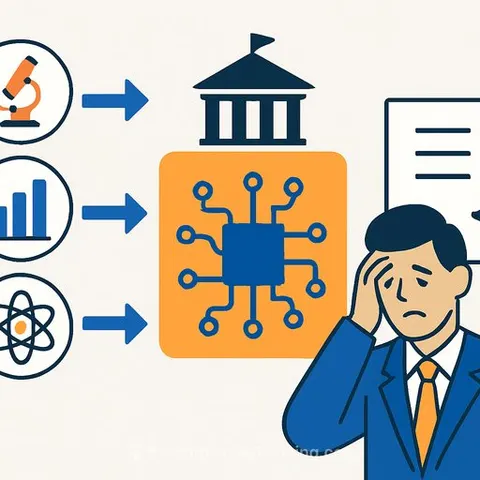
Princeton University merged five research units focused on data, computing, and artificial intelligence into a single entity over the summer - and laid off Edward Freeland, the executive director of the Princeton Survey Research Center who had spent 28 years helping hundreds of researchers design and execute survey projects. The new unit, called Data and Intelligent Systems (DaIS), was created without public announcement or clear governance, leaving faculty unsure who makes decisions and how survey research will continue.
The merger and its immediate cost
DaIS absorbed the Princeton Survey Research Center, the Center for Statistics and Machine Learning, the Data Driven Social Science Initiative, the Princeton Institute for Computational Science and Engineering (PICSciE), and the AI Lab. University spokesperson Jennifer Morrill said the unit aims to "support Princeton's artificial intelligence and data science research communities." But key operational details remain opaque. DaIS has no online presence besides a lecturer job posting, and faculty who served on executive committees of the merged units say they were not consulted about the restructuring.
Freeland learned he was being laid off in May when an HR representative showed him a new organization chart. Two of his staff members were moved into DaIS, but his position was eliminated. He had planned to test AI telephone interview services and systems for detecting bot survey respondents over the summer. "Someone came from HR to show me the new organization chart," Freeland said. "Two of my staff members were going to move over to it, but I was not in it."
Uncertain governance and faculty concerns
DaIS is led by two co-directors: politics professor Arthur Spirling, former director of the Center for Statistics and Machine Learning, and computer science professor Tom Griffiths, former director of the AI Lab. Remi Moss, previously executive director of the AI Lab, serves as DaIS's executive director. An executive committee will handle strategic planning, but faculty from the absorbed units do not yet know their role. English professor Meredith Martin, who was affiliated with four of the merged units, said, "It isn't clear to me, as a faculty member, executive committee member, or affiliated faculty member, who is making the decisions, and when and why."
Martin added that the lack of communication is a side effect of rapid institutional change. "It's not like [the merger] has been hidden. It's more that the things are happening as quickly as they can manage, but institutional organizational work takes a lot of time," she said. The university declined to confirm whether other employees were laid off or if budget cuts drove the merger, which follows layoffs in other campus programs this spring.
Survey research expertise lost
Freeland's departure raises questions about whether DaIS will sustain the Survey Research Center's work. Psychology professor Eldar Shafir and sociology professor Paul Starr both predicted that the university's survey research capacity will suffer. Freeland helped researchers obtain real data at a time when AI-generated bot responses threaten the validity of online surveys. He estimated he saved the university millions of dollars by negotiating contracts and administering projects himself.
"Freeland has provided not just technical advice, but also a great deal of counsel about how to do the research," Starr said. Shafir argued the layoff was handled without regard for downstream effects on students and faculty. "Those who made these decisions did not ask themselves the imputed cost of this move on students' future research, on the seniors who are planning to do a survey this coming year, on faculty whose research had to stop in the middle," he said. "It was all done unceremoniously, with little fanfare, just announced and without any consultation, and that was very, very frustrating and not Princeton-like."
Freeland sees his layoff as part of a broader shift in academia, where survey research is losing ground to AI and data science. "In some ways, it's viewed as old technology, so we're either moving on to AI or other kinds of data science, trying to do more to extract data from these troves of administrative data or social media," he said. This realignment mirrors a growing institutional focus on AI for Science & Research, as universities consolidate resources around computational and data-driven fields.
Why this matters for science and research professionals
When a research university restructures its data and AI units, the choices made about governance and staffing directly affect which methodologies thrive and which atrophy. The quiet dissolution of a survey research center with decades of institutional knowledge shows how administrative decisions can erase practical expertise that students and faculty rely on. For professionals working in research, the Princeton case is a reminder that interdisciplinary initiatives often require transparent faculty governance and a clear plan for preserving specialized skills - not just a new org chart.