ProducerAI joins Google Labs: what product teams need to know
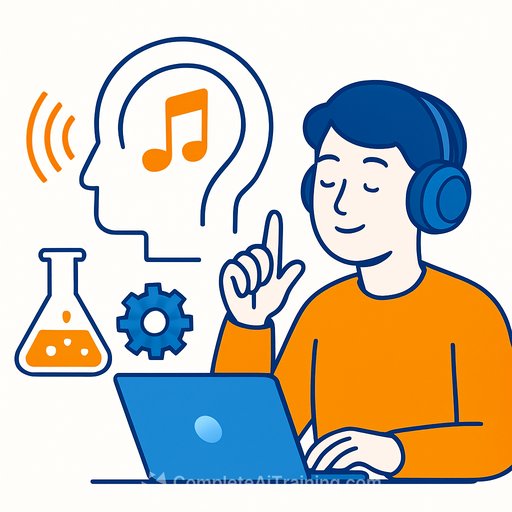
ProducerAI is now part of Google Labs with a clear goal: help creatives make the music they hear in their heads. For product developers, this is a signal. Music creation is moving from static tools to collaborative, AI-assisted workflows with strong controls, provenance, and community features baked in.
What ProducerAI does
ProducerAI acts like a co-creator. It can help write lyrics, refine melodies, and even push into new genres. You can start with a prompt like "make a lofi beat," then iterate with production moves like reverb throws or tightening the low end-without leaving the flow.
Under the hood, it uses models from Google DeepMind: Gemini, a preview of Lyria 3 for high-fidelity music generation, Veo for video-related workflows, and Nano Banana for lightweight tasks. Every output is embedded with SynthID, Google's imperceptible watermark for identifying AI-generated content. Learn how SynthID works.
ProducerAI was shaped with input from working artists across skill levels, including Grammy-winning collaborators.
"We are so grateful to see how this platform continues to evolve. It's truly crafted around the musician's experience. The founders are incredibly technical, but natively musicians, and understand the nuances of what makes a platform truly be an additive tool in the creation process." - Alex Pall, The Chainsmokers
Why this matters for product development
- Creative control is non-negotiable. Lyria 3 introduces granular parameters: tempo control, time-aligned lyrics, and model awareness of rhythm, arrangement, and structure. This supports real production workflows instead of one-shot generations.
- Iterative UX beats one-off outputs. The flow from a simple prompt to detailed mix changes suggests interfaces that make micro-edits fast: effect sends, dynamics, arrangement tweaks, and A/B comparisons.
- Content provenance is table stakes. SynthID watermarking is embedded by default, offering traceability without hurting the creative process.
- Community mechanics amplify value. ProducerAI's "Spaces" lets users create instruments, effects, and full signal chains-from simple keyboards to node-based modular patches-then share and remix them. Think user-generated tooling, not just user-generated content.
- Multi-modal hooks are growing. With Veo in the stack, be ready for music-to-video and video-aware music flows, opening use cases for music videos, sync previews, and social content.
How ProducerAI and Google Labs fit together
ProducerAI uses a preview of Lyria 3, a high-fidelity, professional-grade music model built for production-quality output. It pays attention to musicality, not just texture. That means more reliable structure, timing, and arrangement control-key for real tracks, not demos.
Spaces is the feature to watch. It turns natural language into new instruments and effects, then exposes a node-based environment for deeper users. These mini-apps are shareable and remixable, which encourages a marketplace of reusable building blocks inside the product.
Building on prior exploration
ProducerAI builds on work with Google DeepMind and YouTube via the Music AI Sandbox-experimental tools for pros who want AI as a collaborator. Partners like Wyclef Jean used Lyria during the creation of "Back From Abu Dhabi," feeding real-world feedback into Lyria 3. The takeaway: iterate with professionals early, then generalize to broader creative communities.
Product takeaways you can apply now
- Design for looped creation: prompt → edit → compare → share. Make the next best action obvious.
- Expose low-level controls (tempo, key, arrangement, lyrics alignment) alongside higher-level "style" guidance. Let users steer both.
- Ship provenance by default. Bake in watermarking and disclosure UX so creators and platforms can trust outputs.
- Invest in user-generated tooling. Shareable, remixable mini-apps (Spaces) turn power users into force multipliers.
- Plan for multi-modal. Music, lyrics, stems, and visuals work better when linked. Model choices should reflect that.
- Prioritize speed. If creators can audition changes in seconds, they'll stay in flow and ship more.
Availability
ProducerAI is available globally with free and paid plans at producer.ai. It's built for experimentation and production, whether you're sketching ideas or finishing tracks.
Next steps for your team
- Evaluate Lyria-powered workflows for your roadmap, especially if your users need tempo, structure, or lyric timing control.
- Prototype "Spaces-style" shareable tools for your ecosystem. Start with one high-value instrument or effect and build a remix loop.
- Review watermarking and disclosure policies early. Align legal, platform, and creator experience.
- Upskill your team on Google AI tech and model integration: Google AI Courses.
Your membership also unlocks: