AI Product Liability Is Becoming the Primary Legal Framework for the Next Wave of Litigation
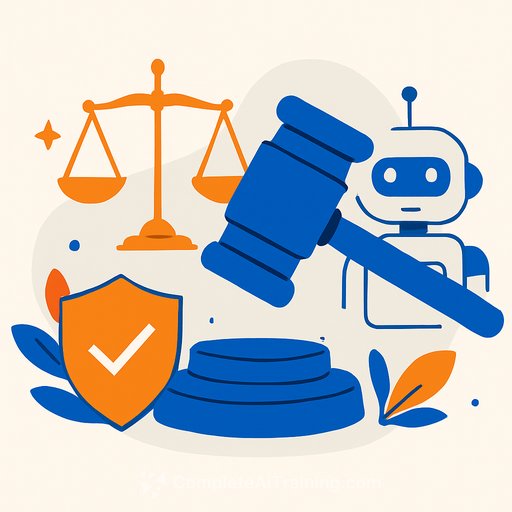
Courts are consolidating AI litigation around product-liability doctrine, a shift that will shape how companies defend themselves and what design decisions matter most in litigation. Early cases test whether consumer-facing AI applications qualify as products-not services-and whether alleged harms fit traditional categories: design defects, inadequate warnings, or foreseeable misuse.
This matters for product development teams because product-liability law is built to evaluate mass-distributed technologies through repeatable design choices, guardrails, and user experience. As AI functionality embeds into everyday applications, plaintiffs have stronger incentives to describe the AI-enabled experience as a product and litigate it the way courts already handle other complex technologies.
How Plaintiffs Are Reframing AI Disputes
A threshold issue in these cases is how courts characterize generative AI outputs. Defendants often argue that chatbot responses are protected expression, attempting to reframe claims as liability for speech. Plaintiffs increasingly draft complaints to target the architecture of the deployed system-guardrails, defaults, escalation pathways, and marketing-so the case looks like a product-defect dispute instead.
Garcia v. Character Technologies, Inc. (M.D. Fla., October 2024) is an early indicator. The plaintiffs alleged a 14-year-old user formed an intense emotional relationship with a Character.AI chatbot and died by suicide. The complaint tied the alleged harm to product design and interaction patterns. The court treated the mass-marketed chatbot app as a "product" under strict-liability pleading, permitting theories that reach upstream technology providers and manufacturers-showing how product-liability concepts extend beyond the branded application.
Raine v. OpenAI (Cal. Sup. Ct., August 2025) illustrates the same strategy. Parents of a 16-year-old alleged that ChatGPT fostered emotional dependency, provided self-harm instructions, and lacked adequate safeguards. The pleadings emphasize guardrails, crisis-intervention behavior, and whether monitoring signals should have triggered different product behavior. Multiple coordinated actions signal a familiar products-litigation dynamic: plaintiffs developing pattern-of-conduct evidence around design choices, testing timelines, and warning strategies.
Nippon Life v. OpenAI (N.D. Ill., March 2026) shows that AI product-liability theories extend beyond personal injury. An insurer sued OpenAI to recover costs from AI-assisted, meritless legal filings, including citations to nonexistent cases. The case highlights institutional economic-harm theories and how terms and disclosures may be litigated as notice and risk-recognition timelines.
Nevada v. MediaLab AI, Inc. (Nev. Dist. Ct., 2025) demonstrates state-level enforcement. The Nevada attorney general sued a tech company for alleged harms to youth, claiming the app is defective and "unreasonably dangerous" because it lacks safety features to protect minors from predators. The lawsuit shows how states are holding AI platforms responsible for user harm while shaping public policy.
Why Product Liability Fits AI Deployments
Product-liability doctrine is designed for technologies that reach users at scale through repeatable experiences-exactly how many AI applications are distributed. As courts decide whether specific AI applications are "products" or "services," plaintiffs plead traditional theories: design defect (guardrails, interaction design, safety features), failure to warn (limitations and foreseeable misuse), and negligence (reasonable testing and monitoring).
A second theme is supply-chain liability. Pleadings suggest plaintiffs will test theories reaching beyond the model developer to the enterprise that brands and deploys the system, as well as upstream providers that allegedly enabled the final product's integration.
Regulation Is Setting the Standard
Policy developments increasingly use product-liability language: what a product is, who is in the distribution chain, and how responsibility is allocated when software causes harm. For AI, these frameworks influence pleading strategies and can supply persuasive authority for defect and foreseeability arguments even where claims remain common-law tort.
The European Union's revised Product Liability Directive (PLD) treats software-including AI systems-as "products," extends strict-liability concepts across the distribution chain, and covers parties that substantially modify AI systems. Member states must transpose the directive by December 2026.
In the United States, California has enacted targeted statutes including AB 316 (addressing "autonomy" defenses) and SB 243 (companion chatbots). These state laws may be cited by plaintiffs to argue foreseeability and to frame what safety features are reasonable in particular deployment contexts.
For multinational products, the EU framework can influence more than European litigation. The PLD's concepts-software as a product, coverage of substantial modifications, and supply-chain responsibility-are likely to appear in US complaints and expert reports as persuasive reference points, particularly where companies market a single AI-enabled product across jurisdictions.
What Product Development Teams Should Know
Courts will continue testing the product-versus-service line, a characterization that determines whether strict-liability theories are available. Pleadings increasingly litigate AI "architecture"-guardrails, escalation design, and user experience choices-rather than isolated outputs. Liability theories are also moving up and down the supply chain as plaintiffs explore component-part and substantial-participation theories.
For companies looking to reduce exposure, two disciplines consistently matter in product cases: defining the product and substantiating the design story.
- Map the deployed system. Document the model and version, prompts, tool connections, retrieval sources, and safety settings. This avoids ambiguity about what the product was at a given point in time, particularly where behavior changes with updates.
- Document design decisions contemporaneously. Records of testing, risk identification, and safety tradeoffs become the evidentiary backbone of defect and foreseeability arguments. They allow a defendant to explain not just what was built, but why the design choices were reasonable when made.
Learn more about AI for Product Development and AI for Legal to understand how these frameworks apply to your work.
The Outlook
Early AI cases and developments like the PLD signal a broader trend: established product-liability doctrine is migrating into AI contexts. Over the next several years, courts will supply threshold answers on product-versus-service characterization, the viability of design-defect framing for AI architecture, and how autonomy and causation arguments are handled. That combination of litigation and legislation makes product liability the likely focal point for the next wave of AI disputes.
Your membership also unlocks: