Professors Design AI Tools That Challenge Students Instead of Answering for Them
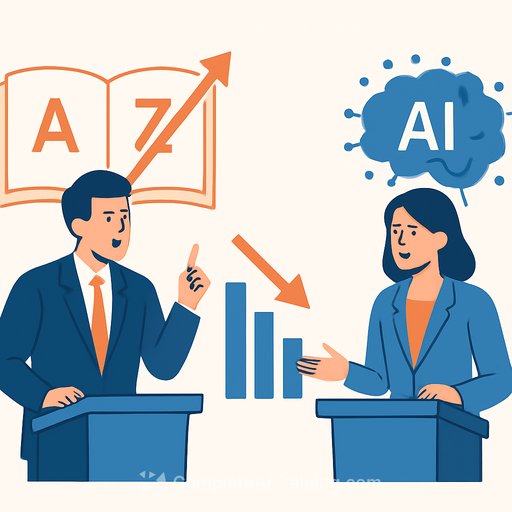
Columbia Business School professor Dan Wang noticed the problem in fall 2022. Students were asking ChatGPT to summarize case studies before class, which made classroom discussions shallow and predictable.
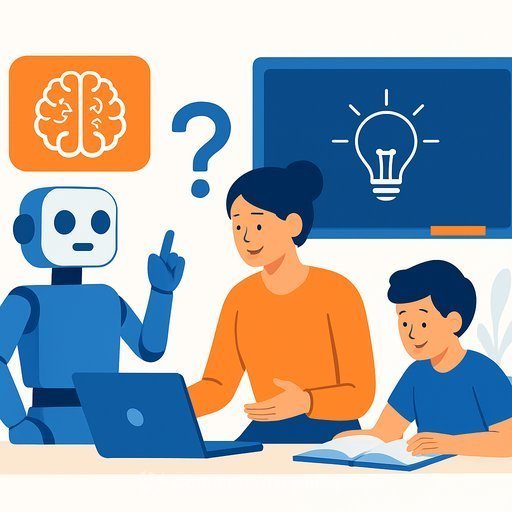
His solution: an AI app called Caisey that does the opposite of what most AI tools do. Instead of providing answers, it asks questions and pushes back on student arguments.
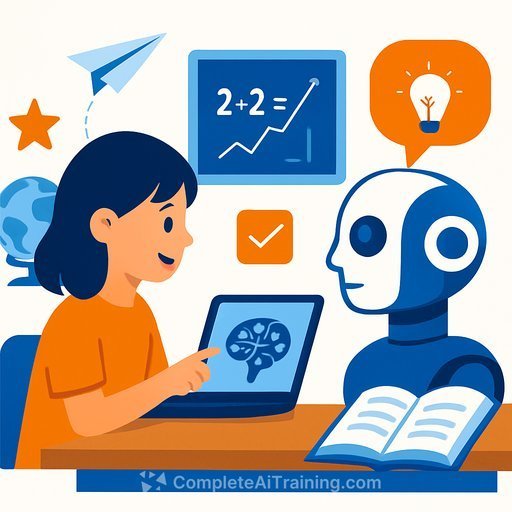
When a student opens Caisey to prepare for class, the app might ask whether Netflix should invest more in original content or rely on licensing. After the student answers, Caisey counters with a competing argument. The conversation continues with the app pointing out gaps in reasoning and suggesting better evidence. Students then walk into class already practiced at defending their positions.
Wang said the concept isn't new. It mirrors the Oxbridge tutorship model-one instructor working closely with one or two students on deep, thoughtful exchanges. Before AI, that personalized approach was difficult to scale. Now thousands of students at Columbia and 15 other institutions, including business schools at UC Berkeley, University of Pennsylvania, and University of Virginia, use Caisey.
Other Schools Build Specialized Tools
Faculty members across disciplines are designing similar tools. At Georgia Institute of Technology, an electrical engineering professor created an AI tutor that guides students through circuit analysis problems without handing them solutions. At Arizona State University, faculty-designed AI helps health sciences students practice with simulated patient interactions and helps language learners refine their skills.
The motivation is consistent: students were already turning to commercial AI tools like ChatGPT when stuck on homework. Faculty wanted to offer guidance that actually teaches.
The Risk of Shortcuts
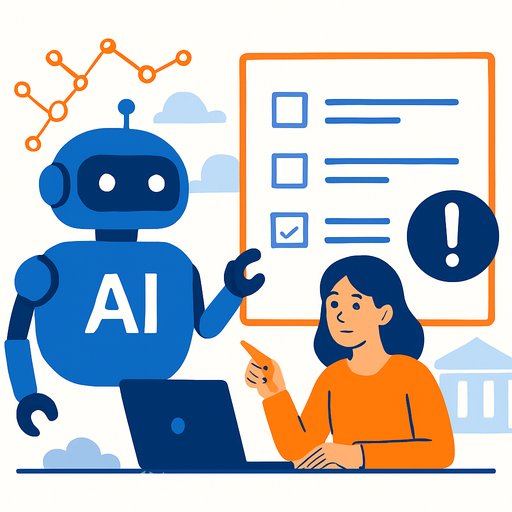
The concern is real. At the University of Virginia's business school, nearly two-thirds of a class submitted the same incorrect answer to a quiz question-the answer the free version of ChatGPT provided.
Hari Subramonyam, an assistant professor at Stanford Graduate School of Education who designs AI tools for teaching, said the problem runs deeper. When students can ask ChatGPT anything, "the impulse isn't, 'Oh, let me think deeply about that,'" he said. "It's 'Oh, let me go ask ChatGPT about it.'"
A Brookings Institution analysis concluded that thoughtfully designed AI tools with safeguards can produce learning gains. The difference lies in design. Tools built by faculty tap directly into course curriculum and expertise. They're structured around cognitive science principles that require active engagement rather than allowing students to bypass thinking.
What Students Say
Alexa Caban, a student in Wang's technology strategy class, said Caisey adapts to her responses in real time. In a 15-minute conversation, she often considers perspectives she hadn't thought of. The app suggests evidence that might strengthen her argument.
Eli Stodghill, a sophomore at Georgia Tech, used to turn to ChatGPT late at night when stuck on electrical engineering homework. The answers were often wrong. With the faculty-designed Smart Tutor, he works through to correct solutions and feels more prepared for exams.
Stodghill said the biggest risk of commercial AI is cognitive offloading-like using a calculator instead of doing arithmetic. The class-specific tool prevents that. "Just working through something like this," he said, "I think keeps you cognitively sharp-it keeps you a more competent human being."
For more on how AI is being deployed in education, see our coverage of AI for Education and Generative AI and LLM tools.
Your membership also unlocks: