Who Builds the AI Your Kids Use Matters
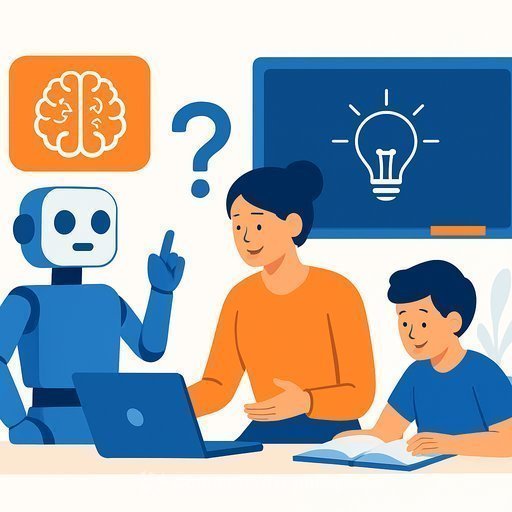
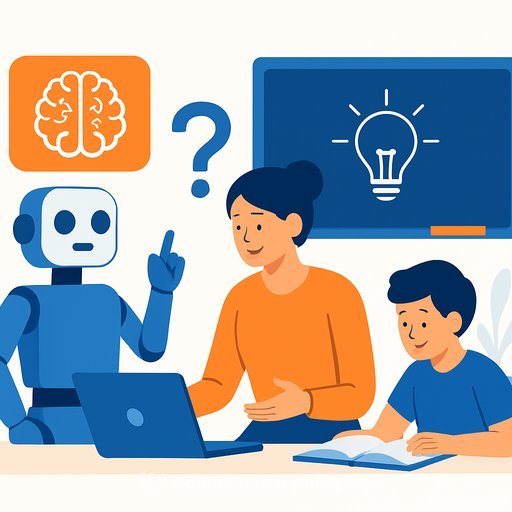
As AI becomes common in homes and classrooms, the real question isn't if children will use it - it's who sets the values, what goals it serves and how it's supervised.
Many parents and educators are uneasy with generic AI tools guiding study habits and early belief formation. Some choose to avoid AI altogether. Martyn Iles, preacher, commentator and former leader at Answers in Genesis, sees a different path: use AI to raise academic standards while keeping convictions intact.
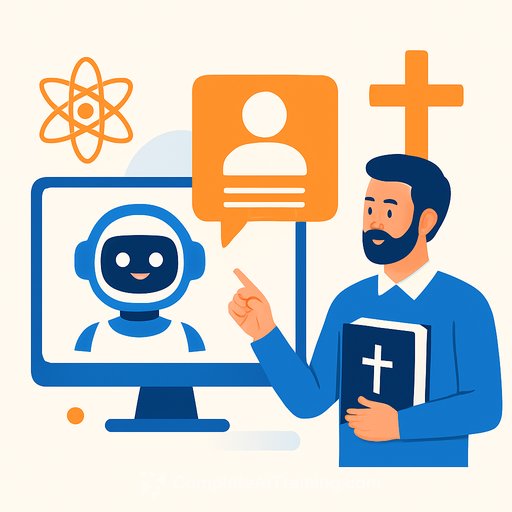
Proto: A Faith-Based AI Learning Platform
Iles is building Proto - a Christian education platform that integrates AI with clear guardrails. The vision: academically rigorous, conviction-anchored and highly customizable for families and educators.
"It is increasingly difficult for parents to find education solutions for their families that are both academically superb and ideologically safe," said Iles. "The program really started with a question: How do you combine academic excellence and ideological accountability in a single education model that's accessible to everyone?"
How Proto Personalizes Curriculum
Proto will start from a single master curriculum and translate it into age-appropriate materials. The system is expected to generate syllabi, lesson plans, assessments and other resources that adjust to learner profiles and instructional settings.
It's built for home-educating families first, but extends to traditional classrooms, churches and learning communities worldwide. "Proto is meant to support education rather than replace it," said Iles.
Cedarville University Students Power Early AI Development
Though early in development, Cedarville University students have been central to research and prototyping. A five-member senior design team helped inform foundational choices for Proto's AI models and system design.
- Lydia Bingamon, senior computer science major (Roanoke, Indiana)
- Linnea Albright, senior computer science major (Savage, Minnesota)
- Eli Payton, senior cyber operations major (Williamston, Michigan)
- Matthew Dudley, junior double major in cyber operations and computer science (Plainfield, Illinois)
- Joshua Hochstedler, sophomore cyber operations major (São Paulo, Brazil)
Since launch, four additional juniors have joined the effort: Myles Young (Marysville, Ohio), Micah Crowe (Maywood, Illinois), Doreen Yin (Guangzhou, China) and Caleb Cao (Beijing, China). Their work has tested feasibility, informed architecture decisions and built momentum. "We're grateful to be working with Cedarville, and the project team has genuinely added a lot to what we're doing," said Iles.
The Next Step: Immersive, Interactive Learning
Iles sees AI expanding learning beyond static text. "AI can construct virtual, immersive worlds that students can learn in," he said. "You could be learning about the American Revolution or Moses crossing the Red Sea and observe events happening in a particular time and place."
The long-term goal is to increase interactivity, engagement and historical context - while keeping guardrails and teacher oversight in place.
What This Means for Education, IT and Development
- Curriculum integrity by design: Maintain a single master source of truth. Version it. Log changes. Generate age-aligned outputs from approved content only.
- Teacher-in-the-loop: Keep educators as final approvers for lesson plans, assessments and grading. Provide audit trails and override options.
- Safety and values controls: Standardize moderation policies, bias checks and alignment tests. Document what the system will and won't generate.
- Assessment fidelity: Use item banks, randomized forms and prompt-shielding to reduce leakage and answer sharing. Track item exposure.
- Data privacy and access: Separate student PII from model context. Apply least-privilege roles and clear data retention windows.
- Model strategy: Mix general models with domain adapters or retrieval from the master curriculum. Evaluate with task-level benchmarks that match your standards.
- Interactivity roadmap: Pilot low-friction simulations before full virtual environments. Measure learning gains, not just engagement metrics.
Educators exploring practical classroom implementation can use the AI Learning Path for Teachers. Developers working on platform architecture and tooling may find AI for IT & Development useful.
Why Proto Stands Out
Proto's core idea is simple: use AI to personalize learning while keeping human guidance and conviction at the center. That balance answers what many families and schools have asked for - high academic quality with clear accountability.
As the platform grows, success will hinge on transparent governance, measurable outcomes and responsible deployment. If those pieces stay strong, Proto can help families and schools use AI with confidence.
About Cedarville University
Cedarville University is an evangelical Christian institution in southwest Ohio offering undergraduate and graduate programs across the arts, sciences and professional fields. With 7,265 students, it is one of Ohio's largest private universities and is ranked among the nation's top five evangelical universities in the Wall Street Journal's 2026 Best Colleges in the U.S.
The university is known for a vibrant Christian community, challenging academics and strong graduation and retention rates.
Your membership also unlocks: