
AI news ·
Public skepticism toward AI grows and brands face rising risk of inauthenticity backlash
Less than half of Americans support pushing ahead with AI, per a new Stanford/UC Berkeley poll. Brands now face real consumer backlash for any perceived AI use-even a Nike post sparked hundreds of responses over word choices.
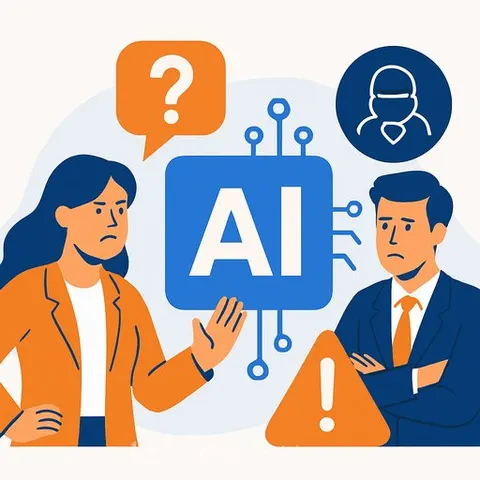
AI Skepticism Is Now a Brand Risk
Public sentiment toward artificial intelligence has shifted sharply enough to threaten companies that appear to embrace it. A new poll from Stanford University and UC Berkeley found less than half of Americans support charging ahead with AI innovation. The backlash has been visible everywhere this week: AI was booed at multiple commencement speeches, a major literary prize faced tarnishment over AI-generated quotes in a hyped book, and local politics in several regions erupted over data-center disputes.
Brands are now caught in the crossfire. It's not just the AI companies themselves struggling to defend the technology-any brand seen using AI in questionable ways risks consumer backlash.
A Small Example With Big Implications
Nike's recent post on X about tennis champion Jannik Sinner showed how quickly skepticism can spark. The company wrote that Sinner "can do it all," adding "This isn't just history - it's his story in the making." One user flagged the phrasing as an "AI-ism," a trope associated with machine-generated text. The comment sparked hundreds of responses, though the original claim was speculative and the construction itself predates AI writing.
The incident matters less for what Nike actually did and more for what it reveals about the public mood. When ex-Google CEO Eric Schmidt mentioned AI during a University of Arizona commencement speech, graduates booed him loudly. Schmidt pressed on, arguing that treating an AI-driven future as inevitable amounts to "surrendering your agency." The crowd's response suggested otherwise.
Inauthenticity as a Liability
Brands face particular vulnerability to charges of inauthenticity. When a company appears to outsource its core messaging to AI, consumers see it as betrayal of identity. This dynamic played out earlier with Apple's 2024 iPad ad, which depicted creative tools being crushed by technology. Apple apologized after backlash, recognizing the ad contradicted its brand values.
The stakes have risen as AI's presence in society has become more visible. Calling out AI-generated content, spotting fakery, and shunning brands for perceived inauthenticity are now standard consumer behaviors. For marketing professionals, this means AI integration requires careful consideration of brand positioning and audience perception.
The challenge extends to social media teams, where even subtle word choices can trigger scrutiny. As public skepticism intensifies, the cost of appearing to rely on AI for authentic brand communication has become a genuine business concern.