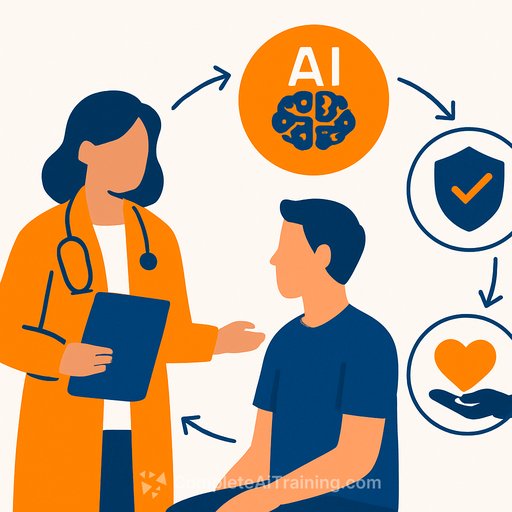
A “True Lifecycle Approach” for Governing Healthcare AI
Artificial intelligence is transforming healthcare delivery—from hospital wards to wellness apps. Institutions like Cedars Sinai are integrating AI with new platforms such as the Apple Vision Pro, while companies like Siemens develop AI tools for precision medicine and predictive analytics. Yet, despite this rapid growth, governance frameworks struggle to keep pace with the technology’s complexity.
Current regulations often focus narrowly on device approval, missing critical aspects like patient consent, liability, and ethical considerations. To address these gaps, a new governance model called the True Lifecycle Approach (TLA) has been proposed, centering on patient safety and ethical principles throughout AI’s entire lifecycle.
Why the True Lifecycle Approach Matters
Existing frameworks, such as those from the FDA and the European Medicines Agency, primarily evaluate AI medical devices before market release. While they require more scrutiny for higher-risk devices, they treat AI mainly as a technical tool. This overlooks the broader impact AI has on patient rights and the medical standard of care.
The TLA embeds healthcare law and ethics at every stage, emphasizing confidentiality, informed consent, and respect for cultural and religious diversity—especially important in regions like the Gulf Cooperation Council (GCC) where populations are diverse.
The Three Phases of the True Lifecycle Approach
- Research and Development (R&D): Governance begins at the AI design stage. For example, Qatar’s Hamad Bin Khalifa University collaborated with the Ministry of Public Health to create guidelines encouraging developers to document AI purpose, scope, and intended use while ensuring early compliance with medical data laws and ethics.
- Systems Approval: While not all AI tools require regulatory approval, regulators need broader authority to enforce safety standards. Saudi Arabia’s Food and Drug Authority has advanced this with guidance that includes ethical standards, transparency, and ongoing monitoring for adaptive algorithms.
- Post-Deployment Oversight: Governance extends beyond developers to healthcare providers, insurers, and others using AI. Abu Dhabi and Dubai have introduced binding AI policies mandating audits, validation, and patient feedback mechanisms to ensure ongoing safety and ethical use.
A Model Emerging from the GCC
The GCC is taking significant steps across all phases of AI governance, demonstrating how a True Lifecycle Approach can function in practice. With centralized governance and diverse populations requiring sensitivity to language, religion, and culture, the region is well placed to develop governance models that balance global standards with local needs.
This approach could serve as a valuable example for other countries aiming to build healthcare AI governance frameworks that prioritize patient trust and safety.
Putting Patients First
AI in healthcare is fundamentally about people, not just technology. Effective governance frameworks must reflect this by embedding legal and ethical considerations throughout AI’s lifecycle. The True Lifecycle Approach offers a clear, patient-centered roadmap for policymakers and healthcare professionals to ensure AI tools are safe, ethical, and trustworthy.
Your membership also unlocks: