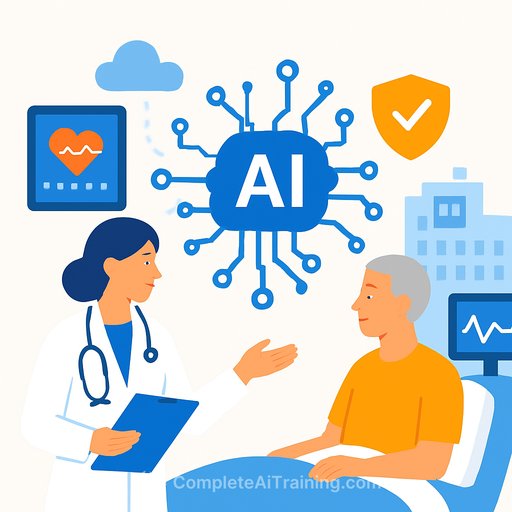
AI In Healthcare: From Reactive Care To Proactive Systems
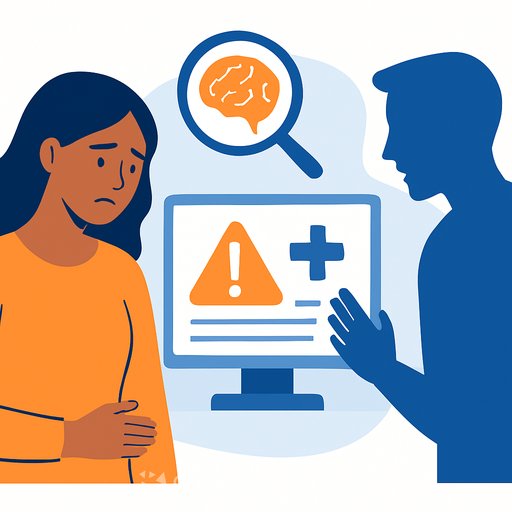
Healthcare is shifting from hospital-first responses to continuous, patient-centered care. Wearables and remote monitoring surface risks earlier, support timely diagnoses, and guide personalized therapies. Telemedicine has reduced response times, unnecessary visits, and low-value referrals across many health systems. Layer AI on top of this data and workflows become faster, more precise, and easier to scale.
AI In Disease Detection And Management
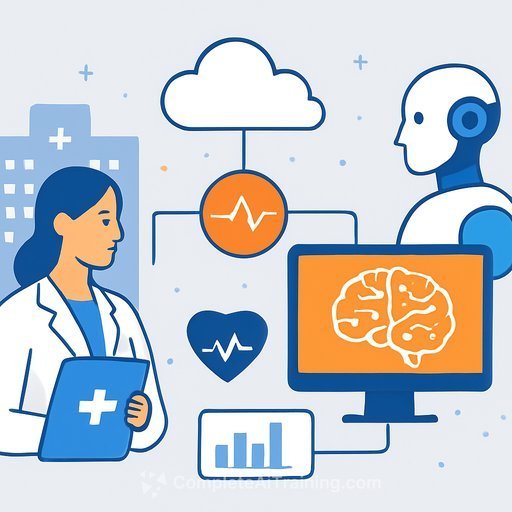
Diagnostics is where AI shows clear, measurable value. Models can read imaging, genomics, electronic health records, and wearable streams at scale, spotting patterns clinicians may not see under time pressure. In oncology, research teams have built tools that detect subtle tumor features on scans, improving speed to diagnosis. Protein-structure models like AlphaFold are informing target discovery, while new sequence models explore mutation effects and sequence design.
Beyond cancer, AI supports chronic disease care by predicting progression, recommending interventions, and optimizing treatment plans. The payoff: fewer avoidable deteriorations, more appropriate therapies, and tighter follow-up with less administrative overhead.
Make AI Clinically Useful
- Combine model outputs with clinician judgment; keep final decisions with licensed professionals.
- Define outcomes upfront (e.g., time-to-diagnosis, readmissions, adverse events) and measure them continuously.
- Validate on local data; check calibration, drift, and subgroup performance to avoid hidden bias.
- Document indications, contraindications, fail-safes, and escalation rules in plain language.
Smart Hospitals And Operational Efficiency
Hospitals are becoming connected, data-driven ecosystems. Early work such as Tsinghua University's "Agent Hospital" simulated full patient journeys-from triage to follow-up-processing thousands of virtual cases in days. While still research, it signals where end-to-end orchestration can go.
On the ground, AI is already relieving cognitive and administrative load so clinicians can focus on complex care.
- Generate clinical notes, discharge summaries, and referral letters from structured data and audio.
- Flag imaging findings, assist in endoscopy, and standardize report quality.
- Translate documentation, propose diet plans, and support scheduling, coding, and HR workflows.
- Surface high-risk patients for proactive outreach, not just reactive admissions.
Ethics And Practical Guardrails
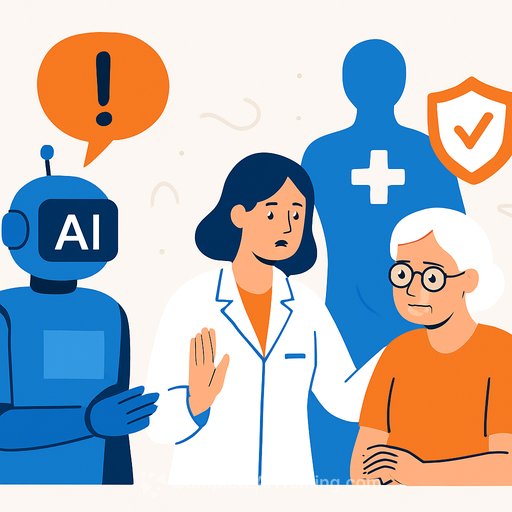
Good tech is not enough. Privacy, fairness, and transparency determine whether patients and staff trust these tools. Poorly trained or poorly monitored systems can widen disparities and erode safety. Use established guidance such as WHO's report on Ethics and governance of AI for health.
- Data governance: consent pathways, de-identification, purpose limitation, and audit trails.
- Bias checks: evaluate performance across age, sex, ethnicity, language, and comorbidity groups.
- Transparency: explain what the model saw, its confidence, and known failure modes.
- Safety net: clear human-in-the-loop steps and escalation when the model is uncertain.
What Healthcare Leaders Can Do Next
- Pick two high-yield use cases to pilot (e.g., imaging QA, documentation, readmission risk) with clear KPIs.
- Stand up a cross-functional AI committee (clinicians, data science, IT, legal, ethics, patient reps).
- Validate models locally; create a monitoring dashboard for drift, bias, and incidents.
- Train front-line staff on prompts, verification, and handoffs; make it part of onboarding and CME.
- Communicate with patients about AI use in care and how privacy is protected.
- Treat AI as decision support, not a replacement; keep accountability with clinicians.
If your team needs structured upskilling on practical AI for clinical and operational workflows, see curated options by role at Complete AI Training.
Bottom Line
AI can help clinicians see risk earlier, cut waste, and personalize care-without adding friction to already stretched teams. The systems that will win are the ones that pair strong clinical governance with simple, measurable use cases and steady staff training. Build trust, measure impact, and keep the human at the center.
Your membership also unlocks: