PVH x OpenAI: What Product Teams Can Do With This Move
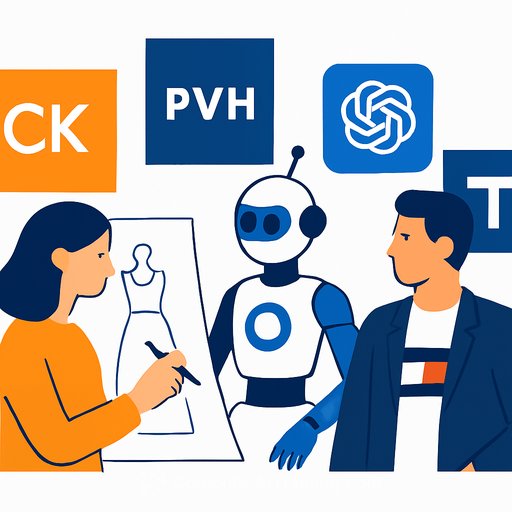
PVH is partnering with OpenAI to embed AI across its global operations for Calvin Klein, TOMMY HILFIGER, and the broader PVH organization. The focus: co-developing custom AI capabilities inside a data- and demand-driven model to improve product design, demand planning, inventory optimization, and consumer engagement.
The company plans to integrate OpenAI enterprise APIs, including ChatGPT Enterprise, to build team-specific apps and modern workflows across product, marketing, supply chain, and retail. The message is clear for product leaders: AI will sit inside core processes, not on the sidelines.
What's being built
- Custom AI inside existing operating models: Embedded in PVH's data pipelines and demand signals, not a standalone tool.
- Product design support: Faster concept iteration, structured feedback loops, and spec consistency checks.
- Demand planning and inventory: Scenario analysis tied to forecast updates and regional nuance.
- Consumer engagement: More relevant experiences driven by insights from brand, retail, and digital touchpoints.
- Enterprise-grade stack: OpenAI enterprise APIs plus ChatGPT Enterprise for secure, team-only applications.
Why this matters for product development
AI won't replace your process; it shortens the gap between idea, signal, and decision. Less time chasing data, more time shaping lines that will actually move.
Expect tighter loops: consumer input informs design, design informs demand, demand informs inventory, and inventory informs go-to-market. The teams that wire these loops early will ship cleaner assortments with fewer surprises.
A simple playbook to mirror this approach
- 30 days: Map your data. PLM, PIM, ERP, sales, returns, site search, and consumer feedback. Identify two high-friction workflows (e.g., product briefs and demand updates) for quick pilots.
- 60 days: Stand up secure access to an enterprise LLM and build lightweight agents for the two pilots. Keep humans-in-the-loop and log every decision path.
- 90 days: Expand to inventory and merchandising scenarios. Connect to planning calendars. Add automated summaries to weekly product reviews.
High-impact workflows to start with
- Concept-to-brief: Generate structured briefs from trend inputs, historical sales, and constraints. Auto-check for missing specs and conflicting requirements.
- Demand-informed roadmaps: Translate forecast deltas into clear product actions (scale up/hold/kill), with regional callouts and margin notes.
- Assortment and inventory: Pair demand signals with lead times to recommend size curves, depth, and DC allocation-flagging risk items early.
- Consumer feedback synthesis: Turn reviews, returns reasons, and social commentary into prioritized product fixes and next-season guidance.
Data and governance basics
- Data quality: Tighten attributes in PLM/PIM. Name standards and versioning matter more than fancy models.
- Access control: Use role-based permissions; sensitive data stays gated. Keep a change log tied to every AI suggestion.
- Model guardrails: Define approved sources, banned outputs, and escalation paths. Always allow a human override.
How to measure impact
- Cycle time: Days from brief to final spec; days from demand signal to plan change.
- Accuracy: Forecast error by key SKU/region and the variance between planned vs. actual sell-through.
- Quality: Return rate and top product complaints per release.
- Waste: Dead stock percentage and markdown reliance.
Team roles to level up
- Product managers/design leads: Define prompts, acceptance criteria, and decision checkpoints.
- Design ops/merch ops: Own workflow integration, documentation, and training.
- Data and platform teams: Connect PLM/PIM/ERP, set up APIs, monitor reliability.
- Planning and supply chain: Stress-test scenarios, validate recommendations, and close the loop with outcomes.
Practical guardrails
- Keep AI recommendations explainable and traceable. No black boxes in core decisions.
- Start with decision support, not full automation. Expand authority as precision improves.
- Ship small, iterate weekly, and retire what isn't moving the metrics you care about.
Tools and next steps
If you're evaluating enterprise-grade options, review OpenAI's enterprise offering for security, administration, and integration details. It helps teams build private, domain-specific workflows on top of company data.
- OpenAI Enterprise overview
- AI upskilling paths by job function
- AI Learning Path for Production Planners
- AI Learning Path for Supply Chain Analysts
Bottom line
PVH is wiring AI into the product-to-retail chain with clear intent: better decisions, faster cycles, and richer consumer context. Product teams that build similar loops-data in, decision out, feedback back-will feel the lift where it counts: speed, accuracy, and cleaner assortments.
Start with two workflows, keep humans in control, measure relentlessly, and scale what proves itself.
Your membership also unlocks: