Quality ETFs Split on Big Tech: What It Means for Your Portfolio
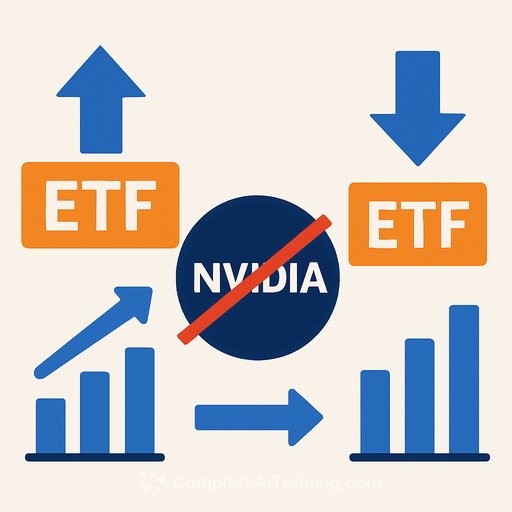
Are the major AI names losing their "quality" badge? Two of the biggest quality-focused ETFs just took different paths after one dropped Nvidia and much of Big Tech. That single choice drove a noticeable performance gap - and it's a useful reminder: the word "quality" depends on the rulebook you're following.
For finance teams managing factor sleeves or building core-satellite portfolios, the takeaway is practical. Quality isn't monolithic. It's a rules-based process that can favor or reject the same company depending on how quality is defined.
What changed
Quality strategies are rebalanced on a set schedule. When fundamentals shift - earnings explode, margins swing, balance sheets get reworked - screens can flip from "in" to "out" fast. That's likely what pushed one ETF to cut Nvidia and reduce exposure to other mega-cap tech names while the other stayed closer to them.
The result: one fund captured more of the AI rally; the other prioritized steadier fundamentals and missed part of the surge.
Quality isn't one thing
- Profitability: High return on equity is common to most definitions, but the weighting and lookback can vary.
- Leverage: Lower leverage tends to score better. Subtle differences in what "leverage" means can swing outcomes.
- Earnings stability vs. accruals: Some screens penalize earnings volatility, others emphasize clean accounting (lower accruals).
Those differences are enough to keep or cut a fast-growing AI leader with surging - and volatile - earnings.
QUAL vs. SPHQ: how rules drive holdings
- QUAL (iShares MSCI USA Quality Factor): Emphasizes high profitability, lower leverage, and earnings stability. That can keep large, steady compounders in - and push out names with whipsawing results.
- SPHQ (Invesco S&P 500 Quality): Ranks S&P 500 constituents by profitability, leverage, and accounting quality (accruals). The tilt can reduce exposure to companies with aggressive working-capital dynamics or shifting balance sheets.
Two "quality" labels, two methodologies - and, at times, two very different portfolios.
Why Big Tech gets cut (even when fundamentals look strong)
- Earnings volatility: Explosive growth can look unstable to a stability screen.
- Accounting quality (accruals): Rapid scaling and inventory swings can raise flags for some models.
- Leverage optics: Debt-funded buybacks or changes in net cash positions can nudge scores down.
- Rebalance timing: If the best fundamentals show after the cutoff date, the score won't reflect it until the next refresh.
What this means for allocation
- Factor purity vs. growth participation: Decide if you want "sleep-at-night" fundamentals or exposure to momentum-heavy winners when they look less "stable."
- Concentration risk: Quality can still be mega-cap heavy. Know your top-10 overlap with the S&P 500 and each other.
- Turnover costs and tax drag: High-change screens can add friction. Check historical turnover and after-tax results.
- Use-case fit: As a core, you may prefer broader, steadier quality. As a satellite, the sharper screen might make sense.
Quick diligence checklist
- Pull the latest holdings and sector weights; measure overlap with your existing large-cap exposure.
- Read the index methodology and rebalance schedule. Small rule differences = big weight differences.
- Backtest dispersion during AI-led rallies and during corrections. You want both sides of the story.
- Stress test earnings volatility and valuation compression on top positions.
Could the AI leaders regain "quality" status?
Yes. If earnings growth stabilizes, margins hold, accruals clean up, and leverage stays contained, many models will pull them back in at the next rebalance. Quality models are rules, not opinions. When the inputs improve, the outputs follow.
Source methodologies
Tooling for finance teams
If you're building internal workflows for holdings analysis, scenario testing, or reporting, curated AI tools can help speed up the grunt work without hiring a bigger team. See a vetted list here: AI tools for finance.
Bottom line: "Quality" is a framework, not a guarantee. Choose the rulebook that fits your mandate, know what it excludes, and size the position so you can live with the next rebalance - whichever side of Big Tech it lands on.
Your membership also unlocks: