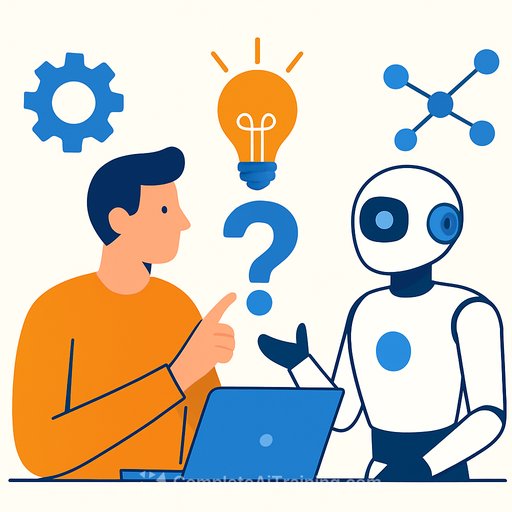
Teaching for the AI Era: Build Thinkers, Not Just Answer-Finders
AI now comments on politics, writes code, drafts essays, and even experiments with belief systems. It can help or harm, depending on how we use it. The real question for educators: what abilities must our students develop to thrive and act responsibly?
Human progress has always come from curiosity, innovation, and the courage to create new paths. In an AI-saturated world, that core hasn't changed-if anything, it matters more.
The abilities that matter most
- Creative thinking (problem finding): seeing what's missing, spotting friction in real contexts, and framing the right questions.
- Critical thinking (solution seeking): using domain knowledge, data, and tools-including AI-while checking evidence and trade-offs.
- Wisdom and integrative thinking (solution building): blending knowledge across subjects, judging consequences, and aligning choices with human values.
Across all stages, students need curiosity, comfort with uncertainty, persistence, and a felt respect for people and nature. Without those, tools become shortcuts, not amplifiers.
Where current schooling falls short
Curriculum documents mention "creativity," but classrooms still reward speed to the single correct answer. High-stakes exams dominate, so students optimize for recall and format, not insight.
Many now default to ChatGPT for quick solutions instead of thinking through the problem. Expecting universities to fix this overnight-without the habits built in primary and secondary years-is wishful thinking.
Lead with problems, then teach the knowledge
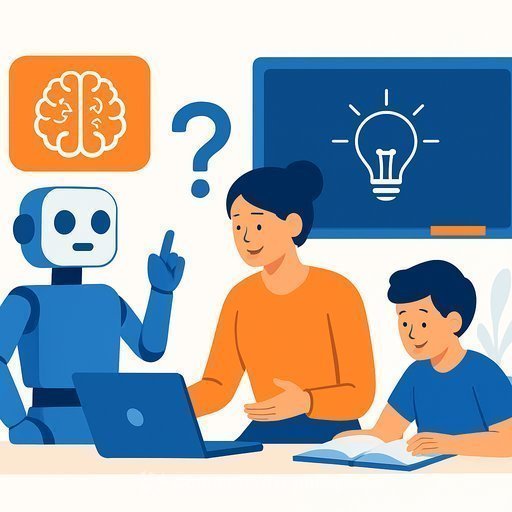
Adopt problem-based learning: present a real, messy problem first, then teach the knowledge and methods students need to make progress. Most real issues don't come with tidy solutions.
In classrooms that run this way, students lean in. They seek knowledge, use AI as a tool (not an answer key), surface unexpected solutions, and grow collaboration and empathy through teamwork. For research-backed models, see resources like PBLWorks and UNESCO's guidance on AI and education for policy context here, and explore related Research.
What this looks like next week
- Start with one authentic problem. Example: "How might our school reduce single-use plastic without raising costs?" Tie it to clear standards.
- Define the competencies up front. Problem framing, evidence use, reasoning, iteration, collaboration, communication.
- Set AI norms. Require students to submit prompt logs, sources, and their own synthesis. AI outputs are starting points, not final work.
- Teach just-in-time. Mini-lessons on the science, math, history, or writing skills exactly when students need them.
- Assess what matters. Use rubrics for problem identification, argument quality, data use, and reflection. Grade the process and the product.
- Build portfolios. Collect drafts, feedback cycles, AI prompts/outputs, and the final artifact. Make thinking visible.
- Mix individual and team marks. Protect accountability while rewarding collective problem-solving.
System shifts schools and universities should prioritize
- Rebalance assessment. Increase performance tasks, portfolios, and capstones; reduce pure recall items.
- Redesign standardized exams (e.g., the CSAT). Use scenario-based items that assess reasoning, transfer, and problem framing.
- Admissions that value evidence of work. Invite portfolios and project evaluations; train reviewers to judge problem identification and iteration quality.
- Time and training for teachers. Protected planning time, instructional coaching, and PD on AI literacy and ethics.
- Schedule for depth. Longer blocks for inquiry, critique, and revision-not just coverage.
Healthy AI use in learning
- Tool, not crutch. Ask students to compare AI outputs with vetted sources and explain differences.
- Source and bias checks. Require citations and bias notes; discuss limitations openly.
- Transparency. Students submit prompts, outputs, and the human-authored reasoning that connects them.
- Ethics by design. Surface questions about privacy, intellectual property, and fairness inside each unit.
Upskilling for educators
If you're building your own AI fluency and classroom playbook, explore curated training and tools for your role:
- AI Learning Path for Primary School Teachers - a structured sequence to build AI fluency in early grades.
- AI Learning Path for Training & Development Managers - designed for leaders who guide teacher PD and curriculum integration.
The bottom line
We can't outsource judgment, creativity, or care. Start small: one problem, one unit, one better rubric.
If we teach students to find problems worth solving-and to use AI with discernment-they'll do more than keep up. They'll lead with conscience and competence.
Your membership also unlocks: