AI-assisted colonoscopy: clearer detection, fewer missed polyps
Gastrointestinal issues range from minor discomfort to conditions that threaten long-term health. Colonoscopy is the gold standard to see what's actually happening inside the colon and to act on it immediately. With AI now integrated into endoscopy systems, clinicians get real-time alerts that flag subtle abnormalities and help judge which polyps may matter most.
Why colonoscopy still leads
Endoscopy lets clinicians directly view the lining of the digestive tract and sample tissue when needed. That's a level of certainty symptoms alone cannot provide. If there's bleeding, unexplained weight loss, suspected inflammation, or other warning signs, colonoscopy gives fast answers and a clear plan.
Screening: start at 45, earlier with family history
Screening colonoscopy is recommended starting at age 45, even without symptoms. Waiting for symptoms often means the disease has advanced, which complicates treatment and recovery. If colorectal cancer runs in your family, begin screening 10 years earlier than the age at which your relative was diagnosed (for example, start at 40 if a parent was diagnosed at 50).
- Typical triggers for diagnostic colonoscopy: rectal bleeding, unexplained weight loss, changes in bowel habits, anemia, or suspected inflammation.
- Screening benefit: find and remove precancerous polyps before they turn into cancer.
See screening guidance from the U.S. Preventive Services Task Force
What AI adds in the exam room
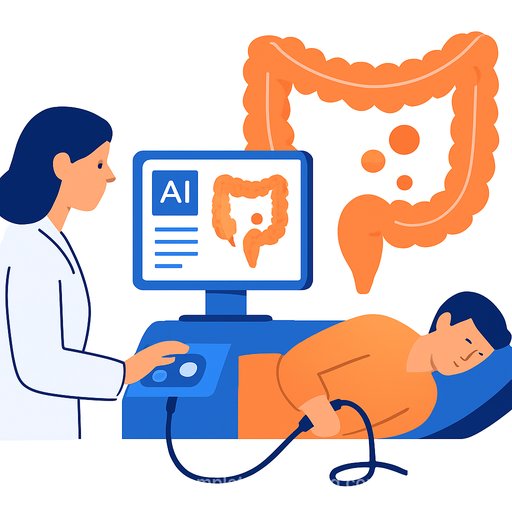
AI acts like a second set of alert eyes, continuously analyzing the video feed to highlight suspicious tissue as the colonoscope advances and withdraws. It improves the odds of spotting flat or small lesions that can blend into normal tissue. It can also suggest the likely type of polyp and estimate its risk profile, helping the endoscopist decide what to remove and what to sample.
The numbers that matter
In patients over 45, clinicians typically find abnormal polyps in at least 3 out of 10 exams. Even highly skilled endoscopists miss some lesions; AI support has been shown to raise polyp detection rates by up to 10% in experienced hands. Every percentage point increase in adenoma detection rate is linked to as much as a 3% drop in future colorectal cancer risk. Research on clinical studies and trials documents these improvements.
From detection to action
Finding a polyp is step one; deciding how to manage it is step two. AI can assist with on-the-spot classification, which may reduce unnecessary biopsies and streamline care in many cases. Biopsy is still used when there's uncertainty, but as training datasets grow and algorithms improve, the need for tissue confirmation may decline for clearly benign patterns.
Learn more about colon polyps from the National Cancer Institute
DeepGI: flexible AI built for real clinical use
DeepGI is an AI system developed through collaboration between a major university hospital and an engineering faculty. A key advantage: it works with endoscopes from any manufacturer, so it can learn from a wider variety of images and patient populations. That flexibility helps the model keep improving accuracy as new data flows in.
Key takeaways for patients and clinicians
- Do not wait for symptoms. Book a screening colonoscopy at 45, or earlier with family history.
- Ask if AI assistance is available - learn more about AI for Healthcare. It increases detection of polyps and early lesions that might otherwise be missed.
- If a polyp is found, most can be removed during the same procedure, preventing future cancer.
- Expect continued progress. As AI systems learn from more cases, precision and confidence in real-time decisions will keep improving.
Bottom line
Colonoscopy prevents cancer by finding and removing precancerous polyps. AI makes that process more precise and efficient, which means fewer missed lesions and better outcomes. If you are due for screening-or have symptoms-schedule the exam and ask about AI-assisted options.
Your membership also unlocks: