
AI news ·
Real voices win: UGC beats AI ads for trust and engagement
UGC feels real-and it wins trust and conversions, especially with Gen Z. Meanwhile, AI ads make many people uneasy, so brands are leaning into real customer stories.
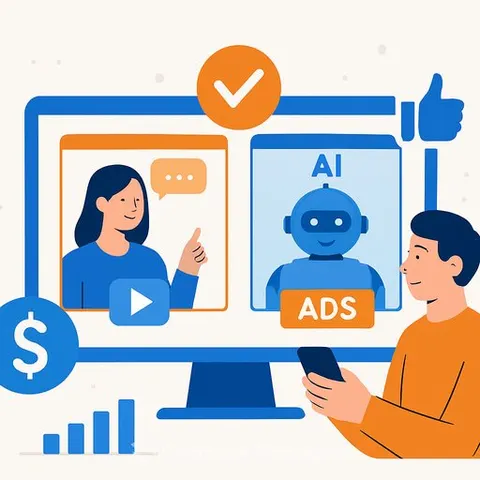
UGC beats ads (and AI) on what matters: trust and action
User-generated content is winning the attention war because it feels real. 70% of Gen Z say UGC is very helpful to their buying journey, and 60% of consumers call UGC the most genuine form of advertising (dcdx). That's not a soft signal-it's a blueprint for where budgets should point.
Meanwhile, audiences are skeptical of AI-driven ads. Over 30% of US adults say AI in ads makes them less likely to choose a brand. 37% view brands using AI-powered advertising negatively, and nearly two-thirds feel uneasy about AI-generated ads. Authenticity isn't a nice-to-have. It's a conversion lever.
Why UGC works
People trust people. UGC comes from real customers, not polished brand decks. It's specific, imperfect, and relatable-exactly what pushes someone off the fence.
It also builds community. When buyers see peers using your product, they don't just learn; they join. That social proof compounds across comments, shares, and saves, feeding your paid and organic programs.
Marketers feel the same
Teams are voting with their strategies: 78% of marketers worldwide say UGC is important to Social Media, and 36% call it "extremely important." Only 28% say AI-generated content is important to social strategies, while 72% say it's not at all important.
Why? UGC is cost-effective-often free aside from incentives and coordination-and it performs. It's efficient for smaller advertisers and a scale lever for bigger ones.
The UGC playbook: practical, repeatable, and measurable
1) Capture more high-signal UGC
- Ask better prompts: "Show how you use [product] daily" beats "Tell us what you think."
- Make it easy: feature hashtags, QR codes on packaging, and low-friction forms for video uploads.
- Seed product to customers who already engage. You're not buying ads-you're fueling stories.
- Offer simple incentives: early access, loyalty points, or a monthly feature. Keep it honest and clearly disclosed.
- Create a short guide for creators: lighting, framing, 15-45 seconds, hook in first 2 seconds, show product in use.
2) Curate and amplify (with permission)
- Get explicit rights to use content across channels. Log creator handles, consent, and usage terms.
- Edit lightly. Keep the voice, tighten the cut, add captions, and clarify benefits on-screen.
- Run UGC through paid: whitelisting, Spark/TikTok Ads, IG Reels, Shorts, in-feed. Test multiple hooks.
- Cross-post winners to PDPs, email, retargeting, and support docs. Let your customers do the demo.
3) Measure what actually moves revenue
- Early signals: hook rate (3-sec views), watch time, completion rate, saves, shares, comments that mention outcomes.
- Mid-funnel: session depth from UGC traffic, PDP dwell time, add-to-cart rate, content-assisted conversions.
- Performance: CAC, ROAS, blended MER, incremental lift vs. your best brand creative.
- Run A/Bs: UGC vs. studio creative, and UGC vs. AI-generated variants. Keep budgets even and windows clean.
4) Guardrails: disclosures, claims, and brand safety
- Disclose incentives and material connections in plain sight (#ad or clear on-screen text). Follow the FTC Endorsement Guides.
- Verify claims. If a user mentions outcomes, ensure they're typical or add clear context.
- Protect customer privacy. Collect and store permissions securely; honor takedown requests quickly.
- Keep brand safety rules simple: no profanity, no competitor bashing, no sensitive topics, accurate product usage.
5) Where AI helps (without killing the vibe)
- Discovery: auto-tag and cluster UGC by product, use case, and sentiment to spot winners faster.
- Moderation: flag compliance issues, profanity, or risky claims before they ship.
- Testing: generate multiple cutdowns, thumbnails, and hooks for the same raw clip; keep the human voice intact.
- Routing: personalize which UGC variant each audience sees based on intent, recency, or past behavior.
Use AI as a support tool-not the face of your message. The human touch is the asset.
Budgets and ops: keep it lean
UGC programs don't need a bloated line item. Start with a small incentive pool, a simple creator brief, and a weekly review cadence.
Business leaders can follow the AI Learning Path for Business Unit Managers to align AI-enabled workflows with budgets, measurement, and ops.
- Costs to expect: light incentives, a UGC rights tool, editing time, and paid distribution.
- Where savings show up: lower CAC from higher trust, faster creative iteration, less studio overhead.
Simple weekly workflow
- Monday: pull new UGC, score quality (hook, clarity, authenticity), check rights and disclosures.
- Tuesday: cut 3-5 variants of top clips; write 2 lines of on-screen copy per variant.
- Wednesday: launch paid tests; keep budgets even for clean reads.
- Thursday: rotate winners to PDPs, email, and retargeting; archive underperformers.
- Friday: report on creative-level metrics; log learnings and update the creator brief.
Pitfalls to avoid
- Over-polishing. If it feels like an ad, it performs like an ad.
- Skipping permissions. Great content without rights is unusable content.
- One-size-fits-all creative. Match UGC to the stage: curiosity for prospecting, proof for retargeting, detail for PDP.
- Vanity metrics. Shares and saves matter; follower count doesn't if it doesn't move revenue.
What to test next quarter
- Face-to-camera testimonial vs. hands-only demo vs. before/after montage.
- Problem-first hooks ("Struggling with X?") vs. transformation-first hooks ("I cut my time by 50%").
- Short-form (12-20s) vs. mid-form (30-45s) for prospecting and retargeting.
- Creator variety: existing customers vs. micro-creators vs. employee advocates.
Bottom line
UGC is the closest thing you have to word-of-mouth at scale. The data is clear: audiences trust it, and marketers rely on it. Use AI to find, sort, and test-but let real customers do the talking.
If you want to sharpen your AI workflows for UGC analysis, sentiment, and creative testing, explore our marketer-focused programs: AI Certification for Marketing Specialists.