Rebellions and Standard Energy team up on AI control for ESS in AI data centers
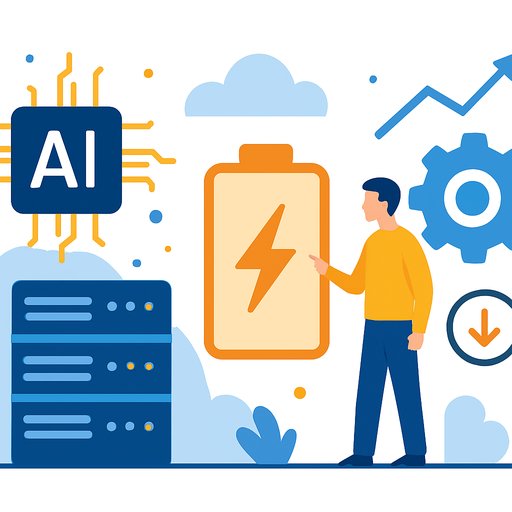
Rebellions and Standard Energy have started joint development of an AI controller for energy storage systems (ESS) in AI-heavy data centers, first reported by BusinessKorea. The controller will orchestrate energy flow between servers and ESS at millisecond intervals, watching load in real time and discharging stored energy automatically. It plugs into their joint solution "Dopamine," which combines Rebellions' NPU servers with Standard Energy's vanadium-ion ESS.
Why this matters for infra and SRE teams
Many utility contracts penalize facilities that exceed contracted capacity multiple times, with surcharge rates of 1.5x to 4x the base electricity fee. AI workloads spike unpredictably, making sites that run training or bursty inference more exposed. By feeding the rack or row from ESS during short peaks, operators can stay under contracted limits and reduce monthly surprises.
- Flatten short spikes with ESS to avoid 1.5-4x surcharge windows.
- Milliseconds-level control reduces overdraw without touching grid import.
- Gives electrical, SRE, and capacity teams another lever alongside job scheduling and cooling.
How the control AI works
The controller samples load and ESS status in milliseconds, forecasts near-term spikes, then dispatches stored energy inside that window. The target is simple: prevent brief demand peaks from crossing contract thresholds. As part of Dopamine, the AI layer will sit next to NPU servers and coordinate with Standard Energy's ESS for fast, repeatable discharge cycles.
Timeline
A prototype is planned for the first half of 2026, with commercial rollouts to follow.
The platform: Dopamine + vanadium-ion ESS
Dopamine pairs NPU servers from Rebellions with Standard Energy's vanadium-ion ESS. Vanadium chemistries are known for durability and long cycle life, which fits frequent, shallow discharge use cases common in peak shaving. For background on the chemistry, see the vanadium redox battery overview here.
Who's behind it
Founded in 2020, Rebellions focuses on efficient, low-latency AI inference accelerators. The company agreed to merge with Sapeon Korea in June 2024 and partnered with Marvell in July of the following year to deliver high-performance, energy-efficient AI systems across APAC and the Middle East. Rebellions was recently valued at $1.4B after a Series C round.
Standard Energy, founded in 2019 and headquartered in Singapore, designs and produces secondary batteries for ESS based on vanadium-ion technologies.
Practical checks for data center teams
- Contract math: map your tariff rules and confirm the exact thresholds that trigger demand penalties. A quick refresher on demand charges is here.
- Integration: confirm interfaces with DCIM, BMS/EMS, and rack-level metering; define precedence with existing UPS logic.
- Forecasting signals: evaluate if the controller can consume workload hints (queue depth, job start events) for better short-term predictions.
- Battery life: review cycle counts and thermal behavior for frequent shallow cycles typical of peak shaving and micro-bursts.
- Fail-safes: define behavior for controller or ESS downtime so you don't trip capacity limits unexpectedly.
What to watch
How accurately the controller predicts inference and training spikes. Latency from reading load to dispatching energy. And the real OPEX impact under different utility tariffs once sites move from pilot to production.
If you're upskilling for AI infrastructure and energy-aware operations, browse our latest programs at Complete AI Training.
Your membership also unlocks: