Reload secures $2.275M to launch EPIC, its first AI employee
Reload, an AI workforce management platform co-founded by Newton Asare and Kiran Das, has raised $2.275 million in pre-seed funding to accelerate EPIC - its first AI employee. The round was led by Anthemis, with participation from Zeal Capital Partners, Plug and Play, Cohen Circle, Axiom, and Blueprint. The funds will support long-term infrastructure for EPIC as adoption grows across the U.S., Canada, the United Kingdom, India, Brazil, Nigeria, Ghana, Switzerland, Spain, and Italy.
What EPIC actually does
EPIC is described as an AI solutions architect that works alongside software engineers and existing AI agents. It provides persistent architectural memory so teams can build systems that scale without losing context between prompts and projects. The technology is already a verified extension within AI software Cursor.
"Coding agents are optimized to respond to the next prompt, not to remember why decisions were made. That leads to lost context, constant re-prompting, and wasted tokens," said Newton Asare, co-founder and CEO of Reload. "EPIC gives coding agents the intelligence of a senior solutions architect, working alongside them to provide persistent architectural memory so teams can build production-grade systems that scale."
Why managers should care
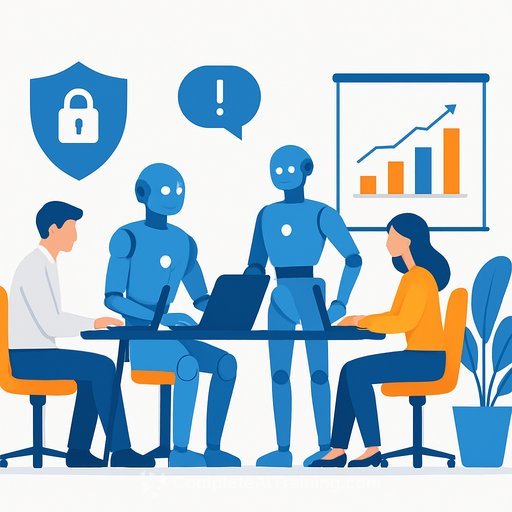
Reload is betting on a simple shift: employees will manage AI teammates that handle orchestration, access management, tracking, and payments - while humans focus on direction, guardrails, and outcomes. As AI agents move from experiments to day-to-day work, management, governance, and clear collaboration patterns become critical.
"As AI agents move from experimentation to real work inside organizations, management, governance, and collaboration become critical," said Bukie Adebo Umeano, investment principal at Anthemis. "EPIC, as the first AI employee, introduces shared architectural memory and coordination, enabling agents to work together with structure and oversight as organizations scale."
Manager-ready benefits
- Reduce rework: Centralize architectural decisions so teams don't re-prompt for the same context.
- Lower token spend: Cut redundant prompts and back-and-forth by persisting rationale and constraints.
- Faster delivery: Keep agents and engineers aligned on system design, interfaces, and standards.
- Stronger governance: Make decisions auditable with shared memory and clear coordination.
How to evaluate EPIC for your org
- Start where context is leaking: multi-agent development, cross-team services, or projects with frequent architectural drift.
- Integration plan: define access to repos, environments, and documentation; establish role-based permissions and approval gates.
- Success metrics: cycle time to merge, PR rework rate, token spend per task, incident rate tied to design gaps, and % of decisions captured in architecture logs.
- Pilot approach (4-6 weeks): one team, one service, clear thresholds (e.g., 20-30% reduction in re-prompting or rework). If it hits, roll out to a second team.
- Guardrails: human-in-the-loop for critical changes, auditable change history, and clear ownership for final decisions.
Funding snapshot
Pre-seed: $2.275 million led by Anthemis. Participants: Zeal Capital Partners, Plug and Play, Cohen Circle, Axiom, and Blueprint. Use of funds: long-term infrastructure development for EPIC.
The bigger shift: managers become orchestrators
Reload's platform reflects a new operating model: managers direct AI teammates across orchestration, access, tracking, and payments - while maintaining oversight. This changes staffing plans, budgets, and performance reviews. Think "agent ops," shared architectural memory, and clear handoffs between humans and AI.
Next steps for leaders
- Map your AI teammate strategy: where can shared architectural memory remove friction today?
- Define governance now: roles, permissions, audit trails, and escalation paths before scaling agents.
- Run a focused pilot: one critical workflow, measurable outcomes, and a path to scale if it works.
Want a deeper framework for evaluating AI teammates and governance? See AI for Management.
Your membership also unlocks: