AI deepfakes spread in 2026 midterm campaigns with few guardrails
A video circulating in Texas shows Democratic State Representative James Talarico appearing to endorse white supremacist rhetoric. He never said those words. The clip is an AI-generated ad created by the National Republican Senatorial Committee, cobbling together his old social media posts with fabricated video.
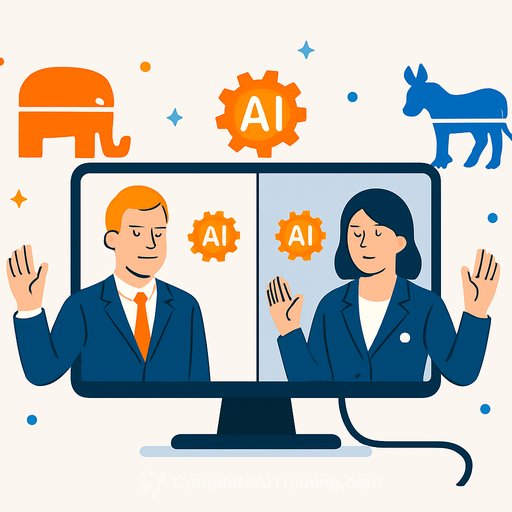
The ad carries a disclosure in small font: "AI generated." It's one of three recent deepfake ads deployed by national Republicans ahead of November's midterm elections, and experts warn the technology poses real risks to voter trust and election integrity.
Republicans leading adoption
Republicans are using AI-generated videos more frequently than Democrats this cycle, according to political strategists and a review of publicly available ads. The trend mirrors the Trump White House, which has released dozens of AI videos and memes on social media attacking protesters and promoting the Iran war.
A Republican campaign in Georgia created a deepfake showing Democratic Senator Jon Ossoff claiming he voted to shut down the government and only knows farms from Instagram. In Virginia, the Republican Committee for Loudoun County released three AI videos attacking Democratic Governor Abigail Spanberger, showing her appearing to advocate for "commie socialist Marxism" and "gun grabs."
California Governor Gavin Newsom, a potential 2028 presidential candidate, has used deepfake videos to mock Trump. But Democratic national campaign committees have not yet matched Republican efforts in midterm races.
Misinformation spreads easily
A 2025 study in the Journal of Creative Communications found that people struggle to identify deepfake videos and that false ads change their opinions. The technology is inexpensive and accessible enough that down-ballot candidates and local political groups now use it.
Daniel Schiff, a Purdue University professor who has studied thousands of deepfakes, said the growing use of political deepfakes risks eroding voter trust in institutions. "The types of damage that we can do to the rigor and credibility of elections and democratic systems - and the ability to misinform people about candidates or social issues - very much risks being supercharged," he said.
Research shows that disclaimers are not effective in preventing voters from being persuaded by false ads, Schiff noted.
States scrambling to regulate
No federal law constrains AI in political messaging. Twenty-eight states have passed legislation addressing AI in political ads, with most focused on disclosure rather than outright bans, according to Ilana Beller at Public Citizen.
Those state laws face significant limits. Many apply only to campaigns, not social media users who spread AI-infused misinformation. Some campaigns have committed to not using deepfakes that misattribute words to opponents, but enforcement remains unclear.
Campaigns defend the tactic
Political strategists say AI-generated videos are persuasive, cost-effective, and can serve as satire. A Republican spokesperson said the technology helps campaigns "pierce through lopsided legacy media coverage and deliver our message directly to voters."
The NRSC defended the Talarico ad by saying Democrats were "panicking after seeing and hearing James Talarico's own words." Talarico's campaign responded that while Republicans "spend their time making deepfake videos to mislead Texans, we are uniting the people of Texas to win in November."
The exchange reflects how quickly AI-generated attacks are becoming routine in campaign messaging. Schiff warned that normalizing deepfakes in politics is harmful to the electoral system.
For government officials and policymakers tasked with responding to these threats, understanding the technology itself is essential. AI Learning Path for Policy Makers provides foundational knowledge for developing regulatory responses. Those seeking broader context on AI for Government applications can review how other agencies are addressing similar challenges.
Your membership also unlocks: