
AI news ·
Researchers identify neural circuits and epigenetic changes linked to reduced smiling in depression
Depressed patients show 55% lower positive expression scores linked to altered serotonin circuits. The study of 66 women connects facial behavior to epigenetic changes.
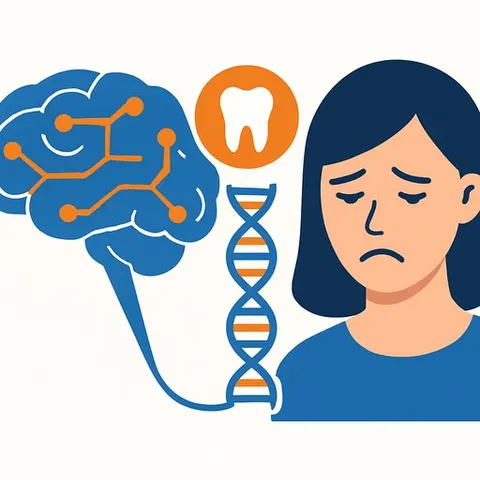
A team from the Korea Institute of Oriental Medicine (KIOM), working with the Korea Basic Science Institute and Daejeon Korean Medicine Hospital, has shown that reduced smiling in people with depression is tied to altered circuits in the serotonin system and to epigenetic changes. The findings, published in Scientific Reports, open a route toward objective diagnostic tools and personalized treatment based on facial expression analysis.
How AI-based facial analysis was used
In traditional Korean medicine, clinicians have long examined facial color and expression as part of a diagnostic method called wangjin. The research team applied AI-based facial expression analysis to quantify these observations, a growing area of interest in scientific research. The approach captured subtle positive and negative expressions while 66 female patients with major depressive disorder and 46 healthy controls watched videos designed to evoke joy or sadness.
The depression group showed positive facial expression scores roughly 55% lower than the control group when watching pleasant videos. This difference was statistically significant and aligns with the symptom of anhedonia-the reduced ability to feel joy or express it through facial expressions.
Neural circuits and serotonin
Functional magnetic resonance imaging (fMRI) revealed that positive facial expressions were linked to neural circuits connected to the dorsal raphe nucleus, a brain region that produces and releases serotonin. In patients with depression, the functional connectivity of these circuits was stronger than in healthy controls.
The researchers then analyzed DNA methylation levels of the serotonin transporter gene (SLC6A4). Methylation is an epigenetic mechanism that regulates gene activity without changing the DNA sequence. Patients with depression had higher methylation levels. Those higher levels corresponded to greater functional connectivity between the dorsal raphe nucleus, the dorsomedial thalamus, and the periaqueductal gray-a midbrain area involved in emotional expression.
What the findings suggest
First author Chan Jin Jeong, a senior researcher at KIOM, said the study "explains the reduction in positive facial expressions observed in patients with depression in terms of brain neural circuits and epigenomic changes." He added that the team expects it "will contribute to the development of objective diagnostic methods and personalized treatment technologies that leverage facial expression-based digital biomarkers and neuroimaging technologies."
Why this matters for science and research
The work connects AI-driven behavioral measurement with neuroimaging and epigenetics, giving researchers a multi-layered framework for investigating depression. Facial expression data, brain circuit patterns, and methylation markers together form a set of measurable signals that could replace purely subjective symptom checklists. For labs developing digital biomarkers, this points toward models that combine biological and behavioral data to stratify patients and track treatment response more precisely.