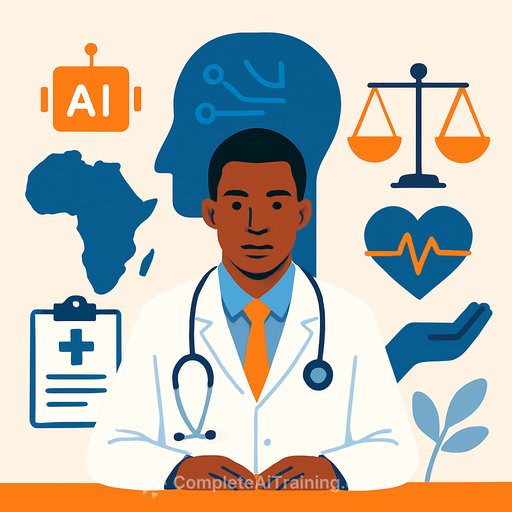
From Promise to Practice: Responsible AI in South African Healthcare
Artificial intelligence (AI) is transforming many sectors worldwide, and healthcare is a key area where its impact is increasingly felt. South Africa’s healthcare system faces challenges such as limited resources, staff shortages, and uneven access to care. AI offers practical solutions to improve diagnostic accuracy, support overburdened professionals, and enhance care delivery.
Applications range from virtual assistants to predictive analytics, reshaping how diagnoses are made and clinical decisions are supported. However, adopting AI comes with responsibilities. Issues around reliability, ethics, accountability, and regulation must be addressed to ensure AI benefits are realized safely and equitably.
AI's Role in Diagnostics and Clinical Decision-Making
A recent study by the Beth Israel Deaconess Medical Centre compared ChatGPT-4’s diagnostic accuracy to that of physicians. ChatGPT achieved 90% accuracy in diagnosing case reports, outperforming physicians who either used ChatGPT (76%) or relied solely on traditional methods (74%). This suggests AI can enhance clinical decision-making.
Yet, the study also revealed challenges: many physicians hesitated to revise their initial diagnoses based on AI input. This highlights trust barriers and cognitive biases in human-AI collaboration, emphasizing that successful AI integration depends on building clinician trust and maintaining transparency alongside strong clinical judgment.
Balancing Innovation with Sustainability
Healthcare is a major contributor to global greenhouse gas emissions—if it were a country, it would rank fifth worldwide. Training large AI models consumes significant electricity, raising sustainability concerns. The World Economic Forum points out that task-specific AI models, which require less computational power, can deliver patient benefits while limiting environmental impact.
This insight is crucial for South Africa, where sustainable healthcare solutions are essential. Choosing AI systems that balance performance with energy efficiency will support long-term health system resilience.
Legal and Ethical Frameworks in South Africa
South Africa currently lacks AI-specific healthcare regulations. However, existing frameworks, like the Health Professions Council of South Africa’s (HPCSA) ethical guidelines for healthcare professionals and telehealth, provide a foundation. These emphasize patient autonomy, informed consent, practitioner accountability, and confidentiality—principles that apply equally when AI tools assist care.
Patients must be informed when AI influences their care, and clinicians remain responsible for final decisions. Compliance with the Protection of Personal Information Act (POPIA) and the National Health Act (NHA) is essential to protect patient data.
That said, HPCSA guidelines do not yet address AI’s growing role in diagnostics, particularly its semi-autonomous or autonomous functions. The current telehealth framework assumes physical examinations by registered practitioners, creating uncertainty around lawful AI integration in clinical decision-making.
Moreover, South African law does not recognize AI systems as legal actors, meaning AI cannot share clinical responsibility with practitioners. This gap risks slowing innovation and limiting AI's potential to improve access and accuracy.
Bridging the Gap: Recommendations for Responsible AI Use
- Human oversight and accountability: AI should support clinical judgment, not replace it.
- Local validation and transparency: AI systems must be tested on South African data and produce understandable outputs for clinicians.
- Data protection compliance: AI applications handling personal health data must fully comply with POPIA and the NHA.
- Informed consent: Patients need clear information about how their data is used and must consent explicitly before processing.
- Equitable access and inclusivity: AI should reduce healthcare disparities across public-private and urban-rural divides.
Context Matters: The Need for Localised AI Solutions
Many global AI health models are trained on data from high-income countries, limiting their accuracy in South African contexts. Local health trends, resource constraints, and systemic challenges must be considered. Validating or retraining AI with local data is essential to avoid bias and inaccuracies in diagnostics, public health surveillance, and telemedicine tools.
For example, AI-powered chatbots are increasingly used for triage and symptom checking, especially where clinician access is limited. South African platforms are developing AI tools trained on local clinical trial data, enhancing relevance and reliability.
South Africa’s Emerging AI Health Innovations
The SA Doctors App illustrates local innovation by integrating AI-driven chatbots into telemedicine. It provides patients with real-time support for symptom assessment and appointment scheduling, improving early engagement and streamlining care delivery in underserved areas.
Such homegrown AI initiatives reflect a growing confidence in digital health. They expand access and improve quality, aligning with national strategies to promote technological innovation in healthcare.
Moving Forward: Building a Safe, Effective AI-Enabled Healthcare System
To fully benefit from AI, South Africa needs clear operational, ethical, and regulatory frameworks that:
- Ensure clinicians remain accountable for care decisions supported by AI.
- Require AI tools to be transparent and validated for local use.
- Mandate strict data protection and informed consent practices.
- Promote equity in AI deployment to avoid worsening existing disparities.
AI can strengthen public health surveillance, outbreak detection, personalized treatment, and chronic disease management. But its success depends on coordinated efforts: policymakers must clarify regulations, healthcare providers must invest in infrastructure and training, and developers need to prioritize ethical, context-relevant design.
With these safeguards, South Africa can leverage AI as a practical tool to build a more accessible, effective, and sustainable healthcare system for all.
For healthcare professionals interested in expanding their understanding of AI’s practical applications, exploring targeted AI training can be valuable. Resources like Complete AI Training’s latest courses offer focused learning opportunities tailored to healthcare roles.
Your membership also unlocks: