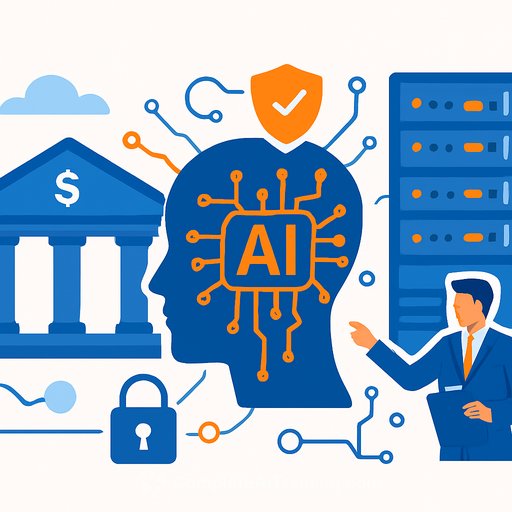
Embedding AI Responsibly in Financial Crime Prevention
Generative AI is gaining traction in the financial sector, moving quickly from pilot projects to broader implementation. As firms adopt this technology, the focus shifts to embedding it responsibly within anti-financial crime strategies.
Recently, experts gathered to discuss the realistic impact of large language models (LLMs) on finance, particularly regarding risk, compliance, and regulation. Their insights highlight practical ways to integrate generative AI while keeping regulators and stakeholders confident.
Build a Strong Governance Foundation
Many financial institutions have established AI risk committees, but that’s just the starting point. Clear accountability, thorough documentation, and defined roles are essential. Without documented policies and procedures, efforts to manage AI risks fall short.
Maintain Transparency
Transparency is key for both regulators and internal teams. Firms should have written policies detailing how AI models are governed, trained, tested, and audited. Documenting data sources, explainability standards, and incident response plans strengthens trust and prepares organizations for evolving AI regulations.
Engage Actively with Regulators
Federal-level AI regulation in the US is still developing, though some states have introduced rules addressing AI bias. Establishing proactive communication with regulators helps companies influence regulatory frameworks and stay ready for changes.
Prioritize Data Quality and Fairness
Data is both the foundation and risk factor in AI-driven compliance systems. Continuous testing for bias and ensuring data quality are critical. New fairness standards require firms to prove their AI models are unbiased, effective, and appropriate for their purpose.
Explainable AI is no longer optional. Financial institutions must be able to show what data feeds their models, how outputs are generated, and how decisions can be verified. As one expert put it: “If you can’t explain it to a regulator, you probably shouldn’t be using it.”
Keep Human Oversight at the Core
Human judgment remains crucial. Combining AI with human review helps catch unexpected issues early. Pilot programs in sandbox environments offer a safe way to test new AI solutions before wider deployment.
Foster Strong Vendor Partnerships
Working with AI vendors is a critical factor for responsible AI use. Firms should demand transparency and long-term support. Vendors should act as partners, helping clients refine strategies, maintain compliance, and communicate clearly with stakeholders.
Financial institutions looking to build AI skills and deepen their knowledge in this area can explore tailored learning options, such as those available at Complete AI Training.
Your membership also unlocks: