
AI news ·
Retailers and app developers use artificial intelligence to personalize shopping and navigation
Retailers are using AI to unify shopper marketing data and prove campaign ROI. Kwik Trip now personalizes rewards for millions of loyalty members.
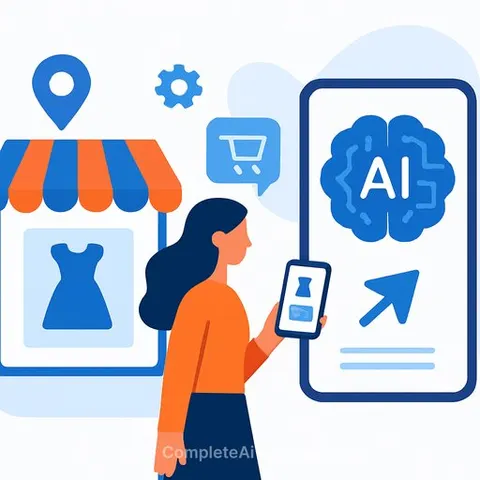
Shopper marketing is moving from disconnected campaigns to a unified, AI-powered strategy that connects retail media, promotions, loyalty programs, and analytics. Total Retail reports that brands are using artificial intelligence to link customer insights and purchase data, creating more personalized experiences and clearer attribution. Meanwhile, Kwik Trip is personalizing its loyalty program with AI, and Waze is turning navigation into a personalized, conversational tool-each opening new doors for marketers.
Unified data drives measurable results
Retailers and brands face growing pressure to prove marketing ROI. AI helps by integrating data from retail media, promotions, and loyalty programs into a single intelligence layer. This connected approach lets marketers see which campaigns and customer interactions lead to verified purchases, making attribution more precise. Personalized offers and recommendations, tailored in real time based on customer behavior, strengthen relationships and increase conversions.
These shifts reflect a broader trend where AI for Marketing is moving beyond isolated experiments into integrated, data-driven strategies.
Kwik Trip tailors rewards to individual shoppers
Kwik Trip's AI initiative personalizes rewards, challenges, and promotions for millions of loyalty members based on their shopping habits. Instead of broad segment-based discounts, the retailer now delivers incentives that reflect what each customer actually buys. This shift gives consumer packaged goods (CPG) partners better opportunities to engage shoppers with measurable campaigns, all while keeping data under the retailer's control and respecting privacy through first-party data practices.
Waze's AI features create a new touchpoint for location-based marketing
Waze is adding personalized routing, conversational search, and new driving modes. Drivers can use everyday language to find destinations or report map changes. For marketers, a navigation app that learns driving habits and preferences becomes a potential channel for context-aware offers-though Waze emphasizes user control and the ability to disable personalization. As AI makes mapping apps more proactive, the line between utility and marketing continues to blur.
Why this matters for marketing professionals
Marketing professionals who unify their data and AI tools can measure campaign impact with greater accuracy and deliver personalized experiences at scale. Loyalty programs that use AI to tailor rewards are seeing higher engagement and better partner collaboration. Even non-traditional platforms like Waze are becoming part of the marketing mix, rewarding teams that think beyond owned channels. The common thread: AI makes it possible to connect the dots between customer behavior and business outcomes, turning shopper marketing into a growth engine rather than a cost center.