
AI news ·
Retailers face legal and fraud risks as third-party AI shopping agents scale in 2026
AI shopping agents can now buy goods autonomously, and retailers face real legal exposure when third-party bots access accounts-even with user permission. Courts may hold site operators liable for transactions they never authorized.
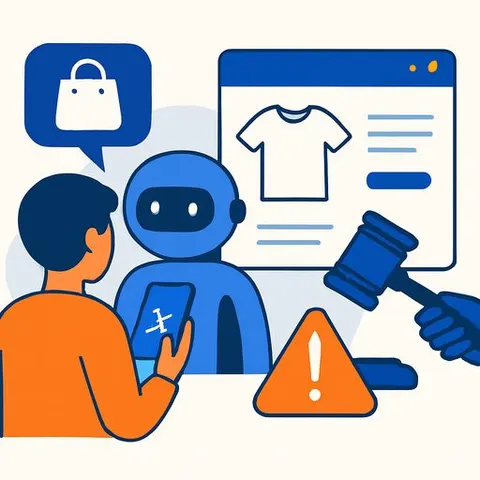
Retailers Face Legal Risks as Third-Party AI Shopping Agents Proliferate
Agentic AI commerce is scaling this year, creating urgent compliance challenges for retailers. AI agents can autonomously search, select, purchase, and pay for goods without human intervention. While retailers can control their own shopping bots, third-party agents and user-created agents operate outside their oversight-generating legal exposure many sites aren't prepared to manage.
A major ecommerce platform recently secured a preliminary injunction against agents accessing user accounts. The court ruled that even when a user authorizes an agent, the site operator must separately authorize agent access to password-protected accounts. The distinction matters: retailers don't control third-party agents, but courts may hold them liable for transactions those agents conduct.
Where the Legal Risks Cluster
New fraud schemes using AI agents are already emerging. Unauthorized purchases, liability disputes, and the enforceability of terms of service against agent-initiated transactions all present unresolved questions. Privacy violations occur when sites share user data with third-party agents without clear consent frameworks.
The core problem: terms of service that users never see or actively agreed to may not bind agents acting on their behalf. A user clicking "accept" on a mobile app doesn't authorize an agent to access that account days or weeks later.
Standards Development Is Underway
The National Institute of Standards and Technology launched an AI Agent Standards Initiative to support interoperable and secure agent systems. Industry groups including the Consumer Bankers Association are identifying consumer protection issues specific to agentic payment tools.
Protocols for agent-to-agent communication, product discovery by agents, and agentic payments are in development across multiple organizations.
What Retailers Must Do Now
Site operators should assess their technical infrastructure to identify and authenticate agents, verify authorization for specific transactions, and prevent unauthorized account access. Technology updates are necessary but not sufficient.
Legal teams need to update terms of service to address agent transactions explicitly. Current terms written for human users don't account for autonomous actors. Privacy policies must clarify how user data flows to third-party agents and under what conditions.
Retailers should also review liability frameworks. If an agent makes an unauthorized purchase, who bears the loss? Current law doesn't provide clear answers, but contracts can allocate risk before disputes arise.
The scale of agentic commerce is still ramping up. Retailers that address these issues now avoid costly litigation and compliance failures later.
AI for Legal professionals should familiarize themselves with agentic commerce risks as clients begin requesting guidance on these issues.