Six Conversations From CES 2026: How Shenzhen-Born AI Hardware Is Resetting Product Strategy
CES 2026 made one thing obvious: Chinese hardware is showing up with scale and intent. Visa hurdles trimmed the official exhibitor count with Chinese addresses to 935 (down from 1,300+ in 2025), yet demand on the floor told a different story.
Distributors, big-box retailers, and service providers crowded booths. New brands secured meetings on day one. The signal is simple for product teams: strong product value still moves markets, even under pressure.
1) Distribution pull vs. geopolitics: the go-to-market reality
New brands landed interest from North American agents and after-sales partners within hours. Some even got early overtures from major retailers. At the same time, teams faced repeated questions about Shenzhen supply chains, engineering talent, and data handling.
This is the new normal: operational proof beats marketing claims. Clear data stewardship, localized support, and shipping credibility decide outcomes.
- What to do: ship-ready demos, transparent data flows (ingest, storage, retention), and local service SLAs on day one.
- Plan for friction: parallel tracks for visas, compliance reviews, and logistics. Don't let paperwork gate your pipeline.
- Bundle the offer: product + install + support + spares. Retailers want total confidence, not just features.
2) Big players are betting on "gadgets" as ecosystem keys
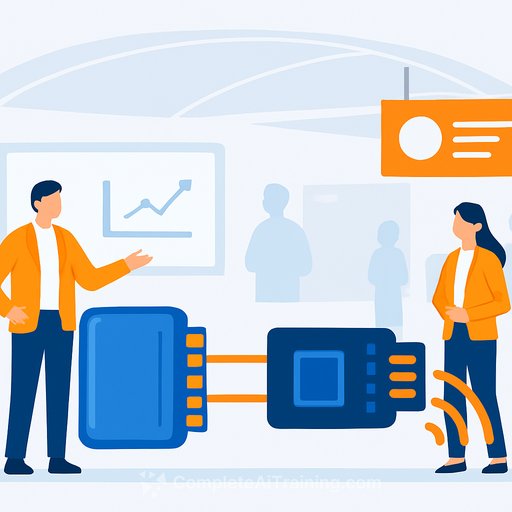
Hardware once dismissed as niche-smart rings, pet robots, health wearables-is now treated as the front door to Physical AI. One example: a smart ring strategy built around three lanes-active interaction via micro-vibration, NFC-based ecosystem control, and 24/7 health sensing-plus a blood-pressure watch.
The ring isn't just a sensor. It's a low-friction, always-on interface that links a user's body signals to home, office, and daily automations. Think millisecond feedback, silent alerts, and one-tap triggers.
- Design notes: 24/7 comfort, sub-100ms feedback, days-long power budget, and reliable haptics in a tiny form factor.
- Ecosystem play: align ring gestures with scenes (arriving home, sleep, deep work). Reduce user effort to near-zero.
- Tech pitfalls: micro-motor vibration stability, EMI, and energy trade-offs. Prototype these early.
3) From modules to AI Agents: unified experiences over single devices
Another shift: moving beyond "smart device enablement" to an AI Agent that orchestrates multiple products. A pet-companion robot is the entry point; the real move is a home-wide assistant that blends security, wellness, routines, and proactive help.
Two Agent categories show traction: emotional companionship (robots, high-end toys) and vertical "expert assistants" (e.g., home energy savings). To work, they need a dependable "nervous system" and "skeletal system."
- Nervous system: stable connectivity and long-term memory so the Agent learns habits and reacts in real time.
- Skeletal system: open, interoperable device networks-Agents add value only when the ecosystem plays nice.
- Evaluate fit: is the value obvious in 30 seconds, and measurable in 30 days? If not, the Agent concept is still fuzzy.
CES is making this shift visible on the floor: fewer "speeds and feeds," more live, cross-device scenes. For device teams, that's a requirement, not a bonus.
4) Startup moat = private data + extreme scenarios + interaction
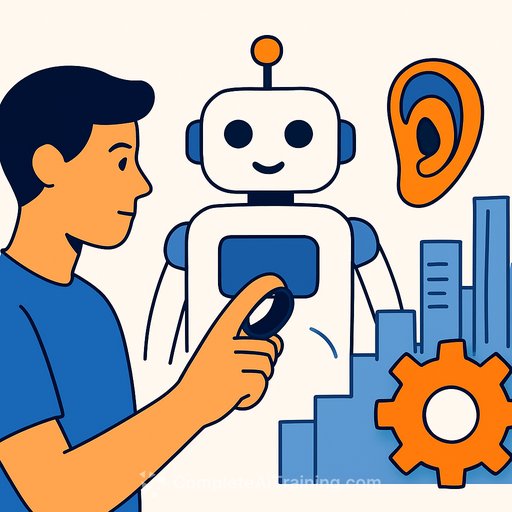
For startups, the bottleneck isn't model or compute-it's high-quality, scenario-bound data you can only collect with physical devices. One team calls AI earphones "the ears of the physical world": they turn audio from meetings and day-to-day work into structured signals that improve collaboration and decisions.
Engineering is getting real. Edge compute is rising. Storage supply is tight and pricier. And interaction quality matters more than spec sheets: adaptive noise control, ear-canal scanning, gesture shortcuts, and interruption logic.
- Device independence: don't rely on a phone app that can be paused by OS rules. Push core tasks to the device and coordinate with cloud.
- Resilience tactics: offline "flash recording," direct dock-to-cloud sync, and failover states for mission-critical capture.
- Enterprise loop: desensitize, structure, and feed data back into workflows (search, decisions, approvals).
5) Privacy-first companionship and cultural fit
Home robotics runs into a trust wall fast. One approach: pure edge models for sub-100ms response, no cloud dependency for core interaction, and deliberate, real-home testing to learn daily rhythms, emotional feedback, and spatial habits.
Context matters. A robot tuned for Japanese seniors will differ from one for kids in North America-voice, timing, wake logic, play patterns. "Play" isn't fluff here; it's the mechanism that sustains daily engagement.
- Guardrails: no paywall for core companionship (dialogue, memory). Don't tie basic presence to a subscription switch.
- PMF metric: frequency and duration of continuous interaction. If usage drops, the bond wasn't real.
- Localization: adapt intonation, rituals, and routine hooks by culture and household type.
6) Robots are leaving the booth: factories first, then homes
On bipedal robots, many non-Chinese demos stayed cautious with fewer live runs. Meanwhile, embodied systems from China are aiming straight at defined business goals. Industrial heavyweights-think construction and automation-showed up to make a point: AI needs physical infrastructure, and they're building it.
This isn't sci-fi. It's engineering, deployment, and service contracts. Expect pilot lines, retrofit kits, and safety stacks to get more attention than acrobatics.
- Deployment checklist: task definition, environment mapping, safety layers, recovery protocols, MTTD/MTTR targets.
- Data loop: on-prem logging, selective cloud learning, and tight version control for models and behaviors.
- Commercials: outcomes pricing (throughput, downtime savings), not just hardware margins.
What this means for product development teams
- Ship a scene, not a device: design for cross-device orchestration and measurable outcomes in a real user day.
- Prioritize privacy and latency: move the "first hop" on-device; keep cloud for learning and fleet-level gains.
- Own your data story: capture, desensitize, store, and delete-make it audit-ready. Publish the diagram.
- De-risk supply: memory and sensors are volatile. Dual-source, pre-buy for launches, and design alternates.
- Build the service layer: install, training, warranty, and spares often close the deal more than features do.
- Set the right KPIs: for companionship: daily interactions and streak length; for assistants: time saved and error rate; for robots: uptime and task completion.
Practical next steps
- Prototype an Agent scene in 30 days: one ring/earbud trigger, two devices, one measurable win (e.g., energy, focus, or safety).
- Draft a public data and privacy note for your product page. Short, visual, and specific.
- Run a cultural fit test: 10 households, 2 weeks, instrument everything. Tune voice, timing, and rituals.
- Model total cost to serve. If support isn't priced in, you're guessing.
Resources
CES official site for trend tracking and exhibitor leads.
If your team needs structured upskilling by role, see AI courses by job.
Your membership also unlocks: