'Rob O-Justice' and the future of law in Ghana
AI is moving into every corner of legal work. Research, drafting, scheduling, even court administration. In Ghana, that can help ease delays and strengthen access to justice-if we use it with discipline.
What AI can do for the profession
AI speeds up legal research, first-draft pleadings, and repetitive admin. It surfaces authorities faster and helps teams organise cases. For a system constrained by time and resources, those gains matter.
But AI is not a lawyer. It predicts text from patterns. It doesn't reason about justice, context, or fairness. That gap is where risk lives. For practical guidance on responsible adoption in legal settings, see AI for Legal.
The real risks: hallucinations, bias, and over-reliance
AI can produce fabricated cases and citations. Courts abroad have sanctioned filings that relied on unverified AI outputs. That can happen here if we get casual about checks.
Data gaps are another problem. Ghana's digitised legal materials are still developing. If the dataset is thin or skewed, the output will be too. Blind trust invites error.
Your duties don't change (they increase)
Under the Legal Profession Act, 1960 (Act 32) and the Legal Profession (Professional Conduct and Etiquette) Rules, 2020 (L.I. 2423), duties of competence, honesty, diligence, and candour apply-no exceptions for AI.
Submitting fictitious or misleading authorities is professional misconduct, whether produced by a junior, a consultant, or a tool. Verification is a non-delegable duty. Intent is not the shield; standards are.
Evidence, deepfakes, and authenticity
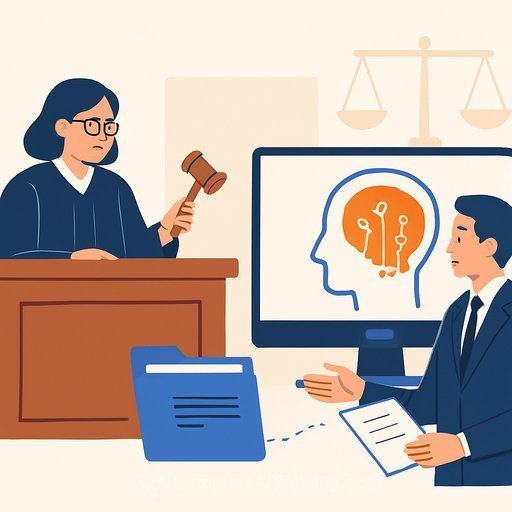
AI-generated audio, video, and images raise fresh authenticity questions. Deepfakes can look convincing and still be false. That puts more weight on foundation, chain of custody, and expert analysis.
Courts should demand stricter proof for digital exhibits and apply established rules on relevance, admissibility, and weight with more scrutiny. The principles haven't changed. The tactics must.
Constitutional boundaries: AI can assist, not decide
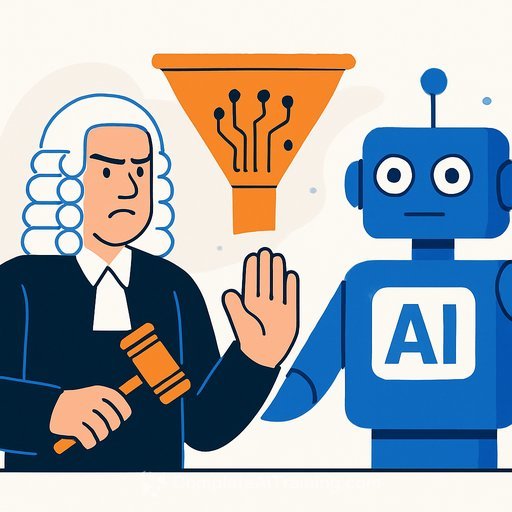
Ghana's 1992 Constitution vests judicial power in human judges. Discretion, proportionality, social context-these are human faculties, not model outputs. No algorithm can assume judicial authority.
AI can support administration (e.g., workload analysis, case-flow metrics). It cannot empanel judges, adjudicate disputes, or craft binding reasons.
Best practices for legal practitioners
- Verify everything: Cross-check every case, statute, and quotation against primary sources. No exceptions.
- Treat AI as a junior assistant: Useful for speed and drafts; never the final word.
- Document your process: Keep a record of sources checked and edits made to AI drafts.
- Guard confidentiality: Don't paste sensitive facts into tools without clear data-handling terms.
- Supervise and train: Seniors must review AI-assisted work and coach juniors on proper use.
- Stay sceptical: If a result looks too neat, assume it's incomplete until proven otherwise.
Institutional actions that will actually help
- Judiciary and GBA training: Continuous AI literacy and ethics programmes via the Judicial Training Institute and Bar platforms.
- Practice guidance: Clear, public rules on acceptable AI use in filings, disclosure duties, and verification standards.
- Regulatory updates: Amend Act 32 and L.I. 2423 where needed to expressly sanction AI-enabled misconduct, including fabricated authorities.
- Evidence protocols: Strengthen guidance on authentication of digital media and expert qualification for AI-related evidence.
- Legal education: Add AI ethics, prompt auditing, and source verification to law school curricula and pupillage.
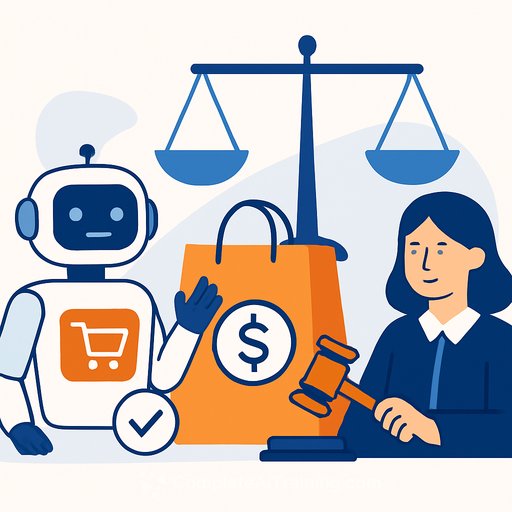
- Court administration: Deploy AI for scheduling, docket analytics, and backlog triage-never for adjudication.
"Rob O-Justice" is a myth-here's the useful version
The fantasy is a robot judge clearing dockets overnight. The reality is smarter workflows that let humans do higher-value thinking. AI should clear noise so judges and lawyers can focus on judgment, context, and remedy.
Measure success by fewer delays, better-quality submissions, and improved public confidence-not by how many prompts you can run.
If you're building capability
- Start with a firm policy on AI use: tools approved, tasks allowed, data protections, and sign-off rules.
- Set a verification checklist for any AI-assisted output attached to court papers.
- Pilot in admin-heavy areas first: research memos, scheduling, bundling, and transcript summarisation.
- Upskill your team with focused training on AI literacy and risk controls. For structured options, see AI Research Courses.
Conclusion
AI can improve how Ghana's legal system works, but it cannot replace human judgment or constitutional safeguards. Treat it as an assistant with speed, not as an authority with wisdom.
The standard remains the same: fairness, integrity, and the rule of law. If "Rob O-Justice" has a future here, it's as a tool that helps people serve justice better-never as the one who decides it.
Your membership also unlocks: