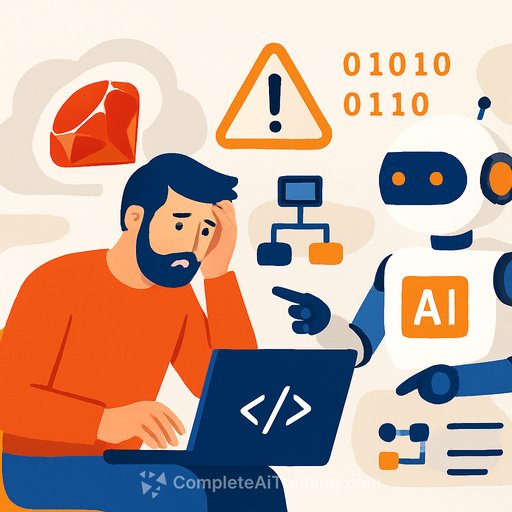
AI Creator of Ruby on Rails Warns AI Coding Tools May Erode Programming Fundamentals
David Heinemeier Hansson (DHH), creator of Ruby on Rails and CTO of 37signals, has raised concerns about how AI coding tools integrated directly into development environments might weaken core programming skills. His comments have sparked a large discussion among developers about balancing productivity gains with maintaining strong programming fundamentals.
In a recent podcast, DHH criticized AI tools like Cursor and Windsurf that embed AI capabilities directly into code editors. He shared that using these tools can feel like competence is slipping away. “I use AI in a separate window. I don’t enjoy Cursor or Windsurf, I can literally feel competence draining out of my fingers,” he said, a sentiment echoed by many developers worried about skill erosion in an AI-assisted landscape.
The Learning Dilemma
DHH’s main concern is that relying too much on AI to write code reduces the hands-on problem-solving experience essential for deep learning. When AI handles the cognitive load, developers miss out on the mental effort that solidifies understanding and builds skill.
He shared a personal example from working on his Linux distribution, Omakub. Even with extensive AI assistance, he noticed he was repeatedly asking AI how to express simple Bash conditionals instead of internalizing them. “By not typing it, I wasn’t learning it. I was using it, but I wasn’t learning it,” he explained. This raised a fear that without physically typing code, learning could stall.
DHH draws a parallel with learning a musical instrument. Watching videos won’t teach you how to play guitar — you have to practice with your fingers on the strings. Programming, he argues, requires a similar physical engagement to truly master it.
Competence Through Physical Practice
Typing code isn’t just about speed; it’s about building muscle memory and intuitive problem-solving skills. DHH stresses that this physical interaction with code is crucial for deep competence.
“You learn with your fingers,” he said. “Programming has to be learned in part by the actual typing.” Without this, developers risk gaining only a surface-level understanding, lacking the intuition that comes from manual practice.
This concern extends beyond individuals. DHH worries that widespread adoption of AI-driven coding tools could create developers who produce code but don’t truly understand it.
The Productivity Paradox
DHH acknowledges AI’s benefits but warns of a trade-off between short-term productivity and long-term skill retention. He notes this happens even without AI — many senior programmers lose touch with coding due to less hands-on work.
“Most great programmers who work in large businesses stop writing code daily because of meetings and other duties. Inevitably, they lose touch with programming,” he observed.
AI could accelerate this process by making coding easier but less engaging mentally and physically. “If you don’t have your fingers in the source, you are going to lose touch with it. There’s just no other way,” he said.
AI as Collaborator, Not Driver
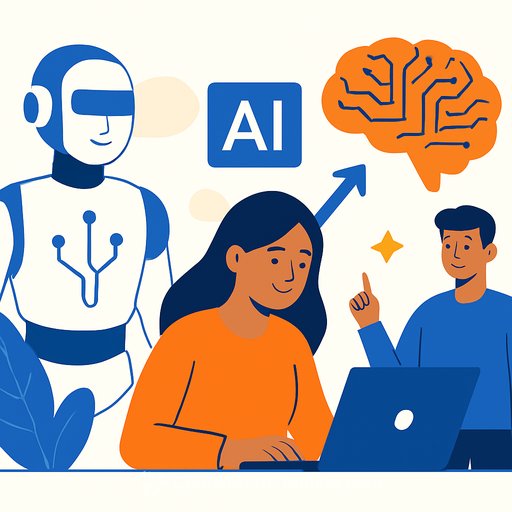
Despite the concerns, DHH embraces AI as a helpful tool when used correctly. He uses AI in a separate window to get explanations and clarifications, especially for things he should know but doesn’t.
“I’m getting smarter every day because of AI. It explains things to me—even simple stuff I’d be embarrassed to Google. AI gives me clear explanations that help me learn,” he shared.
This approach positions AI as a collaborator that supports learning rather than a crutch that replaces effort.
Conclusion
DHH’s experience highlights a real challenge for programmers in the age of AI: how to benefit from AI assistance without losing the hands-on practice essential to mastering programming. The physical act of typing, the mental effort of solving problems manually, and the continuous engagement with code remain vital for building and maintaining true programming competence.
For developers looking to balance AI tools with skill retention, it’s worth exploring methods that encourage active learning alongside AI support. If you want to deepen your AI and programming skills thoughtfully, consider checking out Complete AI Training’s latest courses that focus on practical, skill-building approaches.
Your membership also unlocks: