AI across the curriculum: teach the tools, protect the mind
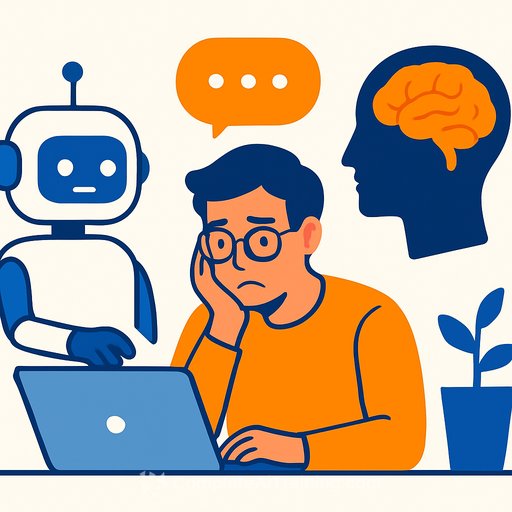
US universities are racing to embed AI into undergraduate programs. The pitch is simple: students should graduate fluent in the tools employers use. The risk, according to researchers and educators quoted by the Atlantic, is just as clear-early, unstructured AI use can blunt core skills students will rely on for the rest of their careers.
Several studies highlighted by the publication point to weaker reasoning, lower brain activity, and copy-paste habits among heavy AI users. Structured use shows some benefits, but that's not how most courses are rolling it out.
What's happening on campus
Ohio State University plans to weave AI education into every major, with similar moves at the University of Florida and the University of Michigan. The intent is sound: literacy, productivity, and career readiness.
The concern from faculty and learning scientists is that tool-first instruction can short-circuit the work that builds thinking. The Atlantic notes that the abilities employers prize-creative thinking, flexible analysis, fast learning-look a lot like outcomes from strong liberal-arts training.
What the early evidence says
- In a months-long MIT study reported by the Atlantic, participants who used ChatGPT produced vaguer, less reasoned essays and showed the lowest brain-activity levels. Reliance on pasting external text increased over time.
- Researchers concluded that over four months, heavy LLM users underperformed on neural, linguistic, and behavioral measures.
- On the upside, tightly controlled generative-AI tools improved some math-tutoring outcomes in work referenced from the Proceedings of the National Academy of Sciences.
- Translation for teaching: structure matters; open-ended use trends toward cognitive offloading.
Warnings from the field
Justin Reich at MIT's Teaching Systems Lab has seen past classroom tech pushes miss their mark, sometimes badly. Michael Bloomberg has made similar points about laptops-big promises, soft results, falling test scores.
Educators quoted by the Atlantic report declines in reading, writing, and reasoning when AI handles core tasks. Employers may discount degrees if graduates can't show independent cognitive work.
Key shifts to track
- Universities expanding AI across undergraduate programs
- Evidence of reduced brain activity and weaker reasoning with frequent AI use
- Positive results limited to tightly structured AI applications
- Faculty concerns about erosion of foundational skills
- Calls to delay broad AI use until core disciplinary abilities are built
A practical path for educators: sequence before scale
Adopt AI, but do it in a way that strengthens thinking instead of replacing it. Here's a simple framework you can deploy program-wide.
Years 1-2: foundational first (AI-light)
- Reading: weekly deep-reading with annotation quotas; concept maps; short oral defenses.
- Writing: "AI-off" drafts for key assignments; require outlines and thesis iterations.
- Reasoning: closed-note analysis labs; argument reconstruction; error-spotting exercises.
- Assessment: grade the process-notes, drafts, and revisions-not just the final artifact.
Years 3-4: applied, structured AI (AI-aware)
- Use tiers: clearly mark tasks as AI-off, AI-assist (brainstorming, critique), or AI-augmented (data cleaning, comparison).
- Audit trail: require prompt logs, version history, and reflection on what AI got wrong.
- Capstones: introduce AI in research design, coding support, or literature scanning-never as the sole author.
- Defense: add viva-style checkpoints to confirm independent understanding.
Course-level guardrails that work
- Policy clarity: publish allowed tools, allowed uses, and examples of disallowed shortcuts.
- Design for thinking: more problem framing, fewer prompts that a model can answer outright.
- Chunked deadlines: proposal → outline → draft → revision; require sources and notes at each step.
- Make it oral: add brief check-ins where students explain choices, tradeoffs, and errors.
- Authenticity: local data, original datasets, or in-class artifacts that AI can't fabricate.
- Equity and privacy: provide AI access options; avoid requiring uploads of personal data.
Assessment that resists shortcutting
- Process portfolios: collect ideation, drafts, feedback, and reflection.
- Reasoning rubrics: score claim-evidence-warrant, counterargument, and error correction.
- Concept checks: quick oral or in-class quizzes tied to submitted work.
- Transfer tasks: new context, same concept-verifies actual learning.
Faculty enablement
- Shared libraries: exemplar assignments with AI tiers and reflection prompts.
- Calibration: norming sessions on what "good reasoning" looks like in each discipline.
- Student briefing: short modules on AI limits, hallucinations, and cognitive offloading.
- Capacity building: explore curated AI courses by job to upskill faculty without sacrificing pedagogy.
Research and resources to watch
- MIT Teaching Systems Lab for evidence-based guidance on technology in education.
- Proceedings of the National Academy of Sciences for controlled studies on AI's instructional impact.
Bottom line
Give students AI fluency, but earn it the right way. Build the muscles first-reading, writing, reasoning-then layer in structured AI that extends, not replaces, their thinking.
Sequence before scale. Make the process visible. Assess what can't be automated. That's how graduates stay valuable in an automated world.
Your membership also unlocks: