Rwanda and Anthropic sign three-year MOU to scale AI across health, education, and the public sector
Feb 17, 2026
The Government of Rwanda and Anthropic have finalized a three-year Memorandum of Understanding to expand AI use across national education, health, and public sector systems. This builds on the ALX education partnership announced in November 2025 and is Anthropic's first multi-sector government MOU on the African continent.
The agreement focuses on practical deployment, training, and local capacity-so ministries, teachers, health workers, and developers can use AI safely and independently to solve real problems.
What the partnership delivers
- Health impact at scale: Support for the Ministry of Health's priorities, including eliminating cervical cancer and reducing malaria and maternal mortality. See global context from the WHO cervical cancer elimination initiative and WHO malaria guidance.
- Public sector developer enablement: Government developer teams will use Claude and Claude Code, backed by hands-on training, capacity building, and API credits to accelerate AI integration across agencies.
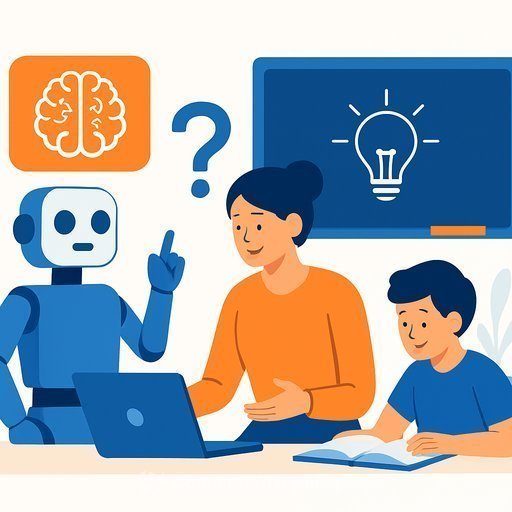
- Deeper education collaboration: The MOU formalizes the fall 2025 agreement-2,000 Claude Pro licenses for educators across Rwanda, AI literacy training for public servants, and a Claude-powered learning companion deployed across eight African countries.
Why this matters for education and government leaders
This isn't a pilot that stalls after a demo. It's a national plan with tools, training, and time-three years-to move from proof-of-concept to daily use in classrooms, clinics, and ministries.
For schools: faster lesson prep, differentiated support for students, and an AI learning companion that extends teaching capacity. For agencies: developer access to modern AI tooling, supported by structured training and credits. For health: targeted use cases aimed at measurable outcomes-screening, triage support, and better information flow.
Government perspective
"This partnership with Anthropic is an important milestone in Rwanda's AI journey. Our goal is to continue to design and deploy AI solutions that can be applied at a national level to strengthen education, advance health outcomes, and enhance governance with an emphasis on our context," said Paula Ingabire, Minister of Information and Communications Technology (ICT) and Innovation in Rwanda.
"Technology is only as valuable as its reach. We're investing in training, technical support, and capacity building to expand access so that AI can be used safely and independently by teachers, health workers, and public servants throughout Rwanda," said Elizabeth Kelly, Head of Beneficial Deployments at Anthropic.
How Rwanda will put this to work
- Capacity first: Training for educators, public servants, and developer teams to build local proficiency and reduce reliance on external vendors.
- Responsible deployment: Guardrails and guidance for safe use in classrooms, clinics, and citizen-facing services.
- Local autonomy: Ministries co-design use cases that fit Rwanda's context, infrastructure, and policy goals.
What leaders can do next
- Set clear use cases: Prioritize 2-3 workflows per unit (e.g., teacher planning, health screening triage, citizen service FAQs). Tie each to a measurable outcome and simple baseline.
- Name owners: Assign a lead in each ministry, district, or school cluster to coordinate training, access, and reporting.
- Standardize guidance: Publish short, practical guardrails for staff: approved prompts, data handling, and escalation paths.
- Track outcomes monthly: Monitor time saved, coverage expanded, and quality indicators (e.g., screening uptake, teacher prep time, ticket resolution).
- Build internal communities: Run weekly office hours and share playbooks so wins spread across teams quickly.
Education and public sector resources
For practical frameworks and training ideas, explore AI for Government and AI for Education-including policy templates, prompt libraries, and implementation checklists.
Long-term commitment
This MOU extends earlier education work into a broader public good agenda, adding health as a core pillar. The focus is on skills, infrastructure, and institutions-so progress continues after the headlines fade.
If implemented with discipline, this approach can compress time-to-impact for teachers, developers, and frontline health workers-and translate AI capability into outcomes people feel in their daily lives.
Your membership also unlocks: