Safe AI tutoring to close the attainment gap: up to 450,000 pupils could get one-to-one support
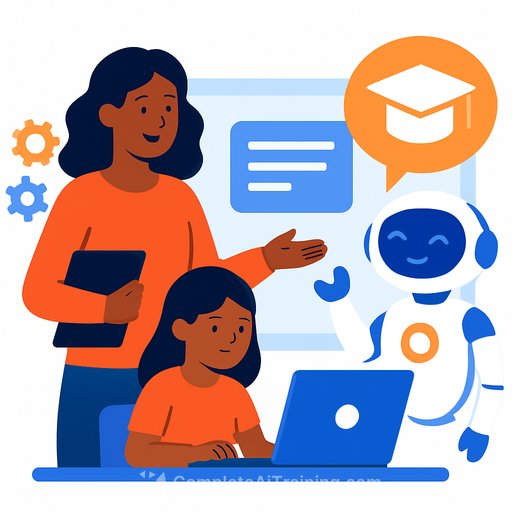
Government plans are moving forward to bring safe AI tutoring into secondary schools, with a focus on children from disadvantaged backgrounds. The goal: provide personalised one-to-one support at scale, without replacing teachers. Early estimates suggest up to 450,000 pupils on free school meals in Years 9-11 could benefit each year by the end of 2027.
What's being built
- AI tutoring tools co-created with teachers and industry, aligned to the National Curriculum.
- Personalised support that adapts to individual needs, offering extra help when pupils get stuck and pinpointing where more practice is needed.
- Use in class and as targeted intervention, complementing high-quality face-to-face teaching.
Why it matters
Too many disadvantaged pupils are behind their peers: only one in four currently achieves grade 5 or above in GCSE English and maths, compared with over half of other pupils. Evidence shows one-to-one tutoring can accelerate learning by around five months, but access is unequal. By bringing high-quality tools to scale, schools can offer consistent support where it's needed most.
For evidence on tutoring impact, see the Education Endowment Foundation's summary of one-to-one tuition effectiveness: EEF overview.
Timeline
- Summer term this year: teacher-led co-creation with AI labs and technology partners begins.
- Later this year: trials in secondary schools, informed by teachers' day-to-day experience.
- By the end of 2027: tools available to schools nationally, with a particular focus on Years 9-11.
Safety, quality, and assurance
- Prototypes will be tested with teachers and pupils, including those most disadvantaged, to ensure they support learning and keep children safe online.
- Clear benchmarks will be developed so parents and educators can trust quality, reliability, and safety.
- Updated safety standards will address emerging risks such as AI affecting learning, emotional, and social development.
- Tools are intended to work alongside teachers, never replace them.
Teacher workload and support
- Teacher training will be developed with the sector to build practical skills and confidence in safe classroom use.
- A £23 million expansion of the EdTech Testbeds pilot will enable more than 1,000 schools and colleges to test AI tools and assistive technologies, with a focus on saving teacher time and reducing workload.
Wider measures announced
- Consultation on children's social media use and a ban on phones in schools to improve wellbeing and safety.
- First-ever guidance on screen use for under-fives to help parents balance screens with play, speaking, and reading.
- Updated safety expectations for technology used in education, with specific attention to AI-related risks.
What leaders said
Education Secretary, Bridget Phillipson: "Our mission is to break the link between background and destiny, and we're working hand-in-hand with teachers to make that a reality. AI tutoring tools have the potential to transform access to tailored support for young people, taking tutoring from a privilege of the lucky few, to every child who needs it - so all children can achieve and thrive. But AI tools are only helpful in education if they are safe and support learning - and that is a non-negotiable. We will ensure tutoring tools are designed with teachers and rigorously tested, so they enhance pupils' learning and keep our children safe online, never replacing the human connection that only great teachers can provide."
Technology Secretary, Liz Kendall: "Every child should have an equal shot at success, no matter their background - but in reality, too many disadvantaged children are falling behind their peers in school. We're determined to close that gap. That's why we are going to work with teachers and tech experts to make safe, smart AI tutoring tools available to schools by the end of 2027 - providing extra help for kids who couldn't otherwise afford it. Alongside the high quality, face-to-face teaching of our brilliant educators, this will help level the playing field for hundreds of thousands of children from disadvantaged backgrounds to make the most of their education by removing the barriers that get in the way."
What Government and school leaders can do now
- Identify priority cohorts (e.g., pupils on free school meals in Years 9-11; those below expected progress in English and maths).
- Name an SLT lead for AI teaching and learning; establish a cross-functional working group (curriculum, safeguarding, data protection, SEND, IT).
- Start a data protection impact assessment for prospective AI tutoring use; set guardrails for data minimisation, retention, and consent.
- Agree classroom-use protocols: teacher-in-the-loop, feedback review, content filters, escalation routes for any unsafe or biased outputs.
- Audit infrastructure: device access, bandwidth, login and identity, accessibility tools for SEND learners; consider specialist training such as AI Learning Path for Network Engineers.
- Define success measures upfront: progress in English/maths, attendance, engagement, time saved for teachers, pupil and parent feedback.
- Plan staff development: short, practical training tied to specific lessons and interventions, with follow-up coaching.
- Prepare communications for parents and carers explaining purpose, safeguards, and how progress will be reported.
Practical resourcing notes
- Focus deployments where tutoring has the highest marginal impact, then scale.
- Pilot in diverse settings (urban/rural, varying SEND profiles) to test equity and accessibility.
- Schedule regular review cycles to refine prompts, content coverage, and classroom routines based on teacher feedback.
Upskilling your team
If you're planning internal capability building around safe AI use in education and public service, consider structured options for technical teams such as the AI Learning Path for Systems Administrators.
Your membership also unlocks: