Deploying Intelligent AI Agents in Healthcare-With Clinicians Fully in Control
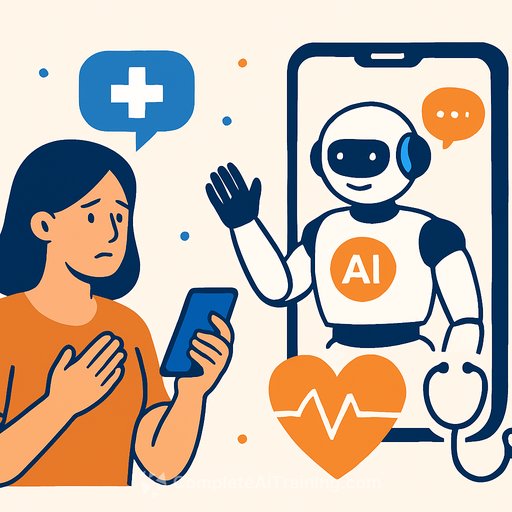
Health systems are stretched thin. Agentic AI can take on the repetitive work, flag risk sooner, and keep information flowing-without sidelining clinical judgment. That balance is the point: better outcomes and smoother operations, with doctors and nurses calling the shots.
At Avanade, Healthcare Industry Lead Christiana Voelker brings more than 15 years of experience helping health systems put AI to work across operations, care coordination, revenue cycle, home health and patient engagement. Her guidance below focuses on responsible deployment, measurable value, and governance that keeps clinicians in charge.
What agentic AI delivers for patients
- Continuous monitoring: Patient-specific agents watch EHRs, vitals, and labs to spot early warning signs and prevent avoidable readmissions.
- Faster clinical decisions: Decision support agents analyze histories and surface evidence-based options in seconds, cutting diagnostic time.
- Stronger adherence: Patient navigation agents send timely nudges, reduce no-shows, and help surgical patients follow pre-op instructions.
- 24/7 mental health support: AI companions provide immediate support and escalate to licensed therapists when the situation warrants it.
Fewer bottlenecks, less administrative drag
- Front desk to discharge: Agents manage intake, insurance verification, referrals, and handoffs so staff can focus on care.
- Prior authorization: What used to take weeks can move in a day, with agents reading payer policies and submitting complete, compliant requests.
- Revenue cycle protection: Billing agents catch coding gaps and documentation mismatches early, reducing costly denials.
Clinicians decide. Period.
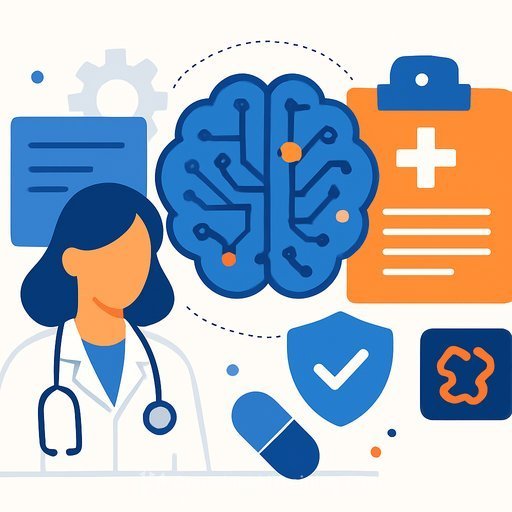
AI should feel like a force multiplier, not a threat. Agents surface insights and options; clinicians make the decisions. That's non-negotiable.
- Clear boundaries: Agents recommend, humans diagnose and prescribe. Every critical decision routes through clinical judgment.
- Explainability: Systems show why a suggestion was made, with sources and reasoning that can be audited.
- Role redesign: Train clinicians as AI orchestrators who supervise multiple assistants handling documentation, referrals, and discharge planning.
Interoperability that actually works
EHRs still act like islands. To bridge them, agents need to be fluent in healthcare's standards and protocols. That's happening.
- Standards momentum: MCP Model Context Protocol (Medical Context Protocol) and FHIR are creating common ground across vendors. See the FHIR specification from HL7 for details: FHIR overview.
- Shared vocabularies: Agents align data with SNOMED CT, ICD-10, and LOINC to keep meaning consistent across systems.
- Nationwide exchange: TEFCA and the 21st Century Cures Act set the rules of the road for secure data sharing at scale. Learn more about TEFCA at ONC: TEFCA guidance.
- Workflow wins: Standardized protocols enable smarter scheduling to cut wait times and documentation assistants that reduce "pajama time."
Security and ethics from the start
Trust is built, not assumed. Governance and security must shape every use case, every time.
- Zero-trust posture: Verify every interaction. Agents authenticate, log actions, and operate with the least access needed.
- Data minimization: Route only the fields required for the task via scoped, task-specific APIs.
- Prompt safety: Use templated inputs, role-based filters, and output checks to prevent prompt injection and leakage.
- Clinical oversight: Cross-functional review (clinicians, legal, security, ethics) vets each use case. Start with low-risk "observe and recommend," then grant more autonomy only after proven reliability.
- Auditability: Document everything-models, prompts, decision pathways, outcomes-and monitor continuously.
A practical rollout plan
- Pick one high-friction, low-risk use case (e.g., prior auth or referral tracking) and define success metrics upfront.
- Set decision boundaries: What can the agent do automatically? What requires human sign-off?
- Standardize prompts and responses: Use structured templates, citations, and confidence signals for easy review.
- Integrate into the workflow: Put recommendations where clinicians already work (EHR inbox, care team chat, or task lists).
- Measure and iterate: Track time saved, quality indicators, and patient experience; scale only after you see consistent gains.
- Upskill your team: Train clinicians, care managers, and rev cycle staff to supervise and tune agents effectively.
The bottom line
Agentic AI is ready to reduce administrative load, tighten care coordination, and expand access-while keeping clinicians firmly in control. Success comes from disciplined governance, smart interoperability, and a rollout plan that proves value fast, then scales thoughtfully.
Ready to see what this could look like in your organization? Start small, measure clearly, and keep decision-making where it belongs-with your clinicians.
Your membership also unlocks: