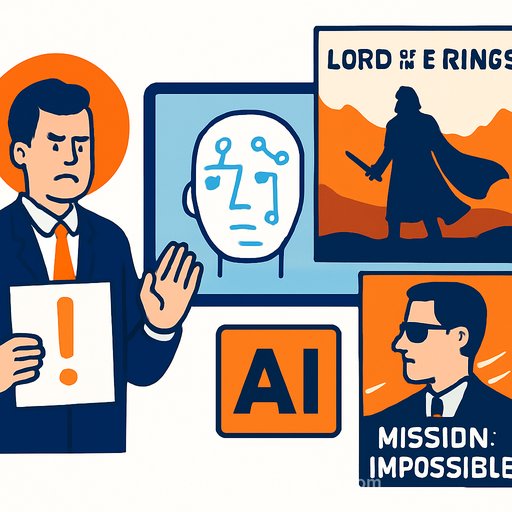
SAG-AFTRA Condemns Seedance 2.0: Legal Stakes for AI-Generated Video
SAG-AFTRA, joined by the MPA and other industry groups, publicly condemned ByteDance's Seedance 2.0 video model for "disregarding law, ethics, industry standards and basic principles of consent." The criticism centers on AI outputs that recreate protected characters and recognizable actors without authorization. Examples flagged include content resembling "Lord of the Rings" and "Mission: Impossible," along with an AI-created depiction of Elijah Wood as Frodo.
Why this matters for legal teams
Generative Video is crossing from theoretical risk into concrete, litigable exposure. If a model makes it easy to produce franchise scenes, celebrity likenesses, or branded assets, you're looking at a stack of IP and publicity claims - plus potential secondary liability for the platform.
Key legal theories likely in play
- Copyright (17 U.S.C. § 106): Unlicensed use of protected characters, sets, music, and scripts can support claims for reproduction and derivative works. Platforms face secondary liability (contributory, vicarious, inducement under MGM v. Grokster) if they know about infringing activity and materially contribute or profit while having the right and ability to control it.
- Right of publicity: Unauthorized use of a performer's name, image, voice, or persona can trigger state-law claims (e.g., California Civil Code § 3344). "Digital doubles" and voice clones raise clear consent and compensation issues.
- Lanham Act § 43(a): False endorsement or association where AI outputs imply a performer or studio authorized the content. Trademark use tied to famous franchises can also invite dilution claims.
- DMCA § 512: Safe harbor depends on expeditious takedowns, a working repeat-infringer policy, and no direct financial benefit while having control. A proactive generator that outputs infringing content risks stepping outside safe harbor defenses.
- Contract and guild rights: Performer and studio agreements commonly restrict synthetic media use without consent. Union rules and collective bargaining terms can add independent obligations and penalties.
- Disclosure and deepfake laws: Jurisdictions increasingly require labeling synthetic media and prohibiting certain deceptive uses. Expect more scrutiny around provenance and authenticity signals.
Evidence that will matter
- Training sources: What datasets were used, under what licenses, and were opt-outs honored?
- Guardrails: Filters blocking known franchises, celebrity likenesses, logos, and soundtrack elements.
- User journey: Prompts, session logs, and moderation decisions showing knowledge and control.
- Similarity analyses: Technical comparisons between outputs and protected works or personas.
- Notice-and-takedown history: Speed, completeness, and consistency of enforcement actions.
Action items for studios, rights holders, and brands
- Stand up a monitoring program for core franchises, talent likenesses, and key marks across major AI platforms.
- Use fast-track takedown templates; escalate to TROs when high-visibility misuse appears ahead of releases.
- Tighten contracts: explicit bans on unconsented synthetic use, clear approvals, and fee schedules for digital replicas.
- Expand registrations (characters, logos, iconic assets) and document distinctiveness to strengthen enforcement.
- Adopt provenance tools (watermarking, C2PA) to aid authenticity claims and speed platform actions.
Risk controls for AI vendors and platforms
- Blocklists for franchises, celebrity names/images/voices, and studio-owned marks; require clear consent for any likeness use.
- License lawful asset libraries for training and output; verify provenance and maintain auditable records.
- High-risk review flows for outputs depicting known characters or living persons; throttle or quarantine questionable renders.
- Terms of service with explicit IP and publicity prohibitions, warranties from users, and structured indemnities.
- DMCA compliance with true repeat-infringer enforcement; preserve logs for notices and counter-notices.
- Visible labeling for synthetic media and stable watermarking to support downstream moderation.
Litigation posture to expect
Early cases will push for injunctions, expedited discovery, and preservation of training data, filters, and logs. Damages theories may combine statutory copyright damages, publicity claims, corrective advertising, and disgorgement tied to model growth or platform traffic.
Outlook
The message from unions and studios is clear: unconsented replicas of protected works and performers are off-limits. Legal teams should assume aggressive enforcement and prepare both product guardrails and rapid response playbooks.
For background on agency views, see the U.S. Copyright Office's AI resource page: copyright.gov/ai.
If your team needs to upskill on AI risk and governance, see curated programs by role: Complete AI Training - Courses by Job.
Your membership also unlocks: