India launches SAHI and BODH to strengthen safe AI deployment in healthcare
India has introduced two national initiatives to make health AI safer, more effective, and easier to scale. The Strategy for AI in Healthcare in India (SAHI) and the Benchmarking Open Data Platform for Health AI (BODH) were launched during the India AI Impact Summit on 17.02.2026.
These moves were shared in a written reply in the Rajya Sabha by the Union Minister of State for Health and Family Welfare, Smt. Anupriya Patel. Together with the Ayushman Bharat Digital Mission (ABDM) Sandbox and CDSCO's device regulations, the pieces now exist for responsible AI use across clinical and public health settings.
SAHI: national guidance for safe, ethical, evidence-based AI
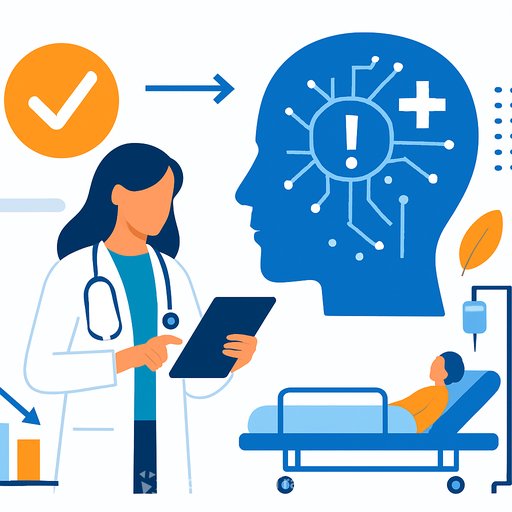
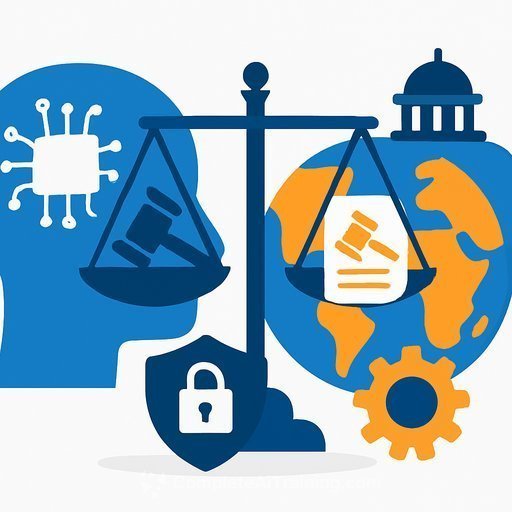
SAHI sets direction for how healthcare organizations adopt AI responsibly. Expect stronger emphasis on governance, clinical oversight, data quality, bias mitigation, and clear accountability.
- Set up an AI governance group that includes clinical, data, IT security, and ethics perspectives.
- Require model cards or equivalent documentation for any AI tool entering care pathways.
- Define clinician-in-the-loop checkpoints and escalation paths for safety-critical use cases.
- Track outcomes and disparities; retire or retrain tools that don't meet clinical and equity thresholds.
BODH: test and validate before scale
Developed with IIT Kanpur, BODH provides a structured way to benchmark health AI solutions before deployment. Think of it as a proving ground to test performance, safety, and generalizability.
- Benchmark models on representative datasets and report performance across key subgroups.
- Validate end-to-end workflow impact (not just AUC): time-to-decision, false alert rates, and clinician workload.
- Document intended use, limits, monitoring plans, and update cadence prior to rollout.
CDSCO pathway for AI-enabled medical devices
The Central Drugs Standard Control Organisation (CDSCO) regulates all medical devices, including AI-enabled ones, under the Medical Devices Rules, 2017. High-risk devices require comprehensive technical documentation, and Chapters IV and V outline timelines for manufacturing and import licenses.
Key technical documentation requirements include:
- Essential Principles Checklist demonstrating conformity with safety and performance requirements
- Verification and validation documentation, including software
- Risk analysis and control documents
- Clinical evidence supporting safety, performance, and effectiveness
- Quality Management System documents
- Software version release certificates, if any
Practical move: assemble a submission-ready dossier early and run an internal gap check against each item above. Keep version history, data lineage, and change-control logs tight to reduce back-and-forth.
Integration via the ABDM Sandbox
ABDM provides a sandbox environment and toolkits for developers to integrate applications, including AI screening tools. This helps you validate interoperability and prepare for live deployment within India's digital health ecosystem.
- Register in the ABDM Sandbox and test core APIs end-to-end before pilot use.
- Align data handling with privacy, consent, and security best practices from day one.
- Plan phased rollouts: limited pilot, post-implementation review, then scale.
What this means for healthcare teams
- Hospital leadership: Approve an AI governance charter, budget for validation, and set clear approval gates before clinical use.
- Clinical departments: Co-develop use cases, define outcome metrics, and insist on explainability that supports bedside decisions.
- Developers and data teams: Prepare BODH-ready evidence packs and automate monitoring for drift, bias, and safety signals.
- Quality and regulatory: Map documentation to CDSCO requirements and maintain audit-ready QMS artifacts.
- Public health programs: Use BODH benchmarks and ABDM integration to standardize tools across states and facilities.
Official references
Further learning
The bottom line: use SAHI for governance, BODH for validation, CDSCO for compliance, and ABDM for integration. Put them together, and you have a clear path from idea to safe, scalable impact.
Your membership also unlocks: