Khan Academy's AI Tutoring Bot Falls Short of Expectations
Sal Khan built an AI-powered tutoring chatbot three years ago and predicted it would transform education. Today, he acknowledges the revolution hasn't arrived.
"For a lot of students, it was a non-event," Khan said about Khanmigo, his chatbot. "They just didn't use it much."
Khan compares the experience to sitting in the back of a classroom and waiting for students to ask for help. Some do. Most don't. That mismatch between the tool's potential and actual student behavior reveals a fundamental limitation: AI tutoring doesn't automatically motivate students to learn or fill knowledge gaps they don't yet recognize.
From Optimism to Reality
In summer 2022, OpenAI leaders Sam Altman and Greg Brockman approached Khan months before releasing ChatGPT. They wanted Khan Academy to demonstrate the technology's educational benefits. Khan Academy received early access to GPT-4 and built Khanmigo-a specialized chatbot designed to guide students without simply handing them answers.
Khan became a public advocate. At a 2023 TED Talk, he said AI could deliver "an artificially intelligent but amazing personal tutor" to every student on the planet. He cited a 1984 study suggesting individualized tutoring could turn average students into academic standouts.
That optimism has tempered. Khan now calls AI "part of the solution; I don't view it as the end-all and be-all."
Teachers Report Mixed Results
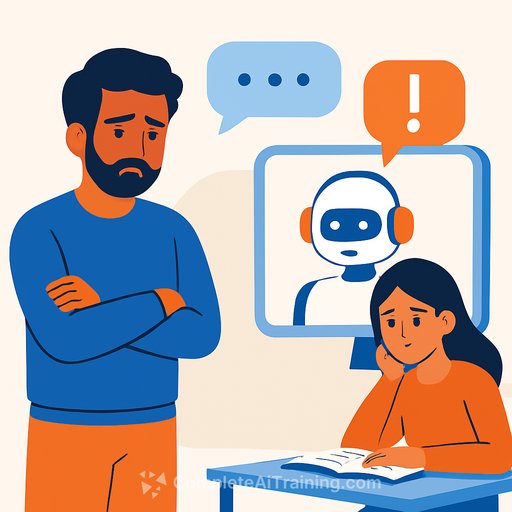
Kristen Musall, a geometry teacher at Hobart High School in Indiana-an early adopter featured in a "60 Minutes" segment-initially appreciated Khanmigo's encouraging tone. But she found students disliked it. They found it frustrating when it refused to give direct answers and sometimes made mistakes.
"If students don't engage with the material enough to know what they're looking for, then an AI like Khanmigo doesn't necessarily help," Musall said. She no longer uses it in her classroom.
Administrators have shown more enthusiasm than teachers. Peggy Buffington, Hobart's superintendent, sees value in the tool, particularly as a homework helper that won't provide answers. But she acknowledges schools need to teach students how to use AI responsibly.
A larger problem has emerged: students are using AI tools to cheat. A recent Pew survey found a majority of teenagers say AI-powered cheating is at least somewhat prevalent in their schools.
The Core Problem: Students Don't Know What to Ask
Kristen DiCerbo, Khan Academy's chief learning officer, identified a core issue. AI can only respond to what students ask-and students aren't skilled at asking good questions.
DiCerbo expected AI to personalize instruction to students' needs and interests. It hasn't. "So far I am not seeing the revolution in education," she said.
The evidence base for AI in education remains "extremely limited," according to an overview paper released last month.
Shifting Strategy
Khan Academy recently restructured its product. The organization found that "students were not seeking out Khanmigo's help as much as we had hoped." The new approach integrates Khanmigo directly into practice problems so students encounter it while working through specific content.
A prior study showed that when teachers used Khan Academy to help students practice academic content, their classes made slightly faster learning gains. Lower-performing students, however, saw few improvements.
Khan's assessment has shifted. "AI is going to help," he said. "But I think our biggest lever is really investing in the human systems."
For educators implementing AI tools, the lesson is clear: technology alone doesn't drive learning. The quality of instruction, student motivation, and teacher guidance remain central. AI for Education works best when integrated thoughtfully into existing practices, not as a replacement for them. Teachers working to understand how to use these tools effectively may benefit from exploring AI Learning Path for Teachers.
Your membership also unlocks: