Samsung's 2026 Strategy Week: Signals Executives Should Pay Attention To
Samsung's top leadership is meeting behind closed doors this week to lock in the 2026 plan after a major management shuffle in November. TM Roh and Young-hyun Jun, the newly named co-CEOs for consumer devices and semiconductors, are chairing the sessions. A separate briefing for Chairman Jay Y. Lee is planned later in the week. The backdrop: intense market pressure and a race for AI hardware supply.
The Core Bet: Own More of the AI Hardware Supply Chain
Samsung aims to tighten its position as a key memory and foundry services provider for AI hardware, including ASICs built by companies like Amazon and Meta. The intent is clear: secure upstream silicon relevance as AI demand grows. Expect more long-term deals, deeper engineering tie-ins, and aggressive node roadmaps.
- Signal for buyers: Plan around longer lead times and node-specific constraints; lock multi-year agreements where strategic.
- Signal for competitors: Memory-plus-foundry bundles will be used to win platform commitments.
US Capacity: Taylor, Texas Set to Anchor 2nm
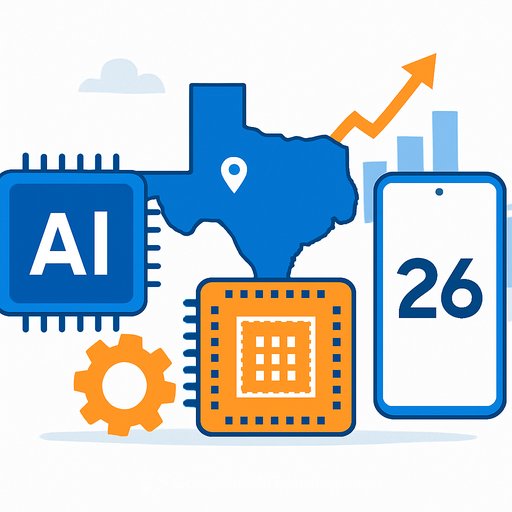
Samsung's $37 billion Taylor, Texas site is expected to start mass-producing advanced 2nm chips, with clients like Tesla in the mix. The company is targeting additional billion-dollar agreements in the coming year. For US tech firms, this offers geographic diversity and potential leverage in vendor negotiations.
Board-Level Diplomacy: Lee's US Meetings
Chairman Jay Y. Lee recently met with Tesla CEO Elon Musk and AMD CEO Lisa Su to expand semiconductor cooperation with US companies. Expect follow-on activity tied to AI accelerators, automotive compute, and edge silicon. For board-level AI planning and decision-making, see AI for Executives & Strategy.
Mobile Timing and Silicon Mix: Galaxy S26
Samsung will finalize Galaxy S26 launch plans during the meetings. A shift from the usual January window to late February is on the table. Exynos 2600 production yields are a concern, which may push Samsung to use Exynos in select markets and lean on the latest Snapdragon elsewhere.
What This Means for Operators and Finance Leaders
- Capacity risk: Track 2nm ramp timing and yield progress; model conservative supply in the first two quarters post-ramp.
- Cost curves: Expect premium pricing tied to node scarcity and packaging constraints; build flexibility into BOMs.
- Vendor leverage: Co-development commitments will move pricing and priority; align engineering roadmaps with procurement.
- Geo exposure: US capacity creates optionality; weigh Taylor output in dual-sourcing plans.
- Product calendars: Treat launch timing as a variable; plan campaigns and channel inventory with two date scenarios.
Practical Moves You Can Copy
- Run a CEO-chaired strategy sprint that ties capacity, product, and GTM into one decision set; consider frameworks from the AI Learning Path for Business Unit Managers.
- Use dual-sourcing on advanced nodes; pre-negotiate volume triggers and allocation clauses.
- Lock LTAs where differentiation depends on specific nodes or memory footprints.
- Align launch windows to silicon readiness, not tradition; set a primary and a fallback date.
- Pair engineering with procurement on account-level co-development plans for AI workloads.
Q1 Checklist for Your Team
- Do we have a firm view on 2nm availability and the realistic yield curve we can plan against?
- Which SKUs require node-specific commitments, and where can we swap silicon without hurting P&L?
- Are our contracts structured for allocation shocks and price escalators?
- What's our comms plan if a flagship product window slips by 2-4 weeks?
- Where can US-based capacity reduce risk or improve customer SLAs?
Bottom line: Samsung is tightening its AI position and pushing US-based advanced capacity while keeping optionality in mobile. If your roadmap depends on leading-edge silicon, make your capacity, pricing, and launch decisions now-before the next wave of AI demand sets the terms for you.
If you're building team capability around AI strategy and vendor selection, consider these curated paths: AI Learning Path for VPs of Strategy.
Your membership also unlocks: